Four Poems by Ni Made Purnama Sari, trans. by Norman Erikson Pasaribu
Norman Erikson Pasaribu translates four poems by Ni Made Purnama Sari, whom they call 'one of the most important Balinese writers working today'. These poems were published in Purnama's 2015 collection, Kawitan, which explores how Balinese people relate to both their ancestral pasts and their futures in a home subject to intense environmental exploitation and touristic, (neo)colonial exoticisation. 'To translate these poems is to understand Purnama’s experiences,' Pasaribu says, 'and then respond to the giant that is Western ignorance of lives in the Global South.' All four poems are presented here in both the original Indonesian and in English.
Supported by a grant from the Open Society Foundations.
Weltevreden
If Marco got out, he would see:
Big trees now stand in Weltevreden streets
and little people pedalling the wheel of time
until sunset
It’s true, Marco, the trees are confining
now in Weltevreden, where undignified meneers
once stalked the girl merchants plodding home
and, when the night fell, turned them
into kept women
Cold wind sweeps the dusty alleys of Weltevreden, Marco
where poor porters and farmers
and thieves and thinkers lost
their whole lives to the underground prison:
One and the same — in struggle, and in feeling
Had Marco released himself, he would’ve seen:
Airbuses fly through the Weltevredenian sky
with them the dreams of street performers
ricocheting off a tram into a train
off a crowded bus into a city park
escaping the hands of police and repo men
Under the carceral trees over there, Marco,
teens are now meeting, stealing kisses
Weltevreden
Kalau marco pulang, dia akan lihat:
Sekarang pohonan rindang di jalan-jalan weltevreden
Pesepeda mengayuh sisa waktu sebelum senja tiba lagi
Ya, pohonan merindang di weltevreden
Tempat dulu tuan tanpa malu memandang
Pada gadis yang baru datang dari pasar
Malam kemudian,
Jadilah ia nyai yang kesekian
Angin meniup gang-gang debu weltevreden
Di mana kuli angkut, petani miskin
Pencuri, rampok, dan cendikia
Ditahan bertahun-tahun
Sama rata, sama rasa
Kalau marco pulang, dia akan lihat:
Pesawat melintas di langit weltevreden
Melayangkan mimpi penyanyi jalanan
Melantun dari trem ke kereta
Dari bus sesak ke taman kota
Lari dari kejaran polisi juga lilitan piutang kehidupan
Di bawah pohon rindang sana
Anak remaja pacaran, curi-curi ciuman
(2014)
Bayam from the Banjaran Market
A Bayam for Two, salty like the morning rain
moribundly green on my breakfast bowl
Do you remember how long she was cooked
or her age when she was picked;
do you think time cares?
Did the dead fly found between her leaves
live a green little life? It flunked to mimic
a corn kernel or a slice of garlic;
but does death even bother?
One day, if I can afford a life
to be a garden-grown bayam, anywhere
or even a wild pigweed, its sister that roams the roadside
I’ll breed myself — breeding and breeding
against time, who always looked down on me
against death, who always lurked around me
Will the farmers pick my leaves
and let me come to you as breakfast?
My green and torrential leaves
will host the ants and their nest
they’ll slumber on my bed of roots
Bayam Pasar Banjaran
Dua porsi bayam, asin seperti gerimis pagi hari
hijau melayu saat tersaji pada piringku
Sejak kapan ia lama dimasak
atau dipetik petani umur berapa;
apa peduli waktu?
Bagaimana masa muda si lalat mati
hinggap di sela daunnya
gagal menyamar biji jagung dan irisan bawang putih;
apakah maut mau tahu?
Suatu hari, bila kudapat sebuah takdir
Jadi tumbuhan bayam di kebun tua di mana pun
atau liar di jalan-jalan di mana pun
Kubiakkan diriku, sebanyak-banyaknya
Melawan usia waktu yang selalu pongah menatapku
Menepis kerling maut yang mengintai hidup matiku
Daunku yang lebat, dipetik para petani
Dihidang sebagai sarapan pagi, di sini
Daunku yang hijau lebat
Dulu menaungi kumpulan sarang semut
Tidur berlindung di lelap akarku
(2015)
Padalarang
Slipping into Padalarang: the hills bumping into the firmament.
A call of the morning prayer, an end to our slumber. Outside
the trees flipped another page of our lives.
Entering Padalarang, an officer slips into our compartment.
The first seats — a couple goes panicking over their tickets.
The next one — also lost theirs. The third, fourth,
fifth, sixth, another, and another: similar horrible fate.
The mist infiltrates the carriage, going through our worry,
blanketing our thoughts with chaotic impossibility.
In the faraway mountain slopes, the fog thickens, flooding
the wildwood and its chattering teeth.
But we’ll leave behind the Padalarang Station.
The mountains will eventually be nowhere to be found.
Do you, do I, have the tickets, know where to go?
Padalarang
Memasuki Padalarang, pegunungan membatas cakrawala.
Gema adzan dini hari menandai akhir yang lelap. Pohonan
hijau membuka hari baru kami.
Memasuki Padalarang, kondektur datangi setiap penumpang.
Deretan pertama, suami istri kebingungan mencari tiket.
Berikutnya, mereka yang lain kehilangan karcis kereta. Bangku
ketiga, keempat, kelima, keenam, dan seterusnya, sama saja.
Kereta seketika penuh kabut, menembus kecemasan,
melingkupi pikiran kalut ketakterdugaan. Kabut menebal
menyelimuti lereng gunung. Menggenangi hutan raya yang
gigil di pucuk dini hari.
Stasiun Padalarang berlalu jauh sekali. Pegunungan nun tadi
sudah tak ada lagi.
Aku, kau, apakah punya tiket, tahu akan ke mana?
(2008)
Cikoko Station, Cawang
a red-faced drizzle
prancing around with a spider couple
leaping and dancing
on the train window
playing around with death
while the blind man near the door
the only witness
My coin tinkling
in his old can
its mouth open and half-empty
My coin whirling
playing a trick of light
against the eyes inside of me
dazzled by the sparkle of billboards
on every street corner
sooty like dead people’s poems
I came closer to him
What face of mine do you see? Which one?
Does it remind you of your mother, who left you
who made you into a footnote of misfortune?
Wish I could give him a little candle
So he could see me
How both of us are strangers in this city
staring at ourselves in silence
So we could talk like old friends:
How we were happy as kids —
kids who played around with life
Cikoko Stasiun Cawang
Gerimis yang malu-malu
menari bersama sepasang laba-laba
melompat dari jendela kereta
mempermainkan maut
dalam bayang pandang seorang lelaki buta
yang termangu di depan pintu
Keping koinku berdenting
meluncur ke kaleng usang
tengadah separuh hampa
Keping koin berputar
mempermainkan mata batinku
yang rabun oleh simpang jalan
gemerlap papan iklan
pias bagai puisi orang-orang mati
Padanya aku mendekat
seperti apakah wajahku kau lihat?
Miripkah dengan ibu yang meninggalkanmu
hidup jadi pelengkap nasib buruk manusia?
Andai bisa kuberi ia sedikit cahaya
agar terlihat diriku, sama-sama pendatang asing
yang menatap sunyi dirinya
Agar kami bercakap bagai dua kawan lama:
Dua kanak bahagia
yang ingin mempermainkan hidup
(2013)
Translator’s Note
The source text for the poems here is the book Kawitan by Ni Made Purnama Sari. Winning second place in the prestigious Jakarta Arts Council’s Poetry Book Manuscript Competition in 2015, Kawitan solidified Purnama Sari as one of the most important Balinese writers working today. Initially, Purnama divided the book into two sections, 'Muhibah Tanah Jauh' ('The Fortune of the Foreign Land') and 'Kampung Halaman' ('Hometown'). So, as a reader, I understood Kawitan as a way to interrogate contemporary Balinese lives — their links to the wider world but also their connections to their beginnings, their ancestors.
Forcefully designed as a major tourist destination since colonial times, Bali has had to survive massive environmental exploitation in the name of economic growth. However, as more settlers arrive, the native Balinese lose more of their livelihoods. One day, they might not have anything left. Purnama built her poetic vision on that distress. She rebelled against the exoticisation of her Balinese roots and the expectation to perform as a Balinese poet. In her poems, she was a Balinese visitor, not the one being visited. She travelled to other cities and towns in Indonesia, to cities in Europe and Australia, and even to Southwest Asia (Lebanon). She tried to coin a form of global empathy, the mirror she would use to reflect on the life she had back home in Bali.
To translate these poems is to understand Purnama’s experiences, and then respond to the giant that is Western ignorance of lives in the Global South. While translating, I kept asking questions about whether the dictionary equivalent of an Indonesian word would suffice. Is 'jiwa' really a 'soul'? (I ended up translating it as 'breath of life'.) Is 'spinach' enough for 'bayam'? (I later found out that 'bayam' and 'spinach' were actually two different plants, despite them being a dictionary couple.) These questions sometimes seemed whimsical (and obsessive), but, after spending hours researching, I eventually found them helpful. I hope this translation will also be helpful to you, an English reader, to better understand Purnama’s context.
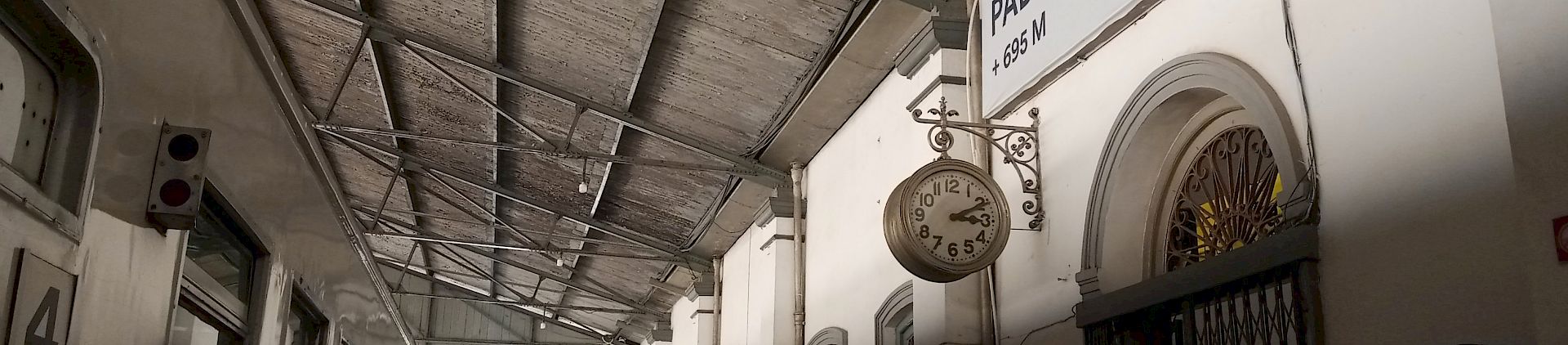
Cover image: Bagian dalam stasiun Padalarag


Wasafiri 116: Shorelines: South East Asia and the Littoral, our special winter issue guest edited by Nazry Bahrawi, Joanne Leow, and the late Y-Dang Troeung, features a range of creative, critical, and artistic work from Singapore, Cambodia, Malaysia, Indonesia, Philippines, Vietnam, and Myanmar and their diasporas, exploring the littoral encounter of existing on the shoreline.
