Remembering Alex Wheatle by Irenosen Okojie
Novelist Irenosen Okojie writes a tribute to her former mentor and ‘literary titan’ Alex Wheatle, who passed away recently on 16 March, 2025. Known as the ‘Brixton Bard’, Wheatle was the author of several books set in South London, and was awarded an MBE for services to literature in 2008.
Alex Wheatle was a literary titan. A game-changing talent, whose groundbreaking body of work encompasses different genres and audiences. From operatic urban classics to incendiary historical offerings to modern sensations — Wheatle was a tour de force who left everything on the page. He gave us lyrical, culturally indelible books – such as Brixton Rock (1999), East of Acre Lane (2001), Island Songs (2005), The Dirty South (2008), and Brenton Brown (2011) – which reflected the times and the language of South London streets. These incandescent books centred the lived experiences of young Black people, the challenges they faced, and the ways in which they fought to thrive. His characters leapt off the page, often based on real people he had encountered.
Wheatle later made the switch to young adult (YA) writing, with the books he produced at this stage taking his career to new heights. Cane Warriors (2020) is a searing historical exploration of an uprising in eighteenth-century Jamaica inspired by Tacky’s War, a real slave rebellion in 1760-1761. The book follows fourteen-year-old Moa’s journey on the front lines, as he and the magnetic Tacky fight for the freedom of slaves on a sugar plantation, thereby becoming ‘cane warriors’. The novel is charged, political, and intimate. Wheatle’s use of emotive language and the first person narration of Moa feel close to the bone. The specificity and intricacies of the lives of slaves is at times painful to read, and intentionally so. It’s a bold and radical work from him, where past horrors never feel that far from the future, unless we as a society hold a lens up, and interrogate those unconscionable cruelties, so those mistakes don’t take on new guises in the present.
Kemosha of The Caribbean (2022), another historical high-wire act, is a thunderous feminist ode to fierce young women. The book was nominated for The Carnegie Medal for Writing. In it, fourteen-year-old Kemosha, born into slavery in the 1660s, is cruelly taken from her family, her little brother Gregory, and the cook, Marta. After being sold to the terrifying Mr Powell, she escapes with the help of brilliant barrel maker Ravenhide, a free Black man who teaches her to sword fight. Their pirate adventures on the ship ‘The Satisfaction with Captain Morgan’ begin, along with Kemosha’s growing desire to buy the freedom of Gregory and Marta. The book is pacy and propulsive. In Wheatle’s deft hands, he makes a tough subject matter feel liberating, once again cleverly shifting gears.
Crongton Knights (2016), his most successful young adult novel franchise, which introduces audiences to the world of a boy named McKay, won him the Guardian Children’s Fiction Prize. Set on a lively council estate, we find McKay trying to maintain the equilibrium in his household after his mother passes away. With a father working all hours to keep the bailiffs at bay, and a brother tempting fate on the streets at night, McKay finds himself in trouble during one crazy night of adventure, facing off against a friend’s ex and a volatile gangster with a vendetta.
Once again, the pacing is fast, the use of street vernacular is vibrant, and the reading experience addictive. Wheatle had a successful trick: although these are classified as young adult novels, they straddle a space between YA and adult fiction. This was something the likes of Roald Dahl pulled off with flourish, and Wheatle did the same. In making the move to this genre, he achieved another level.
Crongton Knights was adapted into a play by Pilot Theatre which toured the UK in 2020. Wheatle’s entire oeuvre was shortlisted for the NSK Neustadt Prize for Children’s Literature that same year. Reflecting on his body of work, there’s so much to choose from. From books, theatre, television adaptations, one-man shows, and his spoken word days as the ‘Brixton Bard’. Before that, too, on the streets of South London in the late 70s and early 80s, during a period of rebellion … his moniker was ‘Yardman Irie’, managing a sound system with his fellow music-loving rascals and friends.
A particular highlight for me was watching his one-man show Uprising, which Tara Arts produced in 2010. It crystalised that Wheatle was a born storyteller, mining the depths of himself with generosity. He told his life story, sang, danced, and displayed elements of showmanship. Audiences loved him. In 2011, his play Shame and Scandal sold out to audiences during its run at the Albany Theatre. He lived and breathed writing — it was his elixir.
Literature, for Wheatle, was never about lording it over others — it represented changing lives, and he knew that from personal experience. In 1981, Wheatle fought during the Brixton Riots. He then did a spell in prison, where he met a rasta mentor who gave him a copy of CLR James’ The Black Jacobins (1938), changing the course of his life. Wheatle was never an author with airs or graces. He always wanted everybody to feel seen, and knew the value of this, particularly for young people and the disenfranchised.
The sheer magnitude of the outpouring of love and celebration following the news of Wheatle’s death is telling. He was a man who always opened himself up, letting you find shared ground with him, then levelling it so you could take some of the magic away with you. Such a quality is rare. Most authors are admired; very few are loved the way Wheatle was and is. One can now revisit his life through Oscar-winning director Steve McQueen’s film, Alex Wheatle, part of the ‘Small Axe’ series, which memorialises Wheatle’s life story on celluloid.
Alex Wheatle mentored me during the earlier stages of my career. As a man, he was down to earth, observant, and often very funny. As a mentor he was rigorous, generous, as well as tough when he needed to be. Beyond that, we collaborated a few times. What struck me was his hunger to keep writing books, as well as his ability to adapt and change with the times. After a long period of producing adult books, he made the bold leap to switch to writing YA novels instead. Having done lots of educational work running workshops for young people in schools and youth clubs, as well as prisons across the country, he was well placed to do it.
Wheatle’s riotous memoir, Sufferah: The Memoir of a Brixton Reggae Head (2023), is an inspiring, hilarious read reflecting his indomitable spirit in surviving the horrific care system, while documenting his rise to literary stardom from the ground up as an emcee. The book provides fascinating insight into the psychology of Alex Wheatle. Thinking about the crossroads he faced at different points, I keep returning to that juncture in prison when Rastaman Simeon, his cellmate, introduced him to books that changed his life. How fitting, then, that now with his exceptional body of work, people of all ages and backgrounds may come to Wheatle’s books at critical points in their lives, which may in turn change them — that’s the power and wonder of books. It’s important to be clear about something: without Alex Wheatle we wouldn’t have some of the male voices of colour we see out there now in literature. He opened the space up and he was never given enough credit for that when he was alive.
Alex was a remarkable man who inspired so many. He gave so much to the cultural landscape — long may his legacy thrive.
An interview with Alex Wheatle from Wasafiri 103: Writing Whiteness – Reggae, Roots and the Brixton Bard: Carolyn Cooper Talks to Alex Wheatle – is currently free to access and download here.
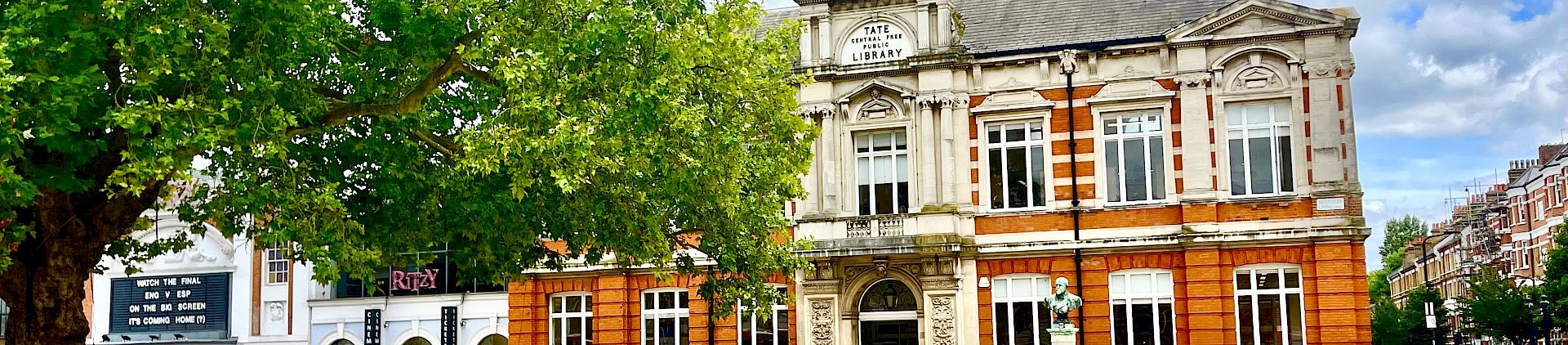
Image: Brixton Library, Brixton Oval on Windrush Square in July 2024 via Wikimedia Commons


Wasafiri 114, guest co-edited by Henghameh Saroukhani and John McLeod, considers how we aesthetically and politically reckon with the Windrush scandal. The lead feature comes from Gary Younge, while our interviews for this issue are with Caryl Phillips and Hazel V Carby. You can also expect our usual range of fiction, art, life writing, poetry, and reviews.
