A Reckoning: Gender Violence in Mauritian Life and Literature by Ariel Saramandi
Ariel Saramandi explores and decries the patriarchal abuses of power behind the Mauritian literary scene, centring Nathacha Appanah's groundbreaking book, La nuit au cœur, and her and other Mauritian women writers' engagements with violence against women, confinement, and carcerality on the island. Where femicide and paedophila remain major issues for the country, Saramandi looks toward how effective feminist shifts can continue to take hold in the future.
Supported by a grant from the Open Society Foundations.
In Mauritius, nine women were murdered in 2025, and six have been murdered in 2026 so far. All died at the hands of men who knew them.
It is crass, perhaps, to think about what these women would have gained by reading a book — whether a text could have prevented their deaths. I do believe that each of these women would have found mirrors of themselves and their entrapment in Nathacha Appanah’s La nuit au cœur (Gallimard, 2025). Winner of Le Prix Femina, the Prix Goncourt des lycéens, and the Prix Renaudot des lycéens, the book was a phenomenon in France. In its depictions of three abusers – two murderers among them – I believe that these women would have seen the traits of the men in their own lives. I do not know whether seeing their own situation reflected to them would have helped these women escape and seek greater protection for themselves. I do not know if their families or public institutions would have even given them that protection.
What I do hope is that every woman who reads La nuit au cœur and finds resemblances to her life can eventually find her way to safety. I wonder about the possibilities of a book like Appanah’s, as it continues to reach wider audiences. I wonder what it could do in the hands of lawmakers, activists, public officials, and non-profits. I’ve seen the book’s power firsthand, and it is not subtle.
*
There were at least three books published internationally by Mauritian authors in 2025: Appanah’s La nuit au cœur in August; Priya Hein’s Tamarin in September; and Sudhir Hazareesingh’s Daring to Be Free: Rebellion and Resistance of the Enslaved in the Atlantic World in October. An excellent year for Mauritian literature and scholarship, but you wouldn’t have known it if you only read Mauritian newspapers and watched Mauritian news.
All of Appanah’s novels examine the violence of "enfermement", which can be translated as entrapment, imprisonment, or confinement.
There was a fourth book as well — my own. Portrait of an Island on Fire, a collection of essays on contemporary Mauritius, was met with fervour online and absolute silence back home, a state of affairs I was used to. The island’s would-be literati have rigorously shunned me since 2020, when I started writing about racism, power, and land dispossession — all the things that perhaps they, too, would like to write about, but which they cannot for fear of losing their cocktail party invitations, events at the Institut Français de Maurice, friendships in the white, bourgeois circle they’ve ingratiated themselves into, and their faces and columns appearing in local newspapers.
I knew that my book would not be mentioned at all in public discourse. I knew that I wouldn’t be invited – again – to the island’s annual literary festival, a great, local fla-fla generously funded by a multitude of sponsors, including the French embassy and its various institutions in Mauritius, and the major players in the private sector — the sugar estates-turned-conglomerates, helmed by white men.
I knew the Director of the festival well. His books were published in France and he had received multiple fellowships. When I was eighteen, I was among his students in a creative writing workshop series he led on the island. He published my first book a year later. In the months that followed, I became ashamed of what I had written. I struggled to articulate the fact that I had felt rushed into writing and publishing it. I asked for my rights to be given back to me; he was upset, but he returned them. He never contacted me again. I am quite sure, by the way he averted his eyes the last time I attended the Festival in 2023, that he knows what I write now, and does not want to be associated with me.
I wasn’t expecting an invitation myself, but I was stunned to see that Nathacha Appanah wasn’t listed anywhere on the lineup last year. Along with Ananda Devi, she is Mauritius’s greatest living novelist, with twelve books and over a dozen awards to her name, from the Prix RFO to the Prix du roman Fnac and the Prix Femina des lycéens. The Festival was held in 2021, 2022, 2023, and 2025. After some research, I found that Appanah had, in fact, never been invited to a single ‘edition’. I figured that the Director’s machinations were at work, enabled by his coterie, even though such an obvious slight, repeated year after year, was grossly embarrassing — for him, for them. My mistake was thinking that the literati would stop at silence. That silence would be enough.
*
La nuit au cœur is an autofictional novel, weaving the story of three women who are trapped by their partners’ violence. Two of them are killed by their husbands. Only the woman who becomes a writer – the writer – survives. It is a harrowing, blistering study of domestic violence – its methods, language, psychology – an examination only made possible once the men are, in turn, imprisoned in the book. The violence that the men have wielded is so total, so obliterating, that the writer can only see them through the confines of an imaginary cell.
The novel opens with:
‘In this imaginary room – because it is only in this space that I can gather them, because it is only in this space that I master the story of what has happened, inverse roles, become a little torturer myself, exert total control, total fascination, demand them to listen, demand their silence – and so, in this imaginary room, I let them stew a little, them who think they have nothing in common with each other. They will continue inspecting this place the way others piss on walls, they will cry for help in vain, they will discuss, they will fight’ (Appanah).
I have translated this extract myself, but a full English translation of the book is forthcoming by Katherine Gregor for Linden Editions this year.
All of Appanah’s novels examine the violence of ‘enfermement’, which can be translated as entrapment, imprisonment, or confinement. Various journalists across French media favour the verb; Sciences Po, in presenting Appanah for its writer-in-residence chair, noted that her work examines ‘l'expérience de l'enfermement, physique et psychologique’, or ‘the experience of psychological or physical confinement’. I think ‘confinement’ is particularly apt. It holds both the physical and the psychological in the same word without defaulting to institutional or state apparatus, capturing the domestic space, the body, and relationships as prisons without needing recourse to a Foucauldian framework.
One could say that confinement is the great, overarching theme of Appanah’s work, but it would be a mistake to think of La nuit au cœur as a culmination of this theme, a master key that ‘unlocks’ the meaning of all her different novels, because all of them have grappled with this notion of confinement differently.
The island’s insularity is itself a form of confinement here, in its particular codes, the impossibility of avoiding one’s fate ... and the cost of breaking free
Her first book, for instance, Les Rochers de Poudre d’Or [‘the rocks of Poudre d’Or’], portrays the lives of different indentured labourers who came to Mauritius between 1834 and 1920: labourers imprisoned by their caste and class in the horrific ships that carried them from India to Mauritius. Twenty years after Les Rochers, Appanah once again examined the violent history of Mauritian indentured labour and its legacy in a brilliant work of non-fiction called La Mémoire Délavée (Éditions Mercure de France, 2023). In this book – a perfect rendition of Mauritius in the mid-to-late twentieth century, evocative even in the smallest details, such as a lace doily placed over the family’s television – Appanah probes the stories told and transmitted in her own family, analysing what she remembers of her grandparents. The island’s insularity is itself a form of confinement here, in its particular codes, the impossibility of avoiding one’s fate (fortune tellers recur in a number of Appanah’s other novels), and the cost of breaking free.
Appanah’s characters are physically confined too in Waiting for Tomorrow (2015), The Sky Above the Roof (2019), and The Last Brother (2007). In the latter, the protagonist and his friend learn that confinement lies not just in the structure of the prison, but also in the dangerous, stifling inescapability of the island. In Tropique de La Violence (2023) the protagonist ends up in jail, and the other characters – unable to escape the horrors of their lives – narrate their fates from beyond the grave; in Blue Bay Palace (2003) and La Noce d’Anna (2005), the protagonists are trapped in desolate relationships that hollow them out.
Appanah has had a prolific career, growing in reputation with each novel: she is one of the lucky writers whose next book is always better than her last. These words of praise do not come from a person who has placed Appanah on a pedestal. I have been critical of her work before: Appanah – like Ananda Devi, Priya Hein, and a wider cohort of Indo-Mauritian women writers – will sometimes render Creole and Black characters as vehicles of almost incredulous suffering or cast them as ‘othered’ figures. Tropique de la Violence is the clearest example: the Mahorais characters exist largely to embody extremes of deprivation and violence. A reckoning with patriarchal violence cannot be complete if it reproduces other hierarchies of dehumanisation, despite these women’s best intentions when writing their novels and stories. The confinement Appanah diagnoses so precisely has racial dimensions that remain largely unexamined in the critical reception of her work, and I feel that any piece on contemporary Mauritian literature should address this.
La nuit au cœur was – is – formidably successful and a work of magic. One hears so much about the ‘transformative power of literature’: it is something to actually witness it.
*
I have had countless conversations on the island about this novel: with my mother, aunt, friends, and women running small businesses of various kinds, whom I’d only previously talked to ‘comme ça-comme ça’, as we say in Mauritian parlance.
Many of us came to the book with years – decades, sometimes – of having examined our experiences of harassment and assault in this country. We’d been to therapy, we had read copiously, we had felt empowered by the #MeToo movement, we had denounced our abusers, and we had talked and talked among ourselves. La nuit au cœur came into our lives both like a scalpel and magnifying glass, articulating the violence we'd suffered from and witnessed in a way that felt entirely new. It was as if, all that time before the book, there was a lingering miasma to our experiences that couldn’t be precisely described.
You can imagine, then, how incredulous Mauritian women were when Appanah was not invited to the biggest local literary event of the year. But the real shock came with the release of the festival’s programme, which has since been removed, but which one can read about here.
It wasn’t enough that Appanah was sidelined. The programme announced that they would be honouring the work of her abuser in a ‘posthumous celebration’. This individual was a marginally talented poet that few Mauritians had heard of before. The festival Director had published his poetry collection many years prior; it was probable that he would have known that this man had groomed and assaulted – almost killed – Appanah. I do not believe that the Director was unaware of La nuit au cœur and its contents.
The uproar was incredible. Mauritius’s local literati began their work: they castigated and dismissed the women calling out the festival as angry millennials, Gen-Z, what have you. Festival staff were particularly clumsy on social media, initially laugh-reacting at the women’s posts. The comments grew in number; the Institut Francais de Maurice and the Commission de l’Ocean Indien became aware of them, and asked the Director to remove the ‘posthumous celebration’ from their programme. Another locally famous writer – who groomed one of my friends and wrote fantasies about raping her – said in a now-deleted comment on Facebook that he was disappointed that the posthumous celebration had been dropped; he’d included the abuser’s poems in a few of his works. Another journalist, an alleged paedophile and serial harasser, wrote a wretched hit piece on La nuit au cœur for a local newspaper, saying it was such a pity that the poet was no longer alive to defend himself.
It wasn’t enough that Appanah was sidelined. The programme announced that they would be honouring the work of her abuser in a "posthumous celebration"
In a public interview, the Director said the festival must go on. His coterie echoed his sentiments in local media. It was apparent to us, however, that he had only removed the posthumous homage because he was at risk of losing sponsors. When Priya Hein pulled out of the festival, the Director said that he would never invite her again. She paid a price for her integrity: her new book was met with total silence in Mauritius, even though until that point she had built up a good following.
The Director was attempting to absolve himself in the press, but online, a whole other conversation had been happening over the years among his former students — another conversation initially generated by La nuit au cœur. In late 2025, it felt impossible to dismiss all the lewd remarks the Director had made over the years, or the predatory culture he had fostered within his workshop, while hosting so many groomers and abusers. One couldn’t forget the parties he once hosted at night, inviting underage writers to get drunk with him. One couldn’t escape from the fact that he’d married a girl at least thirty years younger than him: one of our classmates in his workshop.
*
Then Appanah won Le Prix Femina on 3 November 2025. Articles upon articles were written in haste in Mauritian media, almost to cover up the noxious treatment of her and her book in the local literary sphere. La nuit au cœur was on the radio, in book clubs, and sometimes touted by the same people who had initially described the festival outcry as a ‘polemique’. The balance of power had changed.
Large chunks of the Epstein files released in the weeks that followed, and we were able to use a new term for the men who had harmed us: paedophiles. Like Appanah’s book, the word opened up a whole new cognitive realm of vice and crime. ‘Paedophile’ did not appear in my essay ‘There is too much feminism’, about the physical and sexual harassment and abuse of Mauritian schoolgirls; ‘paedophile’ did not appear in Appanah’s La nuit au cœur either, though the word undoubtedly qualifies her abuser. What this global reckoning over female violence is doing, in fact, is adding diction to our experiences, shaping them anew, and in stronger and stronger iterations.
On 10 December 2025, a landmark judgement was delivered by Judge Mehdi Manrakhan: ‘This Court must speak clearly: women in Mauritius are not the property of those who once lived with them; their autonomy is not conditional; and their refusal to submit to control cannot become a death sentence,’ he said, as he gave a life sentence to the man who killed Sheena Buleeram. Sheena was a twenty-four-year-old hotel employee who was murdered by her former husband. She had divorced him after he became physically violent towards her. Refusing to accept their separation, he took a job at the same hotel to continue surveilling and harassing Sheena, then stabbed her twenty-two times at the end of her shift on 8 November 2019.
I cannot remember a time in Mauritian history when words – uttered by a man – so explicitly condemned patriarchal violence at the highest levels of Mauritian public service.
A music teacher accused of paedophilia at a local school was arrested in February 2026. The way this case dominated the news shocked me, in a country where headlines of femicide are common. The articles written about the paedophile and his crimes were also surprisingly good: they were thorough, they didn’t exonerate him, they didn’t play ‘both sides’, and they used clear, naming words such as ‘grooming’. I thought about the Mauritian journalists who could have read La nuit au cœur, maybe watched the viral videos of Appanah on French media, using her language as their own when describing the multiple horrors of Mauritian patriarchal violence — whether they were conscious of it or not.
I believed, then, that something might have shifted in Mauritius. Perhaps a renewed reckoning with Mauritian patriarchal violence was germinating. So far, those suspicions have proven correct: throughout February, March, and April 2026, local media have investigated two religious leaders accused of paedophilia (one of abuse, the other of ‘inappropriate solicitations’) in a way that is, once again, practically unheard of in the Mauritian social landscape. Allegations of paedophilia, harassment, and abuse in religious institutions were mostly whispered about; I can only remember one time, in 2019, when a case was overtly addressed in the media. One would hear occasionally of a figure who had been suddenly relieved of his duties, and that was the extent of the coverage.
I do wonder whether these shifts – in language, law, and public attention – will hold. I am finding hope in the conversations we’re having now, as women in Mauritius, because they aren’t constrained by institutions. What’s being discussed right now in cultural spaces owned by conglomerates, or the embassy, in media, in workplaces, and various other kinds of corporate-owned venues still pales in scope and depth to the conversations happening online and in informal gatherings. Beyond surveillance by tech companies, these conversations can’t be controlled, and their influence is unconfined. They are still, to a great extent, free. And I do hope that, soon, we’ll have safe, physical places to hold these conversations, and to hold us.
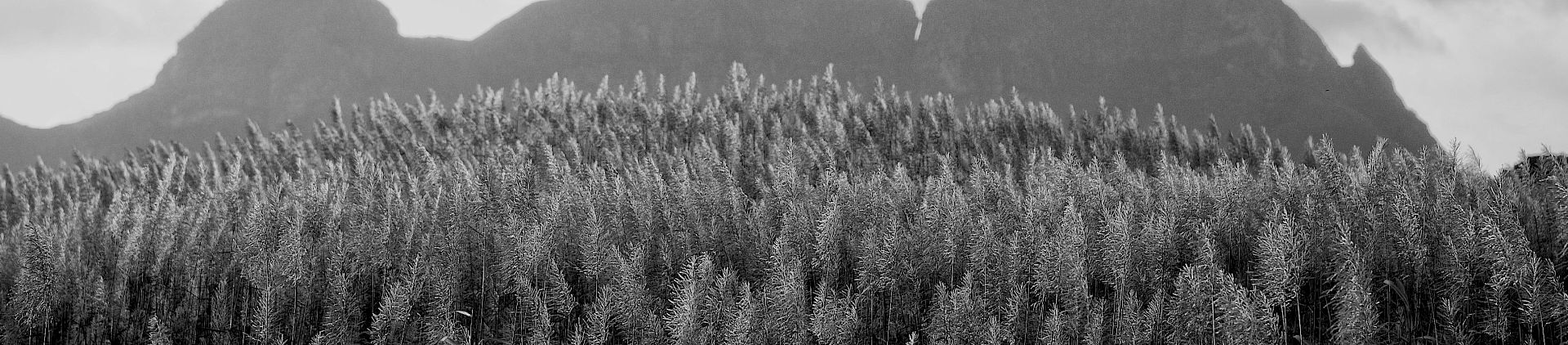
Cover image: Views of Mauritius by Khatleen Minerve

