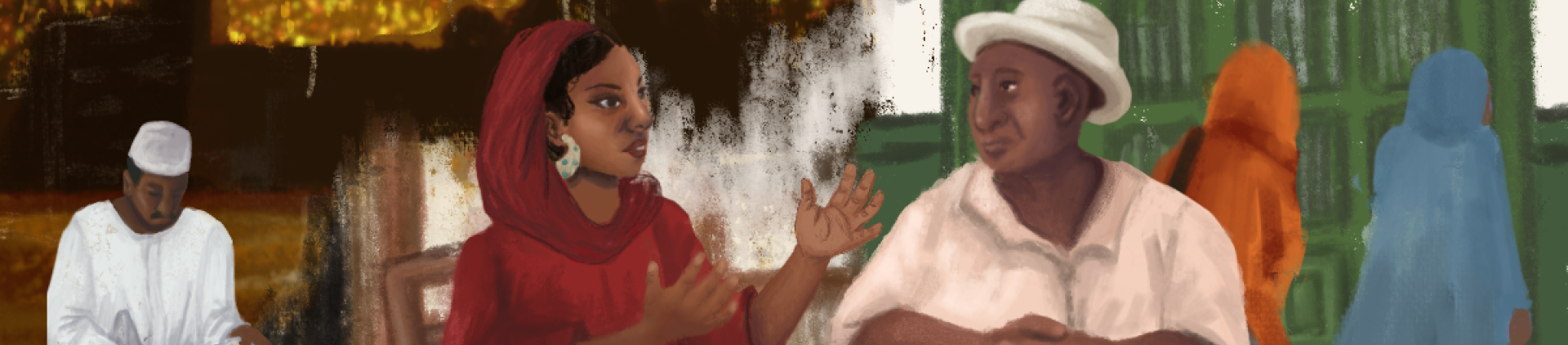
ANTIOQUIA by Safia Elhillo
In this sincere, vulnerable poem, Wasafiri's current International Writer in Residence Safia Elhillo describes a visit to Medellin, Colombia. She notes with wonder and softness how different memories come back to her – the feel of a mattress, the sound of a familiar Arabic – amid reflections on the different languages she carries.
You can also read Safia Elhillo's Lead Feature in Wasafiri 127: Solidarities. As part of her residency with Wasafiri, she is tutoring two online writing workshops in September. Book your place here.
Supported by a grant from the Open Society Foundations.
ANTIOQUIA
We arrive at midnight
to the mountaintop airport,
the city below hidden from us
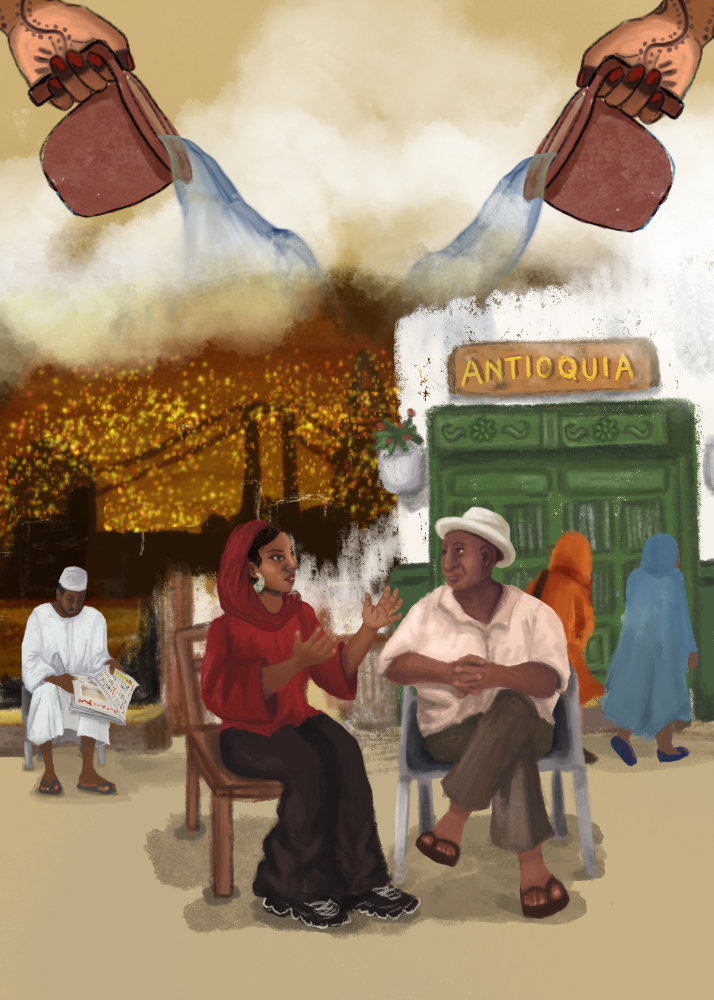
at first beneath the clouds,
stark and white against
the hour’s pitch sky.
One more turn and it reveals itself,
concave valley shimmering
like an evening gown, sequined
by thousands of lit windows.
The compressed mattress I descend onto
calls a memory into my body
from earlier places, a plastic mug dipped
into warm water from a bucket to bathe.
In the morning I feel too shy
to call up the language,
though I speak it enough and understand.
The pathways in my brain begin to heat
in the swirl of every word I’ve collected
across countries, collapsing me
into bed by nine each evening
from exerting myself in concentration.
In every poet I see my own grandfather
in soft slacks, collared shirt with short sleeves.
The ones who speak Arabic offer me
their memories of Khartoum,
time they spent there before I was born.
I show them recent photographs
and in their silence I understand
they too once stood inside these buildings
that no longer stand,
that they recognise the ghost cityscape
lost in the air around the rubble.
With our shared language they make me
their daughter, assign me books
for my vocabulary.
It occurs to me to be embarrassed but I have
no energy left over by the time I finish conjugating,
my every declaration punctuated
by a sheepish smile.
My Spanish without regionalism reveals me
as a textbook student,
language learned beneath fluorescent lights.
In Arabic I am unambiguously Sudanese,
my ق pronounced as a soft g,
my oaths and exclamations.
I was so worried before I came here
that I would not be understood.
Now my English feels frictionless and glib,
full of sense and devoid of meaning.
The old accents of my childhood raising themselves
across it like hairs on the back of a neck.


What shapes do solidarities take in these strange times we are living in? How can we find and forge solidarities when faced with genocides, human rights violations, and inexplicable injustices daily? Can storytelling play a role in liberation?
