'Must Work Last a Few Lifetimes?' In Conversation with Three Bookmakers (Part 2)
It is impossible to explore the UAE’s literary scene without probing its publishing landscape. The three bookmakers in conversation are located at seemingly different ends of this spectrum. Ahmad Makia, an author, editor, and publisher, has been working for over fifteen years with print: first with The State (2012–2013), whose four volumes count among some of the most significant publications at the time in Dubai; then with Hyperhouse, an editorial and publishing practice which experiments with books as material, physical objects. As for Zoe Patterson and Vamika Sinha, both in their twenties, they launched the online magazine Postscript during their time as students at New York University Abu Dhabi; the magazine ran from March 2018 to August 2023. In Part 1 of this conversation, the three of them think deeply about the ways they engage place and offer thoughts on a text’s lifetime and the necessity (or lack thereof) of an archive. In Part 2 below, they expand on these ideas while examining the wider UAE publishing landscape and its history.
This conversation covers further ground in addition to the topics covered in Part 1 of this interview in Wasafiri 122: The UAE Issue, also available via Taylor & Francis, under the title 'Abandon This Idea of Longevity'.
Ahmad Makia: What benchmark did you aspire towards when it came to Postscript, Zoe and Vamika? Did you dig around to see what similar journals were doing within and outside the Khaleej before you launched?
Vamika Sinha: I love the story of how we started, especially the heady … what's the word … the arrogance of youth behind it. What's interesting and fun about projects like these is that they catch you off guard. You work without any blueprint. It might sound like a startup founder's nightmare, but it is also what is so iterative and generative about it.
There were definitely points where we felt like a functioning publication company. Some team members tried to take us in that direction, and we tried building those frameworks like other publications. Unfortunately, there's only so much spontaneity, intuition, and passion that can fuel creative work. It requires labour, and we must talk about the conditions for that labour to come together.
Postscript was really hard to do without funding. If that had been on the table, maybe longevity would have been possible. Even when we had a bigger team, it just couldn't be sustained because there was no funding. It's hard to try to up the quality of the work you publish if you can't pay your writers. I’d want to see [structures like] the UK and the US have in the UAE as well: grants and incubators that nurture the production of literary work and projects. Not just writing residencies – which are new and happening now – but helping writers, editors, and publishers make projects without needing to have all these connections.
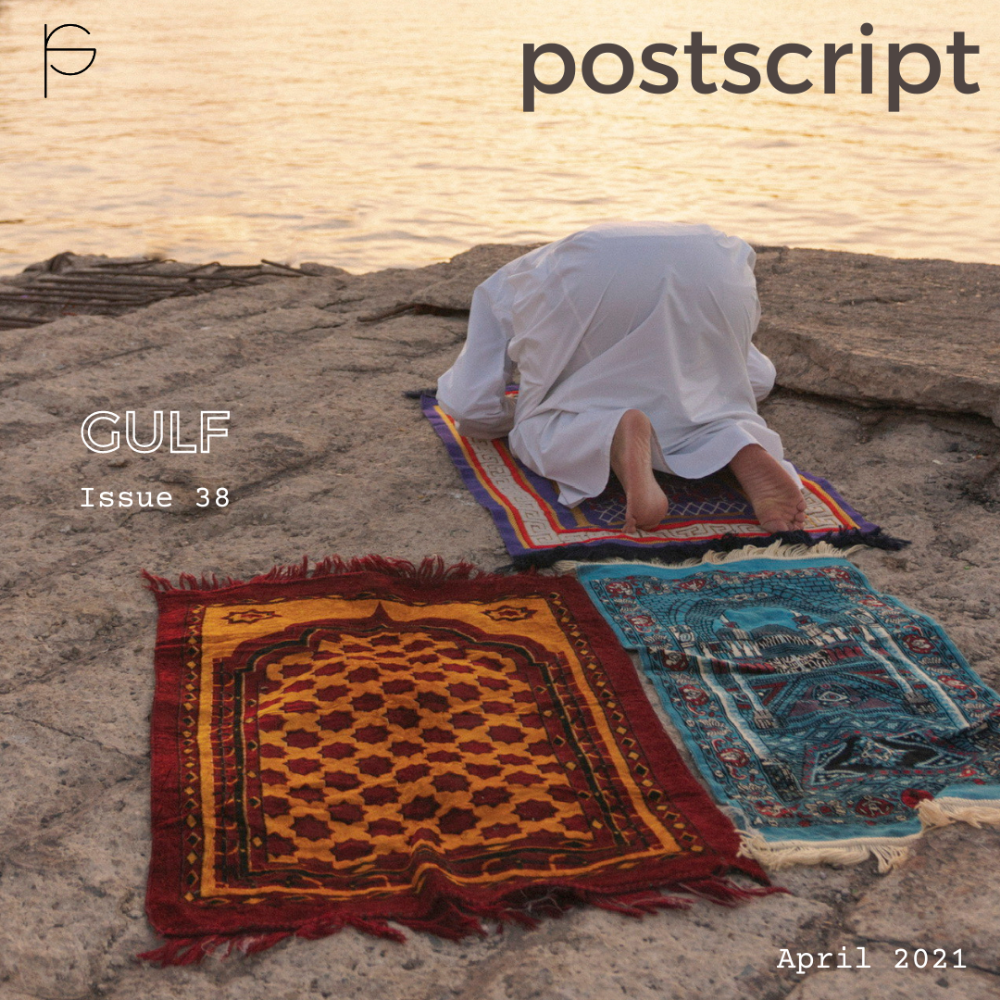
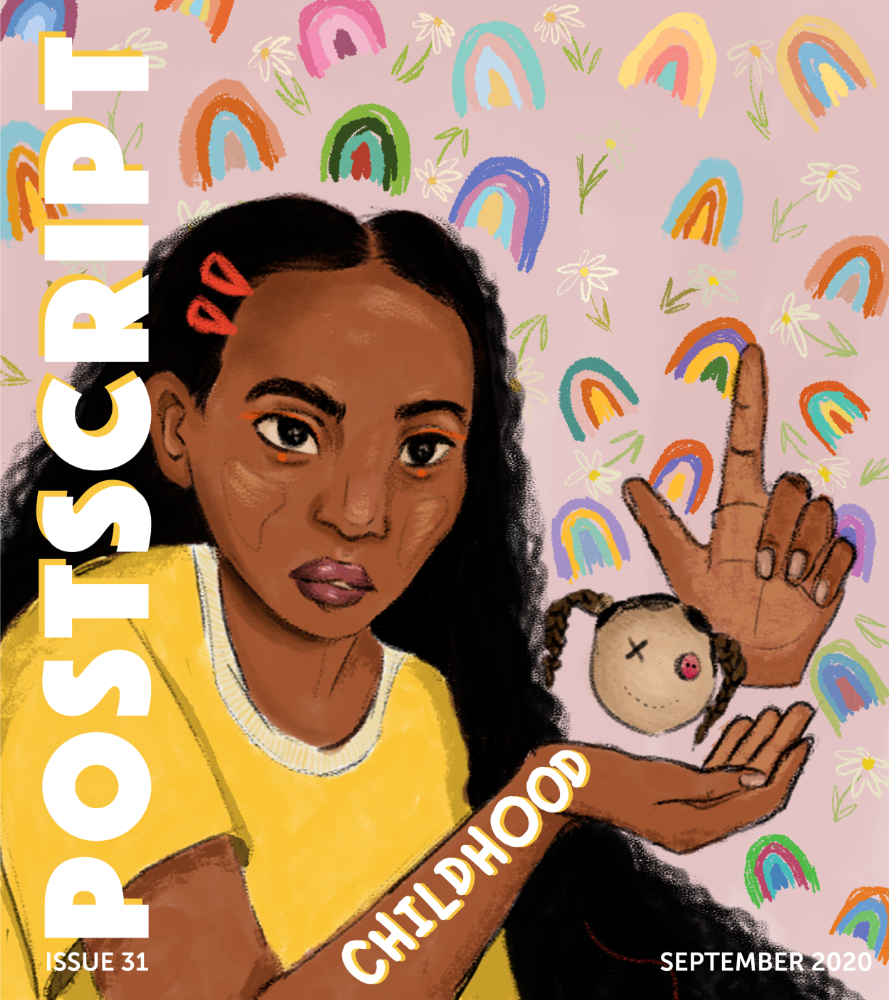
Zoe Patterson: We created Postscript with urgency and complete seriousness, like we were going to be the next thing. A lot of people hoped that Postscript would somehow have a windfall and we would make all this money from it, because there is this lack of funding for artists and it feels hard to break into that space.
This is going to sound cheesy, but Vamika and I, our friends in Paris, and later our team had such a solid friendship and interesting conversations that I would have done anything to sustain it all. It was so invigorating to think about work and talk about literature in that way; people were attracted to Postscript because of those conversations and that community. It was sad about the ending. We both got to go on and do other things, but that community was truly generative. Every time we had an issue, I was inspired to write something; that's still missing for me.
VS: Unfortunately, we just grew up, right? All the questions we didn't ask then are in our minds all the time now. You're thinking about your rent, your job, and wondering: how do I sustain my creativity amid my responsibilities? And it’s also about the landscape. We’re talking about the UAE, but even in these major global centres for art and literature that we’ve both moved on to, writing jobs simply don’t pay enough. Many publications are based in the US, but a lot of journals worldwide doing amazing work remain unsung; they still feel regional. Think about literary journals in Southern Africa or India, they're confined to those spaces in a way. We were trying to avoid this, to circumvent this with a very cosmopolitan, globalist idea while putting Postscript together. Ahmad, how has the history of literary publishing looked like to you in the UAE?
... there's only so much spontaneity, intuition, and passion that can fuel creative work. It requires labour, and we must talk about the conditions for that labour to come together.
AM: Around 2010-2011, there wasn't much of a scene in the UAE. There was a strong magazine publishing scene, but it was a lot more commercial. ITP Publishing was around, as well as Canvas and Brownbook, which has been recently revived. They were the main publishing platform with the byline ‘an urban guide to the Middle East’. But it was mostly lifestyle-oriented work and interviews with creative people. A lot of what you saw in the UAE was not so different from an airline magazine: beautiful fashion, beautiful architecture. But I think it was important.
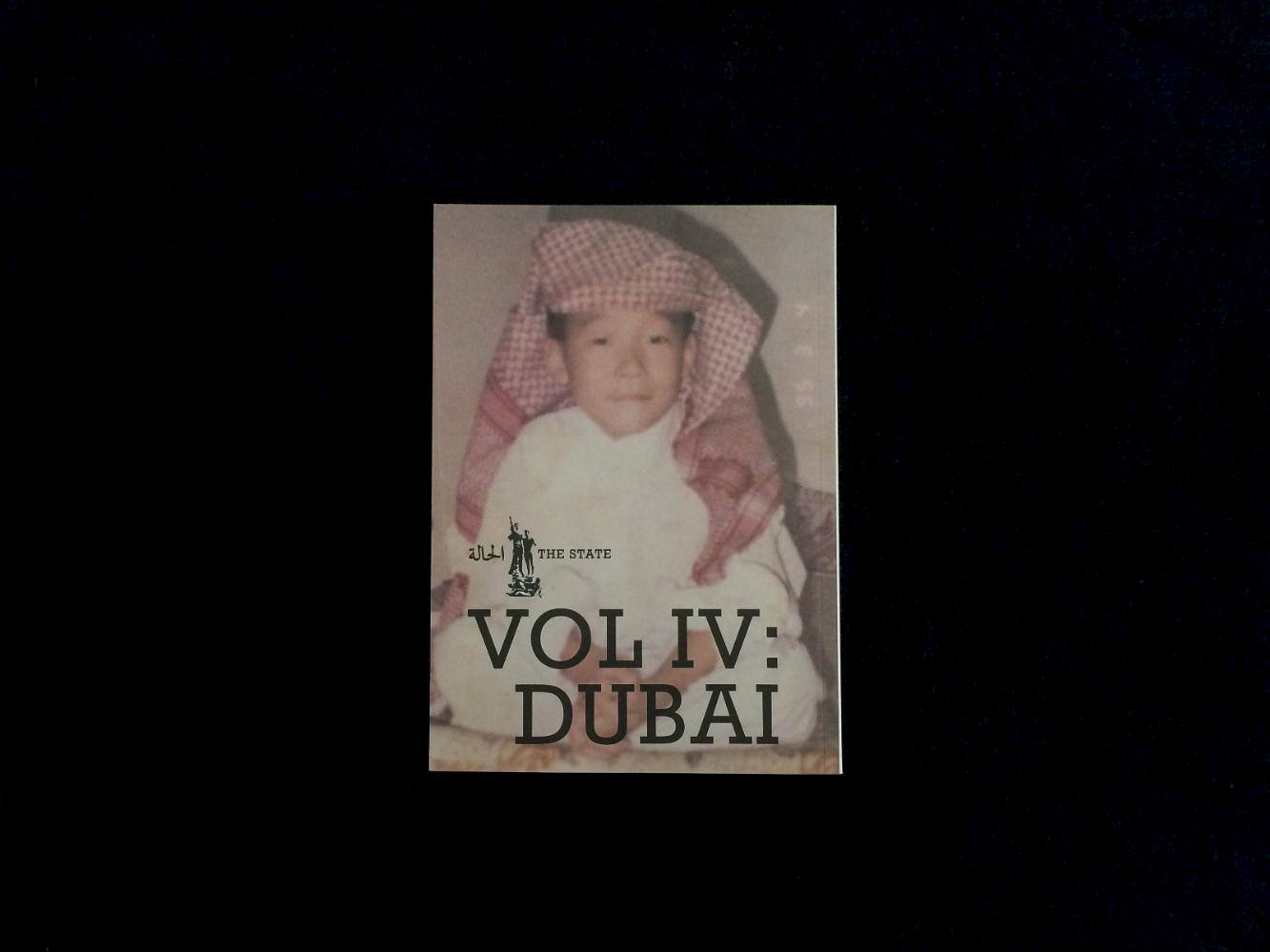
Here, we are talking about a specific creative expression and narrative. If you look at the broader publishing scene since the seventies, a lot has been happening in the UAE within the Arabic cultural sphere. There have been literary prizes, poetry prizes, novelty poetry recitals and competitions, but they are often forgotten when we think about the cultural scene here, because we're really talking about work produced in English. And that community initially looked very small, spread across the arts, fashion, culture, and publishing. Art Dubai was the main event. Sharjah, where I now work, has its own cultural ecosystem but it does not intersect with Dubai’s. The federation of the UAE is an extremely fragmented one rather than being a generative, happy story.
Bidoun was around as well, and I think it was part of the first ‘internationalisation’ of the UAE, particularly the Dubai art market. It emerged from the Iranian diasporic cultural scene, when the first galleries were opening, and they featured Iranian art. Formed within this diasporic context, Bidoun reflected a certain cultural class of Iranians who were tied both to Iran and the US vis-à-vis the UAE. At the same time, we can't really claim Bidoun as a UAE-based project. It had ties here, and they are now a non-profit company based in New York doing different things. Some of the people behind it were US-based and brought some of that rootedness to the project.
The people I work with now are other writers and critical thinkers who are tied to this place — people who did not necessarily leave another place to come here. We are a specific generation who went to school here, have memories from a young age, and eventually came back to start their professional careers. It’s a community of people who didn't leave the place like their parents did. This was the first time that non-citizens were around and asking: how do you talk about your experiences here? Or even just this condition of being of here, not here?
ZP: What does it mean to publish if you have the right or the privilege to move around? Do distance, return, departure, and then repeat, do anything? Do you think your time away from the UAE gave you a new lens for looking at it when you came back?
AM: Going back to what you said – how the UAE understands itself versus how the rest of the world understands it – is critical because a lot of what it means to publish or work from here is about how the rest of the world understands this place. This is not a very insider place, [uninterested] in what's happening in other parts of the world. On the contrary, this is a very foundational aspect of the UAE’s modern expression.
Distance offers a lot. Here, the idea of rootedness builds on a sense of settled-ness, on developing a citizen base or a settler mentality. So, distance is very important. We need to be moving around, migrating, and doing all kinds of things. I feel this idea of removing, returning, moving, and departure goes beyond creative expression; it is about sustenance and an understanding of the world too. Perhaps I’m taking it too far, but I really think all this infrastructure that keeps us from moving freely is modern warfare against us.
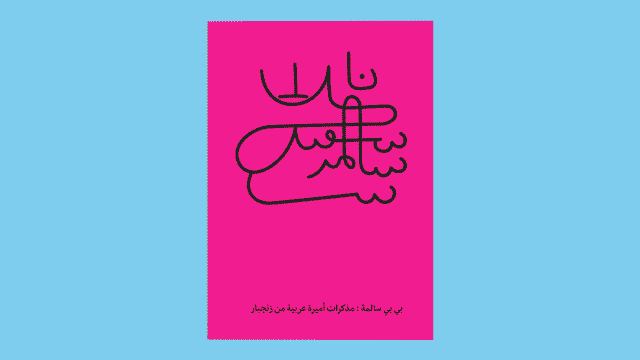
VS: I'm not from any of the places I’ve been in. I’m not even really ‘from’ my country, India, because I didn’t grow up there and don't live there. In the UK, I've met a lot of people who are British and the state is at the forefront of who they are. They travel for fun, but they don’t seem to have that yearning or desperation to understand something that is beyond where they are, which I think I have all the time. Personally, what mattered to me about being in the UAE is that unofficial, non-formalised ethos behind so much of its population: being here when you’re not of here. That’s always been part of my life. There's an openness to being changed by a place then, because your identity is not fixed in place.
AM: What does it mean for an online literary magazine to stop living online, especially if the magazine is taking a break? Or if, like a band, the magazine has given its last concert?
ZP: I know that a lot of literary magazines spontaneously collapse, especially if they only existed online: people get published there, the magazines live for years, and then the founders move on and stop maintaining the digital archive. This is the question: do you want to re-publish it somewhere else, which means taking it out of its original context? I would never want to do that to our contributors or to the team that worked on it at the time.
VS: But then you're also limiting the people who might reanimate that archive later or keep it alive or engage with it. So, I don't know what it means for it to stop running. I guess that happens every day, literary magazines die every day — but they still live, in a way, too.
AM: What does it mean to push the envelope when you're not sure where the line is?
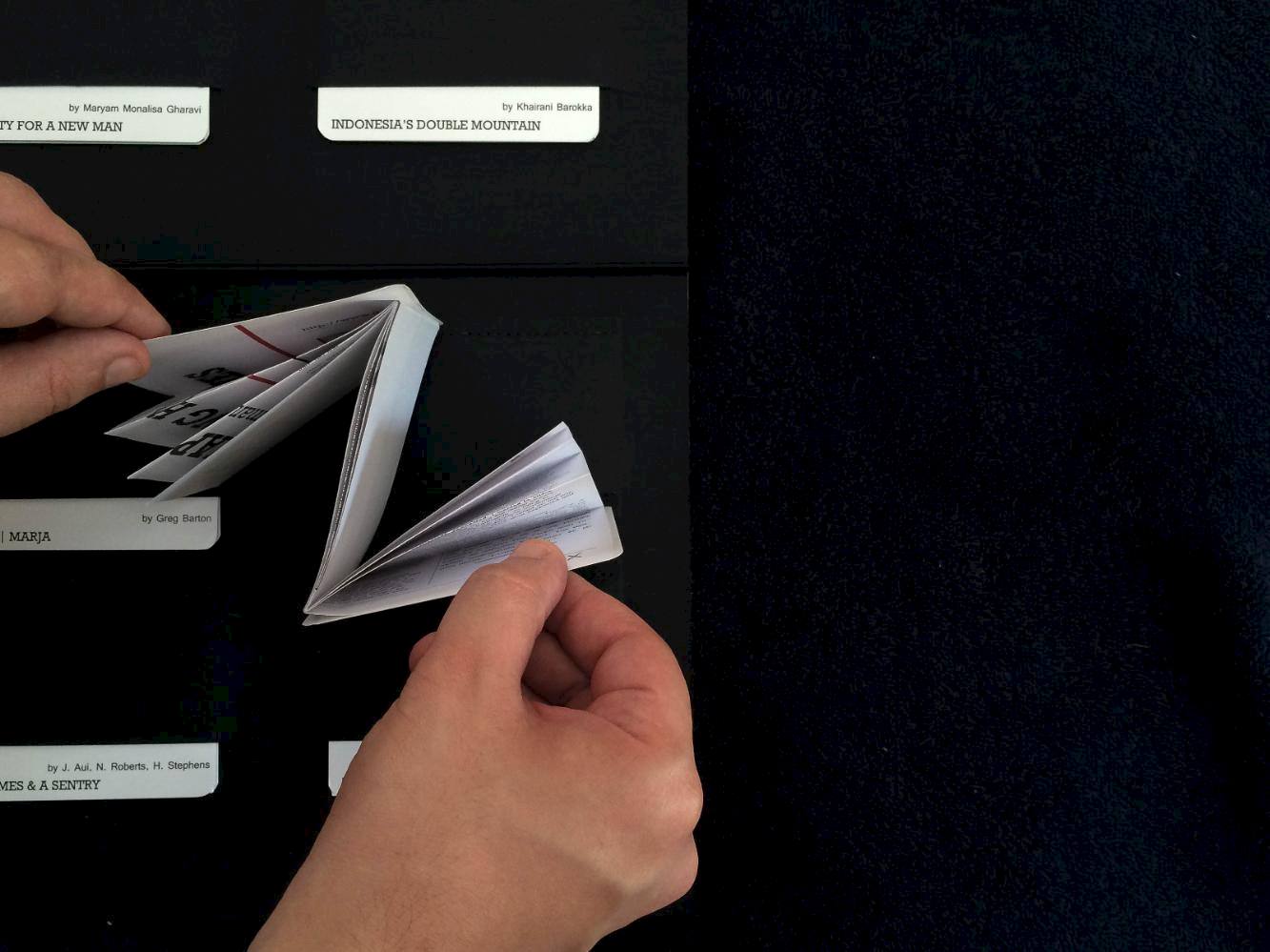
ZP: What's fun and playful about making art is that you can leave things up to interpretation: talk about one thing while talking about something else. And you can get creative about how you're going to speak about certain things. We had some pieces come in that were maybe not acceptable to a UAE audience. So, we would finetune them in certain directions so that they would be more acceptable, without killing the spirit of the thing.
VS: At least in the UAE, you know there’s a line, but not where the line really is. So, you’re making and going off vibes [laughs]. As Zoe said, we would tweak things or play with genre. It was creative, fun, and added something unique to what we did. In the end, you’re just trying to make good work, and sometimes that means pushing something — you don’t know where exactly, but you’re pushing.
ZP: People talk a lot about censorship in the Middle East, but in the current political landscape in the US, grants are being taken away from writers, they're being kicked off or no longer published because of the things they believe in. These institutions in the West are doing the exact same thing.
AM: It's really about holding up a dichotomy: 'look, we're free because these other people are not free.' It is to tell a certain citizen base that they have freedoms. And what un-freedom looks like is [apparently] what people do in the Middle East or elsewhere.
To come to some of our last few questions — could you speak about the visual register in the work you make as publishers and editors?
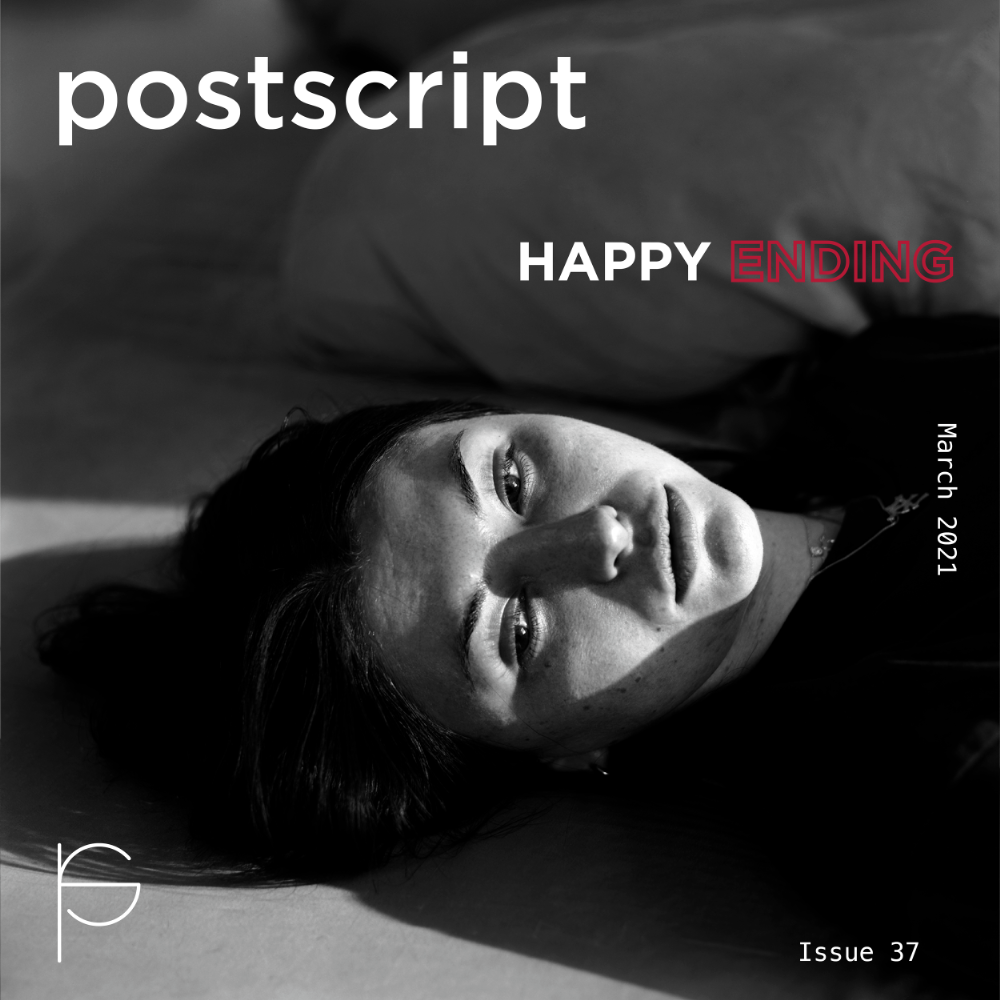
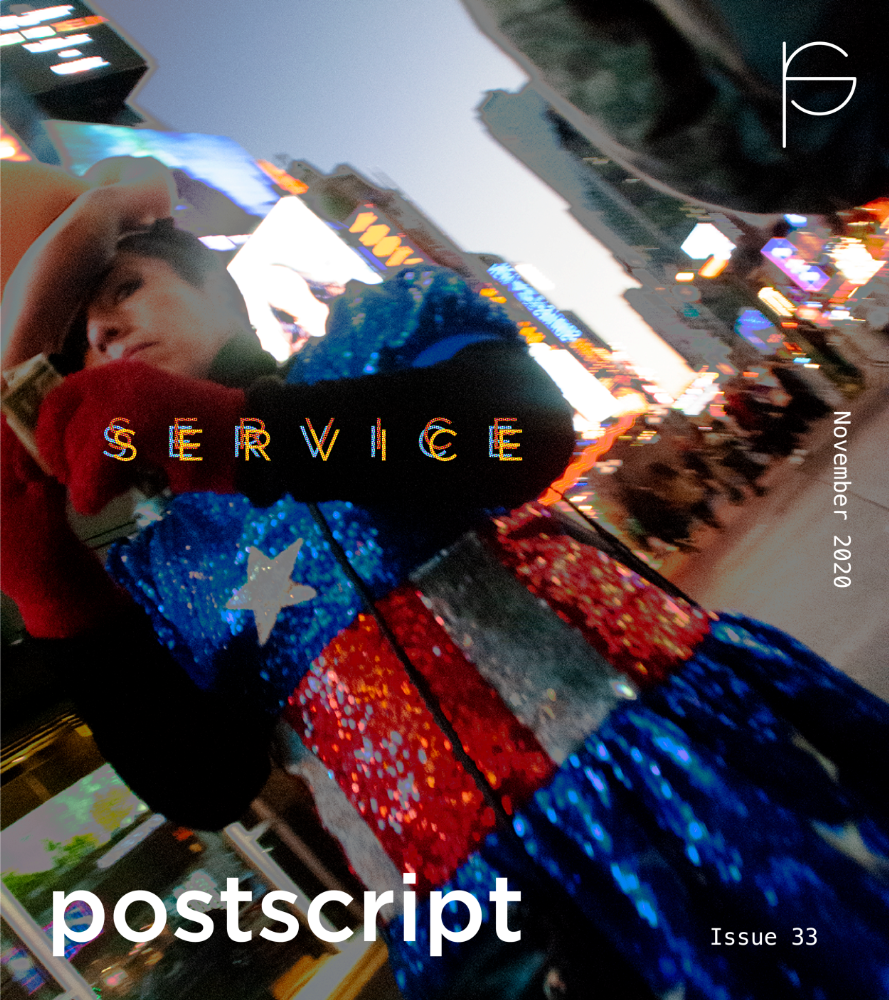
ZP: Postscript was always a visually focused literary magazine. Whereas some others will only publish text, we were always interested in the conversation between a piece of art and a piece of writing, and we wanted it to feel eclectic.
VS: We started publishing more art criticism as well, but it was always very visually oriented, that's true. It came from the idea that text is not a superior form. We wanted the conversational aspect of curating an issue to extend to art. We also started publishing videos, which was fun. You might have more to say about the book as an object.
AM: The book as an object very much comes out of the current technologies within the publishing industry. The possibility of disseminating text in a variety of formats, and so instantaneously, makes you think about what you’re doing visually, and the text you’re producing as an object. Around 2010, there was the discourse that the publishing industry was collapsing because of mass internet publishing. What it ended up doing was create hype around the book as perhaps a collectable object. What really died was the idea of the book as a way of mass communication. Before the printing press, bookmaking had always been more of a craft and an artisanal practice, and I feel there was a return to this idea. In terms of design and visuals, with the emergence of the Internet, a lot of print started to mirror digital effects. Pixelation and glitches became a new visual vocabulary that was included in print as well.
ZP: I hadn’t thought about how the digital world has impacted the offline visual world, that’s cool to think about. I’m also thinking about literature and the problem of writers trying to address a young adult audience. There's such a marked difference between how generations deal with digital space and social media. Some writers try to incorporate it, but it falls flat because there's something weird about trying to capture it. The digital space is always evolving, especially social media.
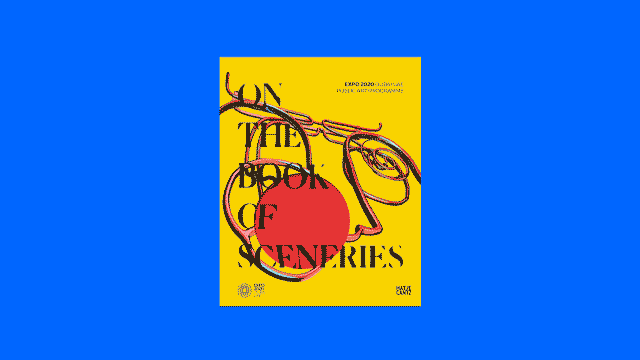
AM: When you have three bookmakers from different generations trying to have a conversation, where do you begin? I don't know if there's that much of a generational gap between us, but they're very different time-spaces, perhaps. When you read what people were publishing and writing here in the 1970s and 1980s, when Emiratis had just become citizens of this new nation-state and were experiencing modernisation, and how we're thinking about the UAE or talking about the UAE now … There's an abrupt gap or a dissonance. Maybe we can use this as a space to leave our concluding remarks. How do we feel about this?
ZP: It feels like we are asking the same questions over different times. Things change, but we've still been thinking about the same problems: archives, citizenship, cosmopolitanism. None of that has gone away.
AM: Yes. Apart from these specific initiatives coming out of a community, a time, or experience, is there something that you would like to see in the future, from a publishing standpoint, in the UAE? What would we hope to be different? Because we're talking about unrooted-ness, we're talking about cosmopolitan-ness, we're talking about migrants but not migrants, not being from somewhere, and I think we're finding a lot of shared things. So, do we hope to see something a bit more rooted coming out with the UAE, a new style and voice, maybe? Do you feel like that should continue or do you think we need something different?
ZP: If I could change something, it would be the financial situation for artists and writers. I don't think that the work people make or the voice in the UAE needs to be different. But there’s a need for more opportunities for those voices to be heard and for the archive to expand. It's moving in the right direction, but even now there's not as much of a push for literary writing as there’s value in the UAE for visual arts.
VS: I'm aligned in wanting that change. The universities and huge infrastructures already exist. We just need more opportunities, especially in literature. Those around the visual arts are booming; we need those opportunities to open up for narratives that are not just Emirati too.
AM: I think for me it would be opening up and thinking about the practitioner’s field beyond the artist, the curator – there's a lot of emphasis on that already. On artists in the very technical sense: you make work, you make sculpture, you make video work, but it doesn't have a transgressive way of doing things — whether it's through bookmaking, through literature, or through food or dance.
This interview follows on from Part 1 of the conversation 'Abandon This Idea of Longevity', published in Wasafiri 122: The UAE Issue.
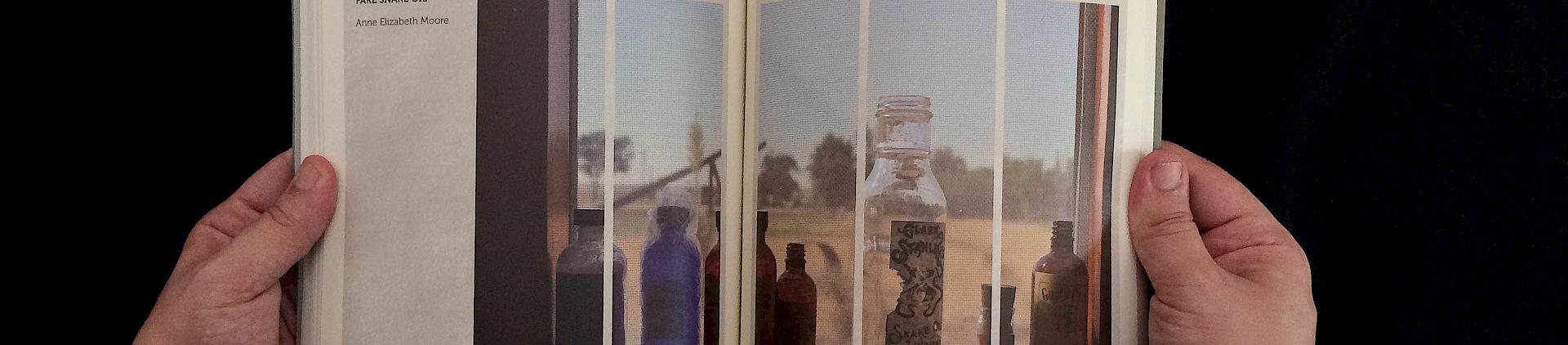
Cover image: The State, Volume III: The Social Olfactory. Photograph by Alicia McBride.
All images courtesy of the interviewees.


Our summer special issue, guest co-edited by Laure Assaf and Deepak Unnikrishnan, explores the United Arab Emirates’ literary and creative scene — away from monolithic representations of the region. Its contributors are makers – of books, arts, texts, and community – with ties to the United Arab Emirates and/or the Gulf. They are brought into conversation across generations and disciplines, reflecting on what this place is for them, and what it does to them. They talk about risk, memory-making, taxis, and televised dreams — pushing the lines, or treading them carefully.
