On visiting the Memorial de la traite de l’esclavage ... by Simon Peter Eggertsen
Simon Peter Eggertsen was shortlisted for the 2024 Queen Mary Wasafiri New Writing Prize in Poetry for a poem imagining the experiences of a nineteenth-century slave.
The 2025 Queen Mary Wasafiri New Writing Prize is open until 30 June 2025. Read the full guidelines and submit your work.
On visiting the Memorial de la traite de l’esclavage (MACTe) at Pointe-à-Pitre, Guadeloupe, I imagine the memories and questions of a nineteenth-century slave
I have marvelled at the deep croak of the puffed-up cane toad,
how it speaks even after the kambwa practitioner buckles its
mouth shut, curses it quiet for the night; danced the sweated
brown of the cocoa beans around the box, oiled them up for
the 50-kilo bag, how many it takes to make one stick of chocolate;
been awed by the imposing silk cotton tree, which stories the
duendes were telling the children’s limbo-hidden spirits that
might set them free; sensed the deep-green smell of chandon
beni — coriander, which village slave auntie first added its
shadowy taste to sloppy callalou; recalled the stories told
of the slaved agonies of the Middle Passage from West Africa
to the Caribbean in the late-1600s, complained sharply about
the murmuring absence of true African surnames among us —
those identities summarily erased by what has been called
the 'Crossings,' generic cargo descriptions, or, later, over
the years as we were by misfortune mixed, the names of
plantation overseers put in their place, when, if ever, we will
get our real names back; thought again of the drops of my dark,
red blood tainting the field debris on Bellevue Plantation many,
many years ago, how incautious the other cane cutter could
have been, wildly swiping his machete across my calf, cheating
me of work and food for eight days while I recovered, whether
that wet offering was sufficient to persuade the gods of the harvest
to increase the yield on that piece of land; dreamt, had I the privilege,
what it would have been like to rest a week in the mèt a mannyòk’s
(the patron’s) soft, pillowed, mohagany longevity bed, how many
days I would have had to sleep there in order to live a hundred
years; passed again near the historic pond, La Mare au Punch,
on Marie-Gallant, whether its waters still carry the rich taste
of the rhum and sugar we dumped there during the slave rebellion
we started nearly two centuries ago just as the debate began to
rage over when to abandon the practice of slavery altogether;
regarded warily the murderous waves swirling at the bottom of
the mawing donut hole at the sea’s edge, Gueule Grand Gouffre,
sensed them utter again, over and over, their siren-like call: 'jump,
cum in here, cum where its deepa, bluea, cum bade ‘n de salt,'
how many succumbed over the years to that beguiling plea, made
the dangerous leap, thinking it a path to freedom or an escape;
and, now, were I alive, would have been captivated by the sharp
impression of the slivery filigree of roots of our accursed fig tree,
the figuier maudit, entangling that vast black stone, symbol of
the weight and mark of slavery on all of us, at the Memorial ACTe
in Pointe-à-Pitre, how long the roots will keep on strangling
the biting inhumanity of the idea of one person owning another.
An’ ya swallow dat? Ah see it all wit’ mih own two eyes!
Ah feel it deep wit in mih own heve hart. Gwada, gwada.
The 2025 Queen Mary Wasafiri New Writing Prize is open for submissions until 30 June. Submit here.
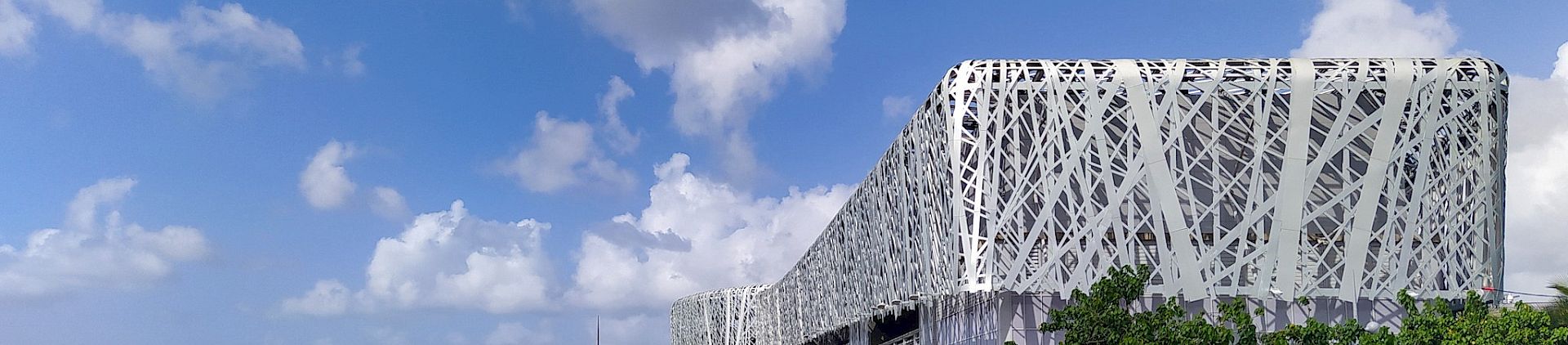
Image: Pointe-à-pitre ACTe Memorial

