Tectonic Shifts: Writing the Indian Far Right by Anu Khosla
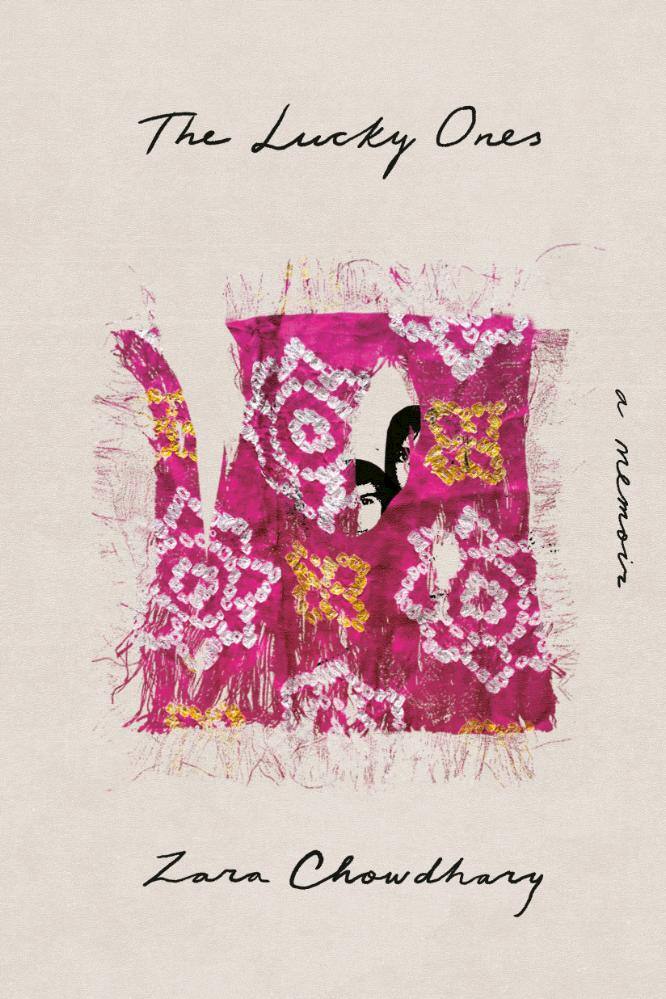
Amid rising fascism and anti-Muslim sentiment in India, this essay by Anu Khosla examines three recent books – Quarterlife by Devika Rege, Saraswati by Gurnaik Johal, and Zara Chowdhary's The Lucky Ones – and their depictions of the seeping, violent ideologies of Hindutva, or Hindu nationalism. This is an extract from our Spring 2026 issue, Wasafiri 125.
Download the full article for free during April 2026, or read it in Wasafiri 125 in print.
For four days last May, the three books which make up this review essay sat closed on my bedside, as the themes they consider – religious intolerance, violence confused for justice, the indelible scars of history – became all too real off the page. It seemed as if war was going to commence on the subcontinent. In a series of eerily familiar events, India launched a heavy series of missile strikes on their former compatriots in Pakistan. The engagement was a response to the Pahalgam attacks of a few weeks prior, when a group of armed terrorists killed twenty-six civilians in the Indian-administered, though long disputed, region of Jammu and Kashmir. It was difficult to read fictionalisations of the ways that the ruling party of India stokes nationalistic and religious fervour while seeing the violent consequences of those dynamics play out on our screens. All three books that I discuss here – Devika Rege’s Quarterlife, Gurnaik Johal’s Saraswati, and Zara Chowdhary’s The Lucky Ones – are about Hindutva, which means, in a practical sense, that all three are about India’s relationship to Muslim people. Hindutva can be read as a philosophy concerned with Islam as much as it is a philosophy concerned with Hinduism. As I watched the skirmish with fear, it seemed that most of the world was too busy with the concurrent papal conclave to notice what was happening elsewhere in the news. The moment resounded with a quote from late in Devika Rege’s debut novel, Quarterlife, when one of her most morally grounded characters, Manasi, considers, ‘Sometimes I wonder if … when we’re all caught up in the trivial, something tectonic isn’t shifting’ (309).
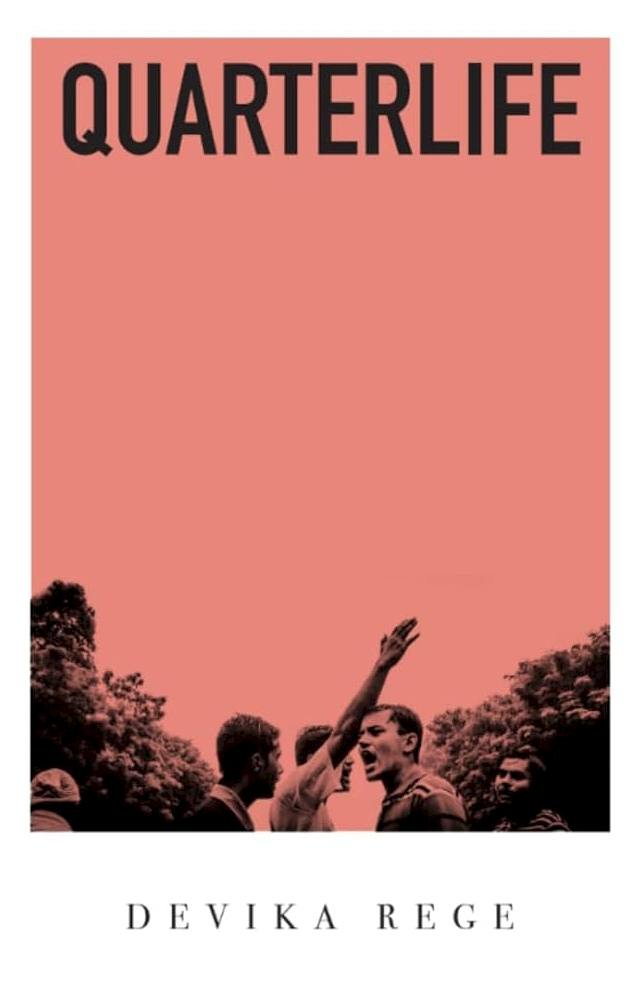
Quarterlife is a novel that seeks to understand how forms of social hierarchy – caste, class, and certainly religion – are sustained as organising principles in the structure of modern Indian society. It does so through the mindsets and discourses of its many characters. It is a polyphonic novel, exploring the voices of brothers Naren and Rohit, their American friend Amanda, and their coterie of diverse Indian pals, inclusive of their upper-class Muslim friend Ifra, their gay Parsi friend Cyrus, their closeted-lower-caste (and aforementioned friend) Manasi, and others. The novel opens as Naren returns to Bombay after years working and schooling in the United States. Amanda joins him, coming into the country to attend an impact fellowship in Deonar, a nearby slum famously home to the largest dumping ground in all of Asia. Deonar, a predominantly Muslim community, also hosts Bombay’s largest abattoir. Upon arriving in India, Amanda develops a piping relationship with Rohit and eventually inspires him to set off on a ‘dig-your-roots tour’ in the coastal Konkan region of Western India (63).
It was difficult to read fictionalisations of the ways that the ruling party of India stokes nationalistic and religious fervour while seeing the violent consequences of those dynamics play out on our screens.
It is on this roots tour that Rohit hears from his uncle, Ravi Kaka: ‘I always tell young people that if you don’t think about caste, it means you are upper caste, so please get off your secular high horse’ (108). Manasi feels she is able to keep her low-caste status a secret because of her friends’ ignorance about which last names denote which caste backgrounds — a modern convenience in India now. Rohit will wear his new insight like an unpatinated crown, one which is new, and not yet worn in. He will demonstrate his enlightenment by befriending a lower-class right-wing organiser named Omkar. It is this friendship that will cause tremors amongst his stable, urbane friend group. The vibrations will be felt beyond just their circle.
For Indians in the diaspora, caste can be difficult to understand. It seems that, to grasp it, one must be oppressed by it. Of course, someone must have a hand in constructing the system that the oppressed know so intimately. It doesn’t arise out of nowhere any more than a military skirmish does, but even those hands that mould the system don’t seem to know fully what they have created, because the system’s centre of gravity lies with those oppressed by it.
In addition to examining the voices of India’s young people, the novel conducts an investigation of the Bharat Party, a fictionalisation of the very real far-right ruling party of India, the Bharatiya Janata Party, or BJP. But this investigation is a quiet one. Quarterlife barely whispers about the Bharat Party until around a hundred pages in, echoing the way real-life political movements can seem to crescendo out from silence. The BJP’s roots and rise lie in the Rashtriya Swayamsevak Sangh (RSS), a far-right paramilitary organisation whose aim is to grow the Hindutva, or Hindu nationalist, movement across the country. (In Rege’s novel, Rohit’s new friend Omkar is a member of a fictionalised RSS.) Narendra Modi, India’s BJP prime minister since 2014, rose to the premiership on an economic message, but his time as Chief Minister of Gujarat presented an unequivocal commitment to Hindutva ideology. As Kedar, Rohit, and Naren’s cousin put it: ‘There was a choice … it was between weak governance and fascism’ (28).
For Indians in the diaspora, caste can be difficult to understand. It seems that, to grasp it, one must be oppressed by it.
Quarterlife is cerebral, with scenes of political debates on friends’ couches anchoring the rhetoric of the text. The book excavates the life of the mind to paint a picture of why the country is the way it is. In one such meet-up, Naren tells his friends:
‘History will always be curated.’ And, ‘This is the hypocrisy of the right,’ Kedar says over his rum. ‘You sing capitalism with one tongue and Hindu culture with the other. Keep opening your markets and see how long your Hindu culture survives’ (204).
As the men debate in the realm of the theoretical, ‘Ifra’s breath quickens. Insufferable, these men, their objectivity and for all that, their incredible talent for missing the obvious’ (205). Manasi may be the one low-caste member of the friend group, but Ifra is the only Muslim. The writing feels alive. Even coming from a different country with a different set of problems and dynamics, this kind of morally charged debate felt instantly familiar. These discussions seem to be the way we navigate a changing world of diverse perspectives.
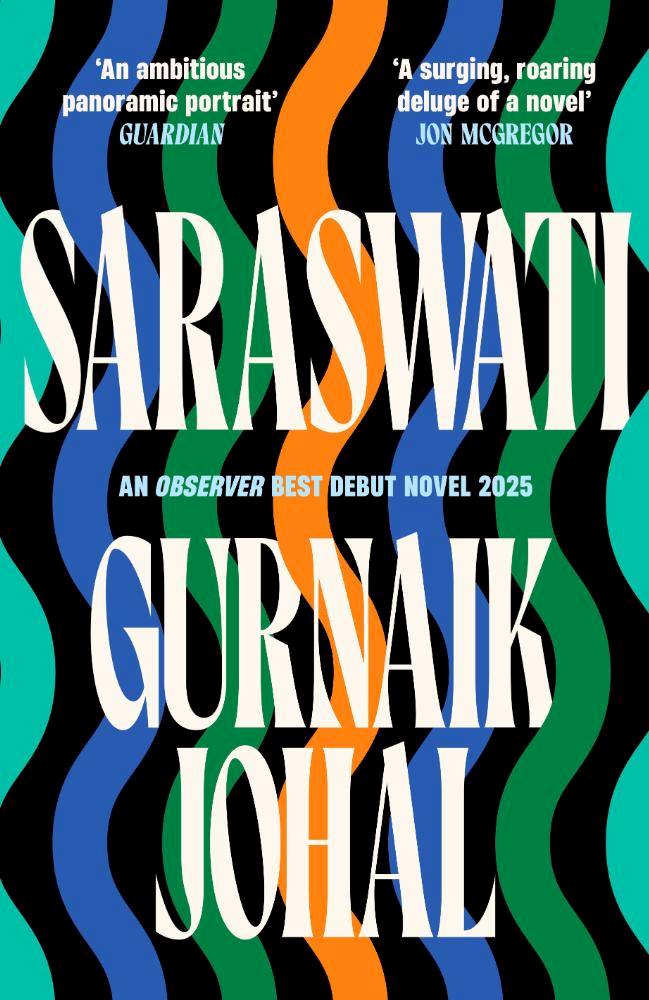
If Quarterlife explores the sentiments of those born and raised in India, Gurnaik Johal’s Saraswati looks to the diaspora. Just as Rohit goes on a roots journey, Johal’s novel opens with Satnam, a British Indian on his own journey back to the mother country, and to his roots. The book takes Quarterlife’s kaleidoscopic form and raises it one notch. Upon arriving in Punjab, Satnam discovers water trickling inside the perpetually dry well on his ancestral plot. He soon finds himself caught up in a local movement to unearth a mythological holy river, the eponymous Saraswati, said to have existed in ancient times on the Indian side of the Punjab region. The movement preaches of a Saraswati civilisation greater than the Indus Valley civilisation, and Satnam, seeking out his place in history, becomes susceptible to the mythologising. His gaze looks away from the Hindutva undertones of the project he’s wrapped himself up in, finding justification in his cause. As one character will have it: ‘A stretched truth … is still the truth. It just reaches further’ (43).
As the story unfolds, we see just how far stretched truths can reach. Saraswati reveals the way Hindutva stains all Indian society, even to the farthest reaches of the diaspora. Everyone is implicated: farmers, archaeologists, Bollywood stuntmen, musicians-cum-activists, among others. Johal’s use of a river is fitting, and not only because the Punjab region – where part of the Indo-Pak border lies – takes as its name ‘the land of five rivers’. The conflict over Kashmir in the north is heightened by the fact that the Indus river system originates, in part, in Jammu and Kashmir. In the wake of the Pahalgam attacks, the Indian foreign minister announced a suspension in the Indus Water Treaty. One can argue that Johal’s book nearly predicts these events. He explains that: ‘the river project was somehow an act of war: by diverting water from the Punjabi rivers that fed the Indus across the border, the Saraswati might cause a future drought in Pakistan’ (69).
Saraswati reveals the way Hindutva stains all Indian society, even to the farthest reaches of the diaspora.
Saraswati is a book about water and land rights, but under the surface we see that it is really about a struggle over the layers of history, and which of those layers will be visible in the present. Subtly placed yet central in Johal’s novel is the not-fictional Archaeological Survey of India (ASI), a government agency tasked with preserving and conserving cultural and historical monuments in the country. In Saraswati, the ASI becomes involved in the excavation of the river. The ASI, which dates to the British Raj, has been criticised in recent years for being far too entangled in religious politics. In 2018, for example, the Supreme Court of India determined that the ASI was not adequately maintaining the Taj Mahal, a mausoleum commissioned by Mughal emperor Shah Jahan in memory of his wife Mumtaz Mahal. The Taj Mahal is a testament to one of the world’s most famous love stories, but it is also a story of an interreligious India, making it a considerable inconvenience for Hindutva mythology. Johal points to these rumblings happening off the page, using fiction to uncover a truth some may not want to see ...
Read the full article here, free to access and download for the month of April 2026 only.
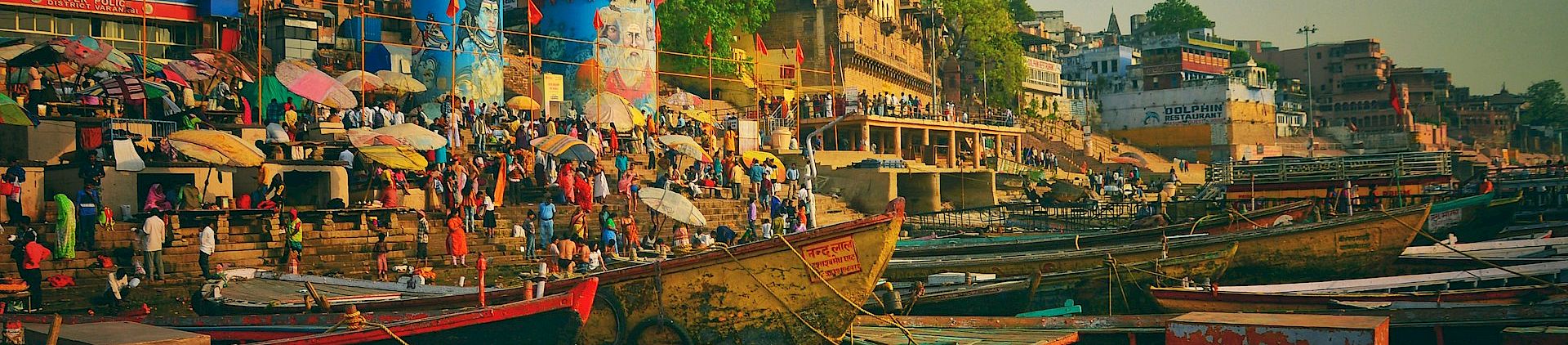
Cover image: Pratish Srivastava on Unsplash


Edited by our Deputy Editor, Vamika Sinha, Wasafiri 125 explores 'Living in the Melancholony'. The term 'melancholony' is used by artist Abdul Halik Azeez to describe a place that 'constructs itself for and through the eyes of the white westerner'. This issue applies the term, more broadly, to not only the structures, but the affect, of living under a colonial, racial capitalist gaze and legacy.
