Disobedient Bodies: An Interview with Liliana A Romero
Liliana ‘Lilo’ A Romero is a visual artist and DJ from Bogotá, Colombia, and a graduate of the Pontificia Universidad Xaveriana, Bogotá and the Camberwell University of Arts. She was featured in the Saatchi Gallery London Grads exhibition in 2020. Romero’s work is characterised by rich colours, bold graphics, and celebratory proportions. In this conversation with Amber Lascelles, a lecturer in Global Anglophone Literature at Royal Holloway, University of London, Romero discusses her exploration of Black women’s experiences and bodies in her work, the intersection between her art and her activism, and how her personal life and the women she admires inspire her artistry. They met at Contemporary 198, an art exhibition space in Brixton, London. During the conversation they also touch on Lilo’s new work-in-progress, a series of abstract portraits, and her involvement in the Latinx music scene.
You can download this full piece for free during February 2026, or read Wasafiri 124 in print, available to order now.
Amber Lascelles: Tell me about how your life has inspired your artwork.
Liliana A Romero: I was born in Venezuela. I moved to Colombia at two years old, so I feel mostly Colombian; I also don’t feel Colombian, because I was raised in Bogotá in what I call a ‘white bubble’. My dad, who is white, comes from a privileged environment. He was a banker from Spain, so he always had money for us to live. We lived a privileged, high standard in Bogotá, meaning I was surrounded by white and white mixed people. That made me want to be extremely white, you know? There was a part of my childhood that was self-destructive. I would whiten my skin, straighten my hair, the horrible things a child might do if they are raised in a white environment. My school was Euro- and American-centric. If you were blonde and blue-eyed, then you were seen as better than others — more good-looking, more intelligent.
I studied visual art at Pontificia Universidad Xaveriana, which was a big decision because I chose between medical school and art. My family wanted me to be a medic, but I was always really creative and expressive. I love print and posters. I always wanted to express my inner dialogue through talking to the public. I created a little, clandestine newspaper at university. This led me to understand that there were a lot of people who didn’t understand where I was coming from.
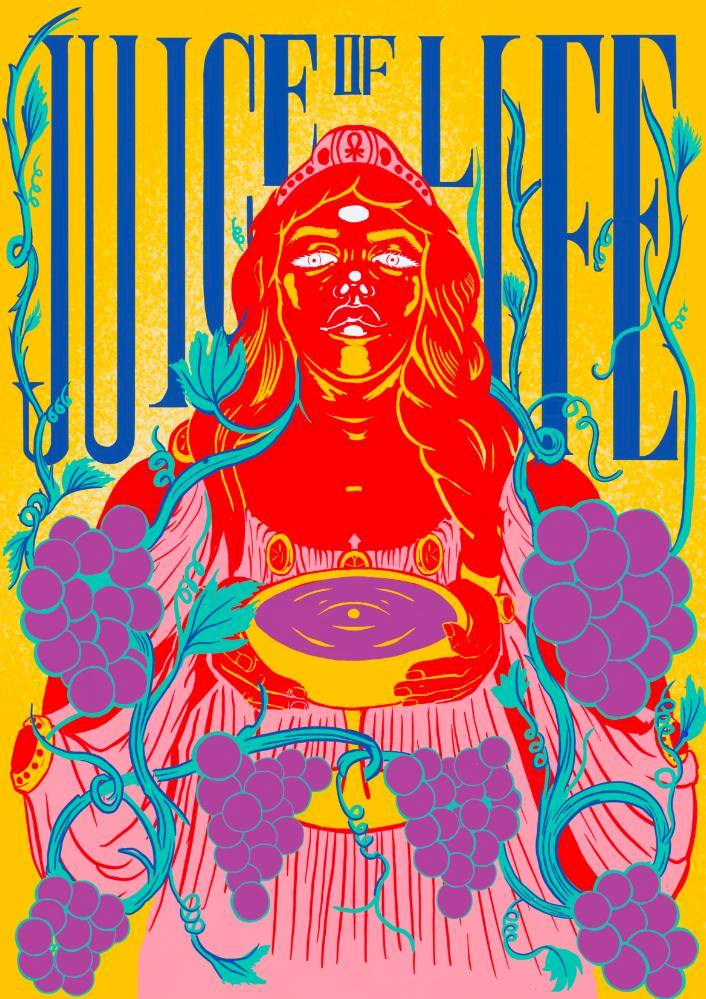
People from the Pacific coast thought I wasn’t ‘Black’ enough. I then devoted my study at the university to find out if I was Black — that was my thesis. I wanted to find out what it meant to be Black in Latin America — to others, and to myself. It really crushed me to find out that I was seen as the ‘ugly duck’, and oversexualised, in Bogotá. I wanted to see more Black women where I’m from talking about this. So, that’s where the ideas for my posters came from.
At university, we started off posting naked pictures of Black women around Bogotá, because you never see naked Black women …
AL: … well, you rarely see an empowered, sexy Black woman showing her body because she wants to …
LAR: Exactly. There were a lot of Black and mixed women who came to me and said, I have the same story as you! It is remarkable that when you are raised in a white bubble, it’s harder to have relationships with Black people, and this becomes another way of segregating us. It’s easier for us to be under the radar than to say: we are here. We are occupying space.
I tried to show my art in gallery spaces in my country, and I was always denied. Because my work is so ‘out there’, depicting ‘weird’ Black women, and Latin Black people aren’t allowed to be weird! The Black gallery spaces wanted more traditional art, more academic work, and I was too out there for the mainstream spaces. They didn’t want to be the ones backing the Black woman who was creating so much noise.
I wanted to find out what it meant to be Black in Latin America — to others, and to myself.
AL: So, you don’t fit the mould, you’re disobedient! It sounds like you feel that you’re not understood by the majority. Did you find that things changed in the UK, or did you experience similar barriers and reactions to your work?
LAR: When I first travelled to London, it was to learn English to study abroad. I was shocked to see Black people driving BMWs! There was a much bigger middle class here. Colombia was still twenty years back in time: racism and colourism were still really strong.
I finished my English Plus course, and I had the opportunity to study at Central Saint Martins and the Royal Academy of Art. It was beautiful, the number of Black artists that belong to these academies, and the information you can find about Black art is huge. In Colombia, you can’t find that many Black Latin artists in contemporary art that aren’t in folklore or dance.
AL: In London, then, did you eventually find a community of Latina, Latinx people …? I’m not sure which term you prefer?
LAR: Either, or both! Latina comes from a categorisation of the Latin language because of the Spanish colonies. I would really appreciate it if Latin people would start using the indigenous name, abya yala. It would show the pertinency of our lost languages.
AL: That’s so important. Did you find an abya yalean community in London?
LAR: In London, it’s interesting because of the union of different people from Brazil, Colombia, the equator, Peru. Everyone wants to find a strong feeling of belonging to their roots. At first, I only wanted English friends. But then, I started a group of ‘pirates’, mostly white mixed race people, and we became like a family: we were all interested in keeping alive something that was so Black it was almost extinguished. Bullerengue is a dance that I’m very passionate about. ‘Bulle’ means noise, ‘renge’ means dance: it’s the dance music of noise. Black communities were nostalgic about the Africa they were taken from: it’s done in a way of remembrance and activism, singing their songs, praying to their own gods, remembering wherever they come from, and to annoy the coloniser.
It has a beautiful history, and there’s a lot of people in London who are involved in it. I love it because in its composition, you can see the basis of all African music. The slow lumbalu, that is more emotional and ancestral, for mourning and ritual; the chalupa is more upbeat, for lullabies and washing clothes. But Bullerengue was seen as too traditional — people on the Pacific and Caribbean coast were more interested in reggae, high life, hip hop. Recovering Bullerengue was my hook that took me back to the Latin community in London ...
Read the full essay here, free to access and download for the month of February 2026 only.
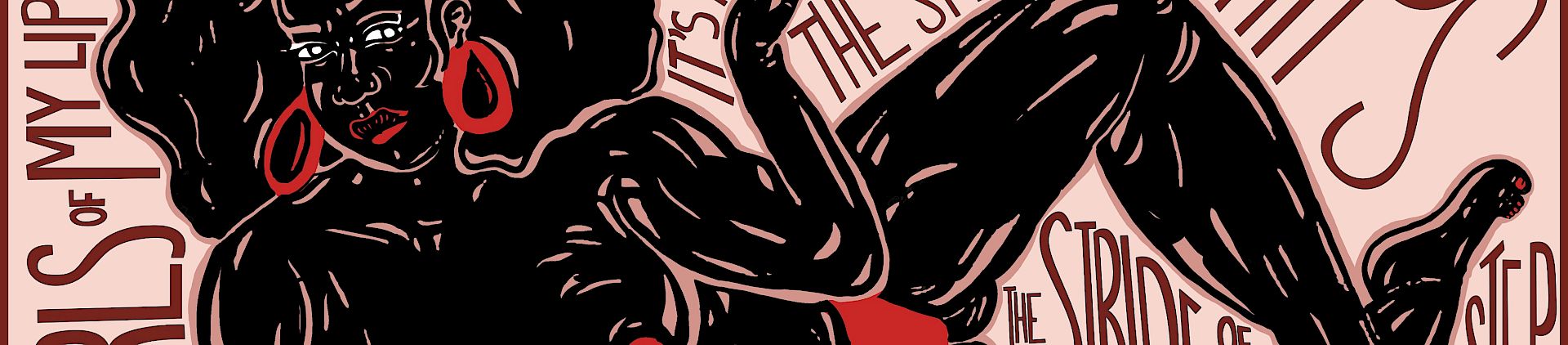
Cover image: 'Phenomenal Woman' (2019), Screenprint, 100 cm x 70 cm. By Liliana A Romero.


Our winter special issue, guest co-edited by Leo Boix and Karina Lickorish Quinn, critically explores the vibrancy and creativity of the British Latin American and Latinx communities which have been unjustly marginalised — both within Britain and beyond.
