Lesbians ‘til the End of the World: The Importance of New Imaginations
Brazilian writer, translator, and literary scholar Natalia Borges Polesso discusses how the composition of gender-dissident, racialised, and/or sick characters in fiction come together to imagine possible ends of the world – and therefore possible new worlds – by breaking normative expectations. Polesso reflects on the narrative choices in her own books, as well as the wider political changes that have occurred in recent years in Brazil, particularly the Bolsonaro regime's crackdown on queer and other marginalised communities and ideas as 'deviant' and 'dangerous'.
This piece is commissioned in tandem with Wasafiri 127: Solidarities.
Supported by a grant from the Open Society Foundations.
What are you writing about? is a common question directed to people who write. Readers, out of banal curiosity, expect that they can get a glimpse of the book still inside our heads, even if through a small crack. Often, we writers find ourselves trying to quickly string together an answer about themes, characters, peripeteias, and plots full of complexities, none of which may have a precise narrative order at that particular moment.
Thinking about the writing process is part of the craft, as is answering about it, even without much certainty. It is like a game. A rather dangerous game, to cite the title of Adília Lopes’s book of poems, Um Jogo Bastante Perigoso (A Rather Dangerous Game), originally self-published in Portuguese in 1985. In it, I found the following poem, titled ‘Arte poética’ (‘Ars Poetica’):
Writing a poem
is like catching a fish
with your hands
I've never caught a fish like that
but I can say it like that
I know that not everything that comes to hand is fish
the fish struggles
tries to escape
it escapes
I persist
I fight hand to hand
with the fish
either we both die or we both save ourselves
I have to be alert
I'm afraid I won't reach the end
it's a matter of life or death
when I reach the end
I’ll discover that I needed to catch the fish
to get rid of the fish
I get rid of the fish
with a sense of relief
I cannot express (Lopes, 2019, my translation).
Writing a short story or novel evokes similar feelings as in the poem above, specifically the sensation of doing something you have never done before, something so utterly brand new that you feel like a beginner again. Something slippery, unusual, bizarre. What are you writing about? I always doubt myself when trying to answer this. The metaphorical and metaphysical fish struggles in my hands.
One day, back in 2018, I decided I would answer this question more assertively, and I did it like this, handing over a fish: I am writing about lesbians at the end of the world.
The answer was so satisfying that the person just said: ‘Wow!’ And it took them a while to speak again. It seemed as if I had shared with them all the narrative anguish and uncertainties that inhabited me. The reply that I gave was enough for me, and they didn't ask anything else. They might have thought it was either so good or so bad, it wasn't worth asking further questions. I wasn’t planning on finding out. However, after the reflexive, silent pause, the person said: Even there? At the end of the world? At the time, Apple TV’s acclaimed sci-fi series Pluribus hadn’t been released yet, so I had no specific references for lesbians facing the apocalypse. It was my turn to fall silent.
We are the ones who raise awareness, who make explicit the end of the world
It wasn't just lesbians, of course. The intent, in this case, was to create a fictional world composed of a variety of people, including those sex- and gender-deviant and/or intersected by other social tensions: lesbians, mariconas, bichas, sapatonas, fanchas, fags, butches, sissies, tortas, non-binary people, trans men, trans women, transmasculine people, racialised people, creepy bodies (Greiner 2023), sick people, elders, children, animals, other-than-human, and, why not — even people who fit better into the norms of hetero-cis-normativity and who also exist with some dignity within my fiction. In this world with all these varied people, the plots would move smoothly from questions to development, and conflicts would flourish from narrative decisions. Altogether, they would form a large dysfunctional assembly, wandering in a collapsed world. Ever since I’ve given that short answer of ‘lesbians ’til the end of the world’, this feeling – a desire to create and depict multiplicity and multitudes – has spread throughout my literary practice and fiction and taken over my writing; the way I view literary theory, critical theory, and creative writing has become more and more complex and layered.
In the fourth edition of Perverts in Paradisei (2018) by João Silvério Trevisan, there is a chapter entitled ‘As patrulhas da moral e da família’ [The Patrols of Morality and Family]. In it, Trevisan revisits the events that, according to him, led to ‘the birth of the new “conceptual” right, expert in fake news and fond of the sensationalist methods of post-truth’ (2018, 472). In his recollection of the years 2016-2017, he cites the following: Jair Bolsonaro’s praising of the military officer who tortured former Brazilian president Dilma Rousseff during the 1960s dictatorial regime, in the voting session leading to Rousseff’s violent impeachment; the shutdown of the Queermuseum exhibition, led by the resurgence of opportunists from the group MBL (Free Brazil Movement); the false controversies surrounding nudity in the 2017 performance La Bête by artist Wagner Schwartz; and the physical and verbal attacks on philosopher Judith Butler during their visit to Brazil, when they were chased by a mob carrying pictures of them as a devil. All these events happened in a somewhat spectacular, media-driven sequence, undermining the progressive, collective process of reflection on LGBTQIAPN+ experiences and rights that had been gradually built up in the arts, as well as in the propositions of laws regarding education, for example. I must add to Trevisan's sequence of events the assassination of politician and civil rights activist Marielle Franco — a horrific crime and tragedy that weighed heavy on all those who believed in the power of her active, vocal, and representative work.
The backlash was almost immediate. Brazil’s right-wing and far-right factions appropriated the narratives of these events for their own benefit, while reinforcing heteronormative ideas of family, tradition, and property — one example is the TFP Movement, with TFP standing for ‘Tradition, Family, Property’, an organisation with Catholic ideals that has fought against the supposed dangers of socialism and communism in Brazil. This was all with the supposed intent to protect those they understood as ‘innocent’ people and their ‘innocent’ families. But what about us? What about the ‘deviant’ families labelled non-innocent? What about the Others? Such regressive discourse was further revived with the aid of religious media coverage (now mostly neo-Pentecostal), which then helped elect Bolsonaro. It was Bolsonarist imagination that produced lies and absurd fantasies like – please believe me when I say these words – the mamadeira de piroca, a penis-shaped baby bottle, or a ‘gay kit’ that would be distributed in schools. Pro-Bolsonaro media denoted the 'dangers' apparently haunting the family institution, and especially schoolchildren, specifically the sons and daughters of traditional, heteropatriarchal families.
The mistaken idea that there was a ‘gender ideology’ with a supposedly ‘terribly homosexual’ character took hold. This fantasy produced hatred towards more reflective forms of education, and further fuelled antipathy towards school teachers, who, according to Bolsonaro’s thinking, had become indoctrinators of leftist thought, many having been trained in universities described as balburdia, meaning a mess or bedlam. There were many instances of hatred against education systems and professionals, and women; neglect of school-age adolescents; dismantling of projects such as Escola sem homofobia (2011-2016), which were not approved and dissolved by Bolsonaro’s government; and increasingly enforced gender and sex education, purportedly in order to prevent sexual violence, itself a serious problem within Brazilian culture. Additionally, the precarity of teachers' work, among other factors, contributed to more acts of violence among youth. For example, a group of seventh-grade students carried out a knife attack on a teacher in a school in Caxias do Sul, the city where I lived. In Salvador, fourth-grade students attempted to poison a teacher. These are only two out of many other cases of violence in schools, including acts of poisoning, shooting, filming teachers to expose supposedly erroneous behaviour, and extreme bullying of other students – usually Black and/or gay, lesbian, bisexual, trans – even to the point of suicide. The final nail in the coffin was the massive defunding of higher education during this time, only worsening the cycles of dysfunction, misery, hatred, and violence.
Writing to Exist
It was in this context that I conceived the characters for my second novel, A extinção das abelhas [2021, The extinction of bees], written in 2016-2020. The story follows Regina, a forty-year-old diabetic, orphaned lesbian facing environmental, social, economic, and political collapse, while simultaneously trying to understand the ruins of her romantic, familial, and platonic relationships. The world as she knows it is gradually disappearing. Meanwhile, her mother, a neurodivergent woman named Guadalupe, lives with a circus troupe and has been travelling the world since escaping from home during Regina's childhood. Mother and daughter have a mirroring, dialogic relationship, even though in the narrative they never meet again after Guadalupe leaves home. In a letter that Regina never sends to her mother, she writes:
'Are there bees where you are? And seeds? Where the fuck are you? Do you also hear the word collapse every day there? I left social media. I never really liked it, and I couldn't take it anymore, even though I had hope that one day you would write my full name in the search and find me and send me a message, who knows, right, a happy birthday, a gif. Even so, even though I carried that little hope for a good while, I left. It's good that you're not here. Actually, Brazil is a pile of shit' (Polesso 2021, 17-18).ii
There is a kind of attention some people – marked by specific identitarian tensions – practise when perceiving the world. I am a lesbian at the end of the world; I am a lesbian professor and artist at the end of the world. I am aware of that. I’ve already seen signals of the end — gender violence, prohibitions, looks of disdain. It was with this great feeling of incomprehension, with these tensions, with anger and fear, that I guided many aspects of the books, short stories, and other projects I have written and participated in in recent years, such as the Atlas do Antropoceno, a current research project in which we investigate not only the images and imaginations of the Anthropocene in contemporary Brazilian literature, but also intersections with race, class, gender, sexual dissidence, and crip bodies.
The Anthropocene serves as a key and a kind of mesh (Morton 2022) for thinking through the complex web that makes us — by us, I mean we LGBTQIAPN+ people; we crip bodies; we who intersect and embody otherness in multiple ways. We are the ones who raise awareness, who make explicit the end of the world. We live through the end of the world.
The Anthropocene is not a concept free of contradictions and conflicts; indeed, it is a refuted scientific hypothesis. But I am interested in thinking about how social sciences and humanities thinkers have fragmented, stretched, and electrified this concept since its emergence in 2000, through Paul Crutzen and Eugene Stoermer — who dated its beginning to the late eighteenth century, considering the spike in atmospheric concentrations of various greenhouse gases that began then. Since then, several golden spikes have been suggested by various Anthropocene scholars in the field.
I, however, locate the event that inaugurates the Anthropocene with the invasion of the Americas, which necessarily means thinking about the kidnapping and expropriation of people from the African continent; the production of a great and continuous trauma of slavery and coloniality; the proliferation of viruses and diseases; and the genocide of native peoples in Abya Yala and the ethnocide of their epistemologies.
It means thinking of the destructuring and restructuring of human and non-human groups and their assemblies, of enormous biome changes, and the formation of plantation structures with casa-grande, engenho, and senzala, as a form of landscape engineering affecting both human and non-human ecosystems. Malcom Ferdinand has called this new and pernicious way of inhabiting the world ‘colonial habitation’.iii
What can fiction do in the face of collapse?
Paul Preciado, in his 2023 book Dysphoria Mundi, says that this syntagma exists so that we can understand those conditions described as dysphoric not as pathological or psychiatric, but as forms of life that announce a new regime of knowledge. To me, this seems like a good way to think against the idea of colonial habitation. I see it more as a reappropriation of knowledge, rather than a new regime. In my view, the planetary transition is and must be material, epistemological, and political; therefore, it must occur in the practices of everyday life and in our ordinary ways of imagining and reimagining the world.
Imagination is a great force for pushing at limitations.
Literature is an incredible imaginative device in the Foucauldian sense, and also specifically as an anthropocenic device (Polesso 2024). For Foucault, a device is a practice – whether discursive or non-discursive – a power arrangement that can be expressed in attitudes, speech, or theories. The device is also a kind of mesh that, at a given historical moment, responds to an urgency. It has a strategic function. In terms of literature, the anthropocenic device is a network of both discursive elements (texts, stories, characters, settings, plots, fabulations) and non-discursive elements (books, bookstores, literary events, cultural objects) that mobilise original reflections about the world and its compositions. It is a creative technology. So, as a writer and a reader, viewing literature as an anthropocenic device offers me a chance to articulate and organise categories of gender, race, class, and crip bodies to compose the dysphoric lexical field of another possible world — perhaps the ‘dysphoria mundi’ itself that Preciado discusses. This is the real function of lesbians at the end of the world. And no, I don’t think literature or art has to be useful — that is not the point. The point is we have been overwhelmed with white heteronormative imaginations and culture, so why not diversify?
Many writers and artists have been trying to articulate and practise alternative or reimagined visions of life using various political and technological strategies for a long time. My own idea of radical utopia, as Jack Halberstam points out in The Queer Art of Failure (2020), is that when I write lesbian characters, they are everywhere, in all the romantic, familial, capitalist, and ecological relations. They are not marginal. But Halberstam asks, what kinds of rewards can failure offer us? Indeed, failure allows us to escape punitive norms that discipline our behaviours and discourage us from our activism. Experiencing failure can preserve some of the anarchy of childhood, and disturb discourses of toxic positivity that instill in us various normoses (a concept describing a set of socially accepted, unhealthy habits that a culture treats as normal). So, if failing is pushing against the normal, let me fail with my lesbians.
Over time, it has made more and more sense to me that if lesbians were at the end of the world, we would go on ‘till the very end.
Against the Straight Mind
In the 1980s, Monique Wittig drew attention to the importance of language and language studies as a political instrument. She stated that discourse produced in the fields of social and cultural studies is inscribed in the heterosexual order and serves to oppress us gender-deviant people (Wittig). Insofar as they also set the references we share – to some extent – they also set the way we can (or can’t) create fictions, to the point where if a character is not markedly ‘different’ (lesbian, trans, Black, etc), they will always be read as a white, straight, cis, healthy man by default (Wittig). By producing literary subjects embodying intersecting identities of woman, lesbian, sick, Black, non-binary etc, we can break the tacit universalising contract of the straight mind.
I ... locate the event that inaugurates the Anthropocene with the invasion of the Americas
It is such a mind that produced the ‘praise’ my book Amora (2016) so often continues to receive. Some people come to me to say Amora is so good that they do not see the lesbians — they see only love and relationships. I wonder how they could not see lesbians in a book in which every single character is a lesbian or bisexual woman. Even though I am forced to mark out characters with specific actions, adjectives, traces, and relations, thus instituting difference within the narrative, this is no guarantee that those characters will be read, seen, recognised, understood, and loved as they are. Therefore, writing for the straight mind or producing imaginations within the meaning of this mind – without breaking the heterosexual contract – is doomed to normative failure, to the failure of desire itself, and perhaps too to the success of capitalist relations. On the other hand, writing by ‘asserting strangeness as a way to exist’ – as appears in the subtitle of Corpos Crip: corpos crip instaurar estranhezas para existir [Creepy Bodies: asserting strangeness as a way to exist] (2022), by Christine Greiner – is to inscribe oneself in Halberstam's notions on failure. To be deviant, and to express incomprehension or displeasure at the norm, is to collaborate in the production of political, conceptual, theoretical, and imaginative transformations.
There is yet another dimension of failure that occurs in the literary field and which questions the legitimacy of our stories as fictional creations. It is a question I hear frequently: Is it autobiographical? Or even: How much of the story is an autobiography? As if, because I am a non-binary lesbian person – yes, because lesbian for me has a political dimension of historical affirmation – I could only write about my experiences. As if I do not possess the capacity to fabulate and speculate, to create fiction that the norm or mainstream would call ‘universal’. Guess what? I am not interested in producing something universal. I do not believe in this so-called universality. I believe in the collective sharing of feelings and sensations, but I cannot be naive enough to think that these feelings would be understood by all people in the world. I know this social contract is white and male. There are geographical, cultural, racial, ethnic, age, economic, gender, subjective, and even ontological, among many other intersections that, once noticed, could never even produce something ‘universal’. A white, straight, cis man could pass unscathed in the face of this question, likely never even receiving it. He could be free to discuss other characteristics of his text, rather than biographical specificities. His biographical traits will always be sublime enough to be called universal. But a sexual or gender deviant person will have to answer, similar to Black and Indigenous people. All of us write from a very particular point of view; we have distinct imaginations and we research our own specific curiosities. This is precisely the magical power of producing fictions — it is a radical exercise of vulnerability, observation, and alterity.
What Can Fiction Do For Us All?
Writers such as Carola Saavedra and Amitav Ghosh both formulate newer, more relevant questions which they try to respond to in their work, specifically in O mundo desdobrável: ensaios para depois do fim and The Great Derangement: Climate Change and the Unthinkable: What can fiction do in the face of collapse? What can fiction do in the face of this great derangement we are living through, in the face of the Anthropocene? Since 2016, I too have been asking myself these questions, composing answers of various kinds within literary theory and creative writing, as well as in my general literary life.
A crisis of thought is associated with a crisis of confrontation, particularly with those whose lives have always been in the comfort of conformity to the norm, a norm that expects one to fulfil objectives that supposedly lead to ‘success’ (having a job, dating, marriage, constituting a legal family, having children, acquiring or consuming goods and services, financial speculation etc). To such people, admitting that perhaps the world will collapse before they can enjoy their most privileged privileges is a blow. The uncertainty of the future fractures the norm and fractures the expectations of those who have always done everything ‘the right way’. But what is left for the ones whose futures have never existed in such certain, linear ways? The existence of colonised bodies – those who are assigned female at birth, sexual deviants, homosexuals, trans, mentally ill, disabled, elderly, children, considered non-human, immigrants, and refugees – has always been strange; for us, the idea of the future has always been a series of unanswered questions (Preciado).
To be deviant ... is to collaborate in the production of political, conceptual, theoretical, and imaginative transformations
Within this collective global dysphoria, our places have always been uncomfortable. We feel sociopolitical and somatic tensions with more force, depending on our positionalities. Our futures have always been a form of speculative fiction — or speculative realism. Our bodies – subjects and objects of the most varied and oppressive extractivist processes – collapse more and more frequently, not limited only to failures, pain, and losses.
In a chapter called ‘From queer to crip’ – gathering the work of queer theorists who lived with illnesses, such as Gloria Anzaldua, Eve Kosofky Sedgwick, Emma Kivisild, and Jasbir Puar, among others, Greiner traces this intertwining of the queer and the strange:
'Cripistemology brings forth a politics of deliberate fragility (and unpredictability), which has nothing to do with remaining inert without action, instead, it focuses on the refusal to inhabit the neoliberal parameters of activation. It is another type of movement that emerges from opacities' (2023, 36-37, my translation).
Cripistemologies do not seek to suffuse disability discourse with narratives of positivity, overcoming, triumph, and empowerment; they rather state that bodies outside the norm assert strangeness as a way to exist, create a more varied repertoire of existences, produce other forms of relations, and stir expectations and desires for alternate futures. Literature produced by and for ‘deviants’ therefore helps create new possible spaces in the world not only to exist, but to desire and create new imaginaries amid the ruins of capitalism.
For my part, in my books I write lesbian and sick characters, like Regina and Nanda; old women, like Norma, Lupe, Marília, Alvina, Leci, Eugênia, the old Asna; racialised characters, like Pietra and Denise; non-binary characters, like Lu, Teo, Penélope; trans characters, like Lilo and Aurora, among so many others. I write these characters in situations where their sexuality and gender do not define or orbit them, but are merely features, a decision that brings necessary complexity and nuance to the literary scene overall. I also seek to compose imaginaries for expectations of good living or, as we say in Brazil, bem-viver. Preciado says that people who have a disease or live with a health condition can only heal through an intentional détournement of the semiotic machines with which we construct ourselves. Language therefore plays a huge part in the composition of our possible worlds.
It is evident that non-normative characters will be subject to non-normative relations inside and outside fiction, that is, in their created worlds and also within the reception to them, where they must be confronted by the world of readers. These relationships are established in shared, normative spaces and times. Whether it is the author's desire to or not, they will end up revealing or unveiling certain ways of being in the world. Some readers may feel a deep identification with these imaginations, while others may feel repulsion. Either way, imaginative possibilities will be activated, possibilities that not long ago were not so widely presented in contemporary Brazilian and other literaturesiv.
We must always consider our lexical, linguistic, and aesthetic choices as political, particularly as political possibilities. We are capable of composing a deviant semantic field, against colonisation; we are capable of exposing the colonial matrix of power; we are capable of imagining new worlds and even ends of worlds, if we wish. We are capable of having non-normative existences without fear of exposing their desires, complexities, and contradictions.
Which world(s) need to end for us to be fully seen and recognised?
Endnotes
i I think this is not the best translation for the original title, Devassos no paraíso. I would have preferred Libertines in paradise, since it is a historic recollection and the term ‘libertine’ is more comprehensive and less pejorative.
ii Sample translated by Julia Sanchez and unpublished.
iii 'Why We Need a Decolonial Ecology'. It comes from a certain way of inhabiting the earth, from some believing themselves entitled to appropriate the earth for the benefit of a few. Starting in the Caribbean, this 'colonial habitation' dates back to the end of the 15th century, when Christopher Columbus arrived in America (even though the plantation model dates back even earlier, for example in Madeira).
iv As shown in Dalcastagnè’s research about the profile of the Brazilian authorship from 2005 to 2014 (97.2% white; 70.6% men; 85% straight). Although we do not have further results, things haven’t substantially changed yet. For further information, see here.
Works Cited
Dalcastagnè, Regina. Uma história da literatura brasileira contemporânea: a narrativa. São Paulo: Todavia, 2026.
Ferdinand, Malcom. Uma ecologia decolonial: pensar a partir do mundo caribenho. São Paulo: Ubu Editora, 2022.
Foucault, Michel. Microfísica do poder. Rio de Janeiro: Edições Graal, 2006.
Ghosh, Amitav. O grande desatino: mudanças climáticas e o impensável. São Paulo: Quina Editora, 2022.
Greiner, Christine; SANCHEZ Thany (ilustrações). Corpos crip: instaurar estranhezas para existir. São Paulo: n-1 edições, 2023.
Halberstam, Jack. A arte queer do fracasso. Kindle Edition, 2024.
Lopes, Adília. Um jogo bastante perigoso. Belo Horizonte: Moinhos, 2018.
Polesso, Natalia Borges. Amora. São Paulo: Dublinense, 2015.
Polesso, Natalia Borges. A extinção das abelhas. São Paulo: Companhia das Letras, 2021.
Polesso, Natalia Borges. A literatura como dispositivo antropocenico: considerações acerca do processo criativo em corpos secos, a extinção das abelhas e perfeita tecnologia, de Natalia Borges Polesso. Abusões, Rio de Janeiro, v. 24, n. 24, 2024.
Preciado, Paul. Dysphoria mundi: o som do mundo desmoronando. São Paulo: Companhia das Letras / Zahar, 2023.
Saavedra, Carola. O mundo desdobrável: ensaios para depois do fim. Belo Horizonte: Relicário, 2021.
Trevisan, João Silvério. Devassos no paraíso: a homossexualidade no Brasil da colônia a atualidade. São Paulo: Objetiva, 2018.
Wittig, Monique. O pensamento hétero e outros ensaios. Belo Horizonte: Auténtica, 2022.
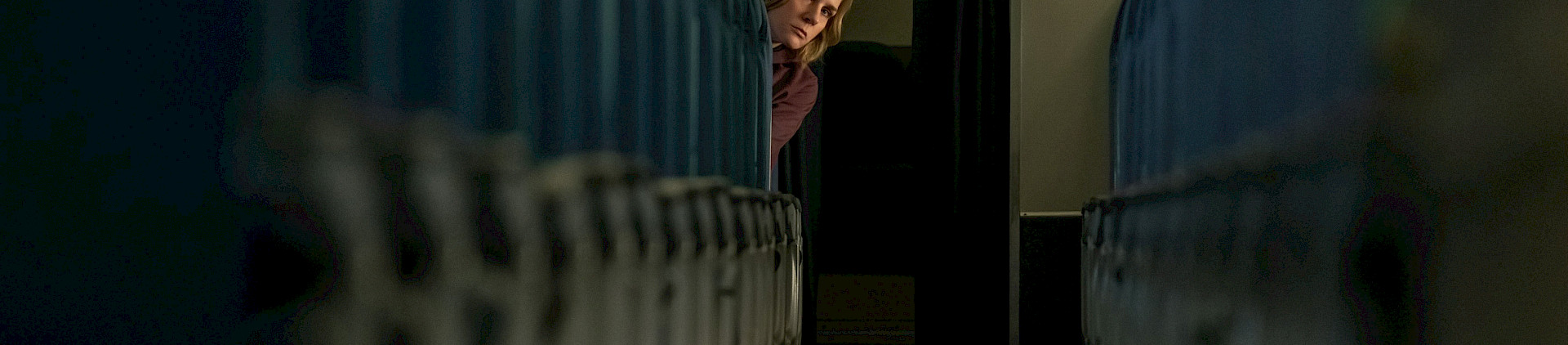
Cover image: Rhea Seehorn in 'Pluribus,' now streaming on Apple TV.


What shapes do solidarities take in these strange times we are living in? How can we find and forge solidarities when faced with genocides, human rights violations, and inexplicable injustices daily? Can storytelling play a role in liberation?
