Meditations — Esther King on Leo Boix's Southernmost: Sonnets
Esther King finds kinship in Argentine British poet Leo Boix's Southernmost: Sonnets (Chatto & Windus 2025) about the experiences of migration and living between multiple cultures and languages. She reflects on the 'push and pull of belonging to different places' and how that has shaped her understandings of home, geography, partnership, family, and grief.
Wasafiri’s Meditations series features creative and personal responses to literature, asking writers to seek connections with themselves, their own work, and any texts they may be reading. Lying between criticism and life writing, each Meditation offers a unique angle to view the writer and the reader, and the world around them.
Supported by a grant from the Open Society Foundations.
It was late September 2025, and it had been raining all morning. My partner and I were staying in a cabin in the woods, which we had rented for the week, near Achouffe, a small town in the Belgian Ardennes. The area is known for its beer and two bottles were waiting for us in the mini-fridge when we arrived. We had spent the first two days hiking under low-hanging grey skies, following the trails along the Ourthe river. In the evening, we huddled around the fireplace, drank our beers, and read. That day, as it poured with rain, I was ready to hunker down but my partner was antsy. ‘Let’s go to the war museum,’ he suggested. ‘Just for an hour.’ We had just watched Band of Brothers, the HBO series about the American soldiers who fought in the Ardennes in World War II. Bastogne was a twenty-minute drive away; we could go see the trenches.
It didn’t occur to me until later, as we walked around the Battle of the Bulge memorial – a hulking granite structure shaped like a five-pointed star – that this place encompasses the three countries with which I answer the question: 'Where are you from?' Earlier at the museum, we had watched video testimonies of locals who had survived the December 1944 siege of Bastogne, many by hiding in their basements. They spoke with real emotion about the courage of the American soldiers who fought for their freedom. They looked familiar, like I could have crossed them at the supermarket, or in the car park just outside the museum. They looked like my neighbours in Brussels, the couple whose five children had babysat my brother and me, each one in turn, until they graduated high school.
I thought about this excursion again some months later, when I printed out a copy of Leo Boix’s Southernmost: Sonnets and took it with me to the café that had just opened down the street. The café is called ‘Mauvais Élève’, or ‘bad student’, with the menu scrawled on a chalkboard. There seemed to be no heating and I huddled in my coat and scarf. As I read, my pen underlined and circled, looking for echoes and notes of dissonance. Boix's history, at least in one way, mirrors my own: an Argentine British poet, Boix was born in Argentina and moved to the UK at twenty. Like me, he has lived in multiple cultures and languages.

The push and pull of belonging to different places that Boix describes in his poems, and the search for answers in recent and distant history, is deeply familiar to me. I was born in Brussels to a German mother and American father. My grandparents – my father’s parents – were academics who travelled widely in Asia, long before it was comfortable or common to do so. They lived for many years in Hong Kong, then in Oxford, and felt at home in many other places, including Kansas and New Mexico. Every year, they bought a round-the-world plane ticket, a tradition my grandfather continued well into his eighties. My German family was easier to pin down: my mother had grown up on an island in the North Sea, near the Danish border. Her many siblings either didn’t leave the island or stayed within the country; by boarding a plane to Kansas to study English literature, on a campus where she would later meet my father, my mother was an outlier in her family.
My parents set an example; I always planned to leave the country where I grew up. I expected to do what my parents had done by moving to Brussels — build a new life somewhere else, in a country where I didn’t yet belong. Instead, my leaving was only temporary. I travelled, studied, tried out other lives. But I came back. And for a long time, that untidy trajectory felt unsatisfying. I felt as though I was looping back into the past, or away from the future. I felt some level of rage, even, against the pull of home.
The sonnets I sat down to read on that cold day in December seemed untraditional; although most of them have fourteen lines, the rhyming scheme is looser, and the rhythm less rigid and more disjointed than the iambic pentameter. Southernmost: Sonnets is Boix’s fourth poetry collection, the second written in English (two are in Spanish). There are 100 sonnets in the collection, divided into three sections, which move back and forth between different types of history. One is personal, filled with intimate details of Boix’s childhood, his parents, and the specific world they inhabited in Buenos Aires. In an early poem, Boix imagines his mother telling the baby in her belly – him – secrets, her thumb caressing 'the stretching skin' (7) of her stomach. He can’t help but skip ahead in time, telling her not to worry: he will sing to her at her hospital bed when she is ill the same songs she sang to him as a child. In other sonnets, Boix reaches further back beyond his family, imagining himself as part of a more expansive world, one whose perimeter was drawn by the many explorers who plundered the vast continent of Latin America.
In one of the few poems in the collection with a title, '(The Unholy Family)’, Boix composes a dark, disturbing origin story for himself: 'At least as unholy as my mother, she brought me home/wrapped in newspaper sheets. Bad news this time' (37). He places his family amid a darker legacy of violence, exodus, and forced silence. The movement back and forth between the early 'explorers' of Patagonia and his own exploration of the world – his early forbidden yearnings for 'men in leotards, dancing bluebirds' (38), and excursions into Buenos Aires with his father – create an unsettling, greater whole. Here is a young boy trying to free himself, but also to make peace with an unsettling history.
This tension of the unsaid in Boix’s poems gives the collection a sense of energy — we move across time, languages, and species. There is often also a kind of magic. The places Boix evokes seem to exist as much in the abstract, plucked from memory, stories, history books, and dreams, as they do in the physical world. As Boix alternates between the mundane and mythological, they inevitably bleed into one another. The year after he arrives in England, he works as a newsboy and the job is tedious. But one day, while doing the rounds, the van driver looks at him and says, 'Let’s pray together. Here. Right now./Think of three wishes and la virgen purísma will deliver' (47). Boix prays to stay in England, and to become a poet.
I travelled, studied, tried out other lives. But I came back. And for a long time, that untidy trajectory felt unsatisfying.
The poems that drew me closer, asking to be read again and again, were the ones grounded most obviously in tangible details — of objects, rituals, memories of precise moments in time. Perhaps because I have been a collector of these things myself. Like Boix, I have my own 'diorama for an immigrant' — the manila folder of postcards sent over many decades; a typewritten account of my parents’ wedding on the island where my mother grew up, written by my American grandmother in a letter to her own mother in Kansas; photographs. In every place I lived – from my college dorm room in Maine, to my student accommodation in Cape Town, to my tiny sublet in New York – I tacked up postcards purchased at museum exhibitions I had visited, often with my mother. Images that reminded me of home, even if they depicted something else entirely. In Boix’s poems, there is 'the thrill/of arriving at the city’s largest market with our empty bags' (24). And the memory of the way his mother would watch telenovelas, 'often by her side, a big pot full of green beans to be peeled,/her school papers, a lighter, a pack of her long slim cigarettes’ (25). I heard, in those moments, the echoes of what I missed most when I was away from Brussels: the way the stairs creaked in our house, falling asleep to the sounds of my mother watching the news downstairs, trips to the butcher or the fruit and vegetable seller, that had all seemed so mundane at the time.
In French, people sometimes say someone has 'disappeared' to say they have died. The first time I heard the phrase, I thought the person in question had vanished under mysterious circumstances, that their absence was a case to solve. My father's ‘disappearance’ came after a long illness — but it also happened abruptly, mysteriously, between one day and the next. I had just turned twelve. Afterward, I sought out photographs and examples of his handwriting, the notebooks he kept, the postcards he had sent me, a Post-it. I was concerned not only about losing him, but also about losing the world he had created, with his specific habits, and preferences, and elegant, slanted handwriting.
I also recognised, perhaps because of the ‘disappearance’ I experienced, a foreboding in many of Boix’s recollections, a sense that paradise, like childhood, coexists with its opposite: a loss of innocence, a fall into the abyss. On a summer vacation at a luxurious hotel in Rio de Janeiro, with 'gargantuan breakfasts' and 'sombreros’, his father 'spent all the money he had' because he had just learned that his wife’s illness was a death sentence (32). He decided to shield the information from her.
Here is a young boy trying to free himself, but also to make peace with an unsettling history.
This undercurrent struck a chord with me. Though it would have been impossible to articulate at the time, a feeling of precarity had emerged within me when my father had fallen ill with cancer, a silent knowledge that the family he and my mother had so painstakingly created could now collapse. And when it did, the bluntness of that grief sometimes made moving through days feel like moving through water. So much went unsaid; we didn’t have the words for it.
In the specificities of Boix’s memories – and their undertone of violence – there is an effort both to document and to anticipate loss. To pinpoint the moment when that loss of a place, a childhood, a sense of certainty, first began — and to peer into what happens next. I have done the same. Lying awake in bed, afraid of the demons he has been told come at night, Boix writes: 'I often saw those monsters hovering above my head, omens/of a life that would come, of tragedies, journeys, and oceans’ (12). All lives involve, to some degree, tragedies and journeys. Not all, however, involve the kind of ocean crossings that compel a person to leave something behind.
*
Boix travelled through South America after finishing high school. Alone in a tiny hut by the Pacific in Ecuador, gazing up at the stars, he realised, ‘There was no El Dorado; their vast skies were also ours’ (42). I underlined this last part several times. Was it a feeling of disillusionment; had he seen 'enough'? Or was there something hopeful in that realisation, that wherever he was, he was looking up at the same endless space?
Living in England, Boix writes about making a new life with his 'Argentinian baggage’, but it’s a weight he seems to carry lightly (54). He doesn’t live 'between' two languages, but 'in two languages’ (54). His experiences are multiplied, not divided. With his partner, who he initially mistakes for Swedish, but who is in fact Argentinian too, he builds a life of shared rituals, archives, and stories. When they spend a week isolating together during the COVID pandemic, they ask each other both 'how do you feel today' and '¿Cómo te sentís?' in their two languages (63). Their past in Argentina is not the same – his partner left Buenos Aires when he was four – but it is a shared experience, a shared language of belonging to more than one place at once.
In the specificities of Boix’s memories – and their undertone of violence – there is an effort both to document and to anticipate loss.
I did not formally learn any of the languages that I speak. I assimilated them from my parents, my classmates, and the movies we watched in three languages. My mother spoke to us in German, my father in English; the only rule they enforced was that we didn’t switch languages in the same sentence. For the first few months of kindergarten, I responded to any question directed my way in French, with an emphatic ‘no’, until I started to understand what they were saying. I associate different things with these languages. English was, of course, the ‘cooler’ language; the language of the films we watched, the popstars we idolised. There is nothing more comforting than speaking to my mother in German. Time felt a little different on the island where my grandparents lived, dictated by the tides, the weather, the harvest. The weeks I spent there always did something to still my restlessness. French was school and daily life. It became rusty during my years in the US, but when I moved back, it became the language in which I first put words to my grief, and in which I fell in love. (Perhaps these two things are related.)
Switching between these languages could be confusing, not because I would forget a word or make mistakes (which I did), but because they were keys to different ways of thinking or being. In the US, I missed the person I was when I spoke German and French. But English is the language in which I read, write, dream, think. I don’t know that I could live in Brussels if I didn’t work in English, if I didn’t have that tether to another world. My partner, who is French, also speaks English, and it’s a relief to be understood in more than one language, to feel known a little more completely.
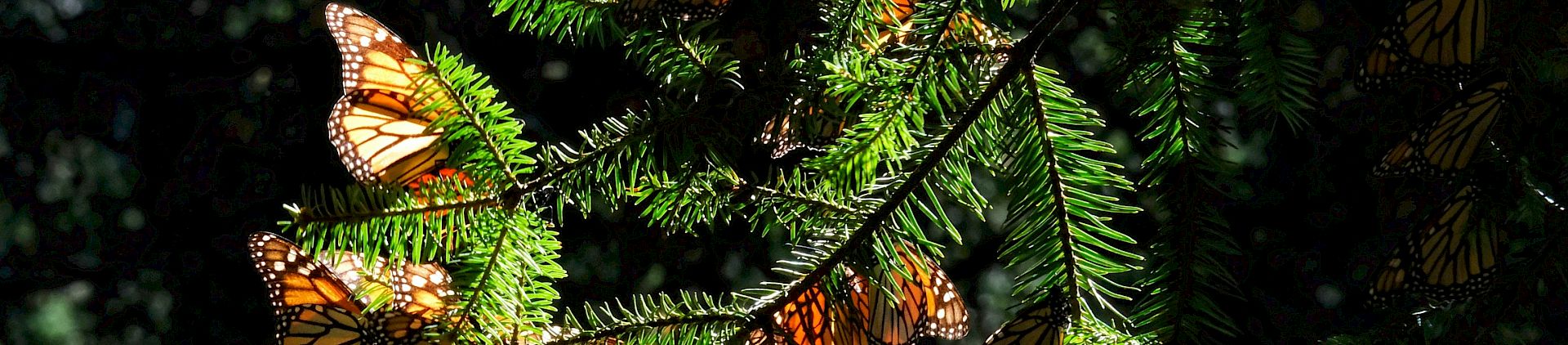
In 'sonnet #45', Boix recounts reading the Butterflies and Moths in Britain field guide and learning that most of these species are in fact nomadic. He imagines their impulse to move, to pursue a better place, as an 'inner compass always at work’ (56). In another poem on another continent, when the day’s light fades, the toucan is 'forced to retreat/to the forest’s heart, or perhaps beyond, to that all-divine/place where she’ll shift into another being and be complete’ (65).
This 'shape-shifting' may also belong to the person with more than one country, more than one language, who is able to invent themselves and their idea of home, sometimes over and over again. The trick, then, is to know when the cycle is 'complete’. To be able to point and say, 'that’s home’, as Boix’s partner later does upon spotting the white cliffs of Dover as they approach on the ferry from France (104).
I wasn’t entirely honest, earlier. That day, gazing up at the memorial in Bastogne, I wasn’t the one to realise that I was standing at the intersection of my three countries. It was my partner who pointed it out to me, who asked gently what I was thinking. I felt at home then, but I’m not sure how much it had to do with geography, with the sideways rain and the muddy fields of the Ardennes. Perhaps it had more to do with the fact that we had made this strange pilgrimage there together, accidentally, curious about what we might find.
*
In 'sonnet #58', Boix writes in conversation with his partner: 'what to do with all these memories,/if it’s worth holding on to photos and papers, if by doing so/we kill what we’ve lived and seen’. Is it not better 'to live in a present that flows'? They have been clearing out papers before moving house; we don’t find out what is tossed and what is kept, but what remains are 'messages to our future, time machines of sorts’ (69).
I don’t look at my ‘diorama’ all that often, but it is there. Mainly, the images and objects it contains are placeholders, reminders of a sense of history and belonging that is ingrained, like the languages that became mine as a child.
My father’s brother in Maine has recently been retracing our family’s genealogy. He sends me documents with his findings: who came over on the Mayflower, who is buried where. I feel a thrill at seeing these names on a page, mapped on lines that trace these people – my ancestors – through generations. But it’s only when my uncle sends me his recollections of his and my father’s childhoods across Asia, the US, and Europe, that I feel a greater sense of recognition and immediacy, even as they are so different from my own.
These days I think of home as a place where multiple countries and versions of ourselves can exist alongside one another; the self that speaks one language and dreams in another, the self that yearns for another country yet feels – strangely, finally – at home where they are.
Above my desk, I keep a photograph of my father taken in profile, as he holds a camera and adjusts the lens. Behind him are sand dunes and scraggly tufts of grass; beyond him, I can’t say. I often wonder what he is pointing his lens at, what he is watching, and whether the picture he took exists somewhere. I keep this image on my wall, a reminder to look in the direction he might have pointed.
Cover image: Ricardo Olvera


Our winter special issue, guest co-edited by Leo Boix and Karina Lickorish Quinn, critically explores the vibrancy and creativity of the British Latin American and Latinx communities which have been unjustly marginalised — both within Britain and beyond.
