
Mirarse Negro en España / To See Oneself Black in Spain: Memory, Archive, and Resistance in the Work of Rubén H Bermúdez
Dantaé Garee Elliott explores the work of visual artist and author Rubén H Bermúdez, specifically his photobook Y tú, ¿por qué eres negro? (And You, Why Are You Black?) and documentary, A todos nos gusta el plátano, which record self-representation of the Black diaspora in Spain — a country where whiteness is positioned as the norm.
This is an extract from Wasafiri 126: Impossible Returns — The Spain Issue.
Download/read the full article for free via Open Access.
‘I am aware of my blackness when I go to school and the others tell me so. When they sing me the song about the Conguitos and the Cola-Cao. Boys and girls in a circle. Nocilla, Chocokripis’ (Bermúdez 24).
Introduction
Rubén H Bermúdez's career as a photographer and cultural organiser is distinguished for its aesthetic and ethical dedication to representing Blackness in Spain. Race in Spain constitutes a complex issue, primarily due to the country’s denial of racism, which is expressed and enacted through language, humour, and a colonial legacy that emphasises and depicts national identity and the concept of the nation as devoid of race. From a personal perspective – as a Black woman who has resided and studied in Spain – living as a racialised individual in Spain involves experiencing what W E B Du Bois described as ‘double consciousness’, an awareness of both the recognition and suppression of Blackness, alongside a mythical fixation with whiteness as the cultural norm. Sara Ahmed, in ‘A Phenomenology of Whiteness’, characterises this silence and negation of race within societies as a means of orientation that organises bodies, spaces, and affective relations. Many racialised individuals encounter this persistent internal conflict when residing in a society that affirms cultural diversity while eschewing the centrality of race and corporeal identity. Rubén Bermúdez’s photobook, Y tú, ¿por qué eres negro? (And You, Why Are You Black?), exemplifies this conceptualisation of the orientation, organisation, and regulation of bodies, where the racial component remains external, confined solely to migrant, African, or Latin American people.
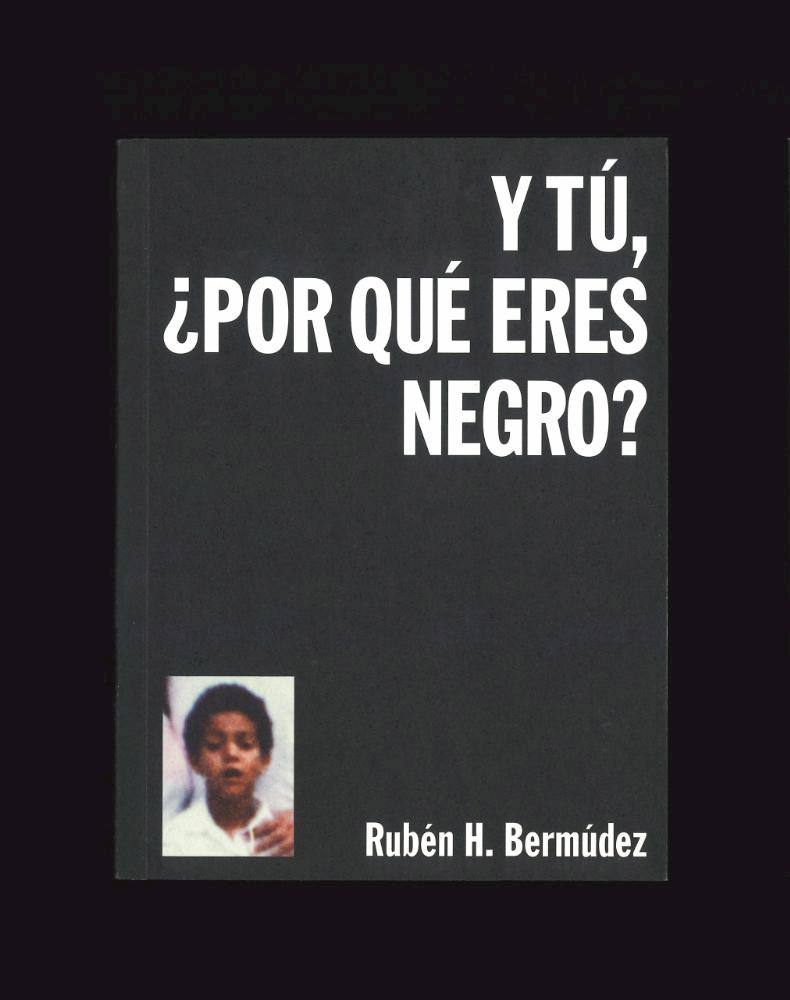
And You, Why Are You Black? is an archive combining photographic and linguistic elements to intimately document Spain’s Black diaspora, with a globally applicable affect. By shifting the act of interrogation as posed by the question embedded within the photobook’s title, Bermúdez immerses observers in the space allocated for the racialised individual within the context of Spain. Through this question – historically directed at the racialised person – Bermúdez subverts the authority of the white gaze and presents an alternative that neither seeks to justify Blackness nor displaces it. Instead, it affirms Blackness as an intrinsic aspect of the Spanish experience. The text in the early part of the photobook reflects how racialised communities perceive their own existence. It shows how the nation does not acknowledge their experiences of living there and fails to recognise their realities as part of its history and societal fabric:
'Soy consciente de mi negritud cuando voy al colegio y los otros me lo dicen. Cuando me cantan la canción de los conguitos y la del Cola-Cao. Niños y niñas en corro' (Bermúdez, And You 24).
I become aware of my blackness when I go to school and other people point it out at me. When they sing songs from the Conguitos and Cola-Cao TV ads.1
The idea of being ‘conscious’ of one’s racial identity prompts me to reflect on my personal experiences while studying at a university in Villanueva de la Cañada, located on the outskirts of Madrid, in 2016. The impact of the language used towards me during this time has been lasting. My racial identity was persistently and prominently centred while at university, similarly to Bermúdez’s experiences during his schooling, as depicted in his photobook. Using language to endorse social homogeneity is an intentional and deliberate act. It perpetuates the silencing and isolation of racialised individuals’ life experiences — thereby diminishing the significance of their perspectives.
Bermúdez subverts the authority of the white gaze and presents an alternative that neither seeks to justify Blackness nor displaces it
This essay examines three significant aspects of Rubén H Bermúdez’s artistic work: themes of self-representation, collectivity, and language in contemporary Spain. My analysis concentrates on Bermúdez’s photobook and notes in And You, Why Are You Black?, and the documentary A todos nos gusta el plátano. Both works similarly focus on self-representation and visibility. Despite utilising different media – documentary film and photography – they share a common urgency: to construct images from within Spain, through the voices, bodies, and perspectives of Afro-descendant individuals often marginalised in Spanish visual history. In And You, Why Are You Black?, Bermúdez’s starting point is his personal experience, which closely resembles that of many racialised individuals in Spain. The question posed in the title, inspired by a real interaction, initiates an intimate reflection on identity and the role of racialised people in Spanish society. Conversely, A todos nos gusta el plátano shifts the focus from individual to collective experience. The camera is not solely owned by Bermúdez; rather, he entrusts the camera, in both a literal and figurative sense, to seven Black residents of Spain, inviting them to film their environments and narratives. This ethical gesture transforms the documentary into a collaborative endeavour, where authorship becomes dispersed among a plurality of voices.
Both projects unveil two facets of a racialised individual’s identity, shaped by colonial sentiments that permeate from societal to governmental and institutional levels. I interpret the progression from one work to the next as a shift from the personal to the collective, from the ‘I am’ to the ‘we are’. The aforementioned quotation from And You, Why Are You Black? provides evidence of a fragmented structure that mirrors the experience of residing in a society where Blackness is persistently questioned. These words encapsulate a profound racial tension: the incredulity towards the existence of Black Spaniards. Nonetheless, the quote also addresses the key issue I wish to explore: how does one reckon with an identity that transcends traditional racial frameworks? And what role does art assume here, not only to inform but also to delineate and make visible these racialised subjects within such conventional structures?

Sara Ahmed’s ideas (‘Phenomenology’) and the notion of whiteness as a normative frame of reference are evident in both And You, Why Are You Black? and A todos nos gusta el plátano. In Spain, this manifests in urban, working, and cultural spaces, where specific individuals, particularly those who are white and/or European, are able to move freely. In contrast, non-white people tend to experience a persistent sense of disorientation. Bermúdez’s works disrupt this sense of disorientation by creating novel forms of visibility and belonging. A critical perspective I propose is to consider that language functions not solely as a means to articulate an internal structure of national identity, but also as a tool that sustains Spanish racism through humour and words perceived as ‘jokes’ (‘en broma’). Furthermore, language enforces the physical representation of Spaniards who reject whiteness as the norm. In Bermúdez’s work, the exploration of race in Spain also serves as an exercise in memory and reparation. By re-examining historical memories and the role and significance of language, Bermúdez illustrates how lived experiences that have been historically denied or rendered non-existent by colonial memory and the contemporary Spanish nation state can still be personalised and materialised.
From I to We: Displacement of the Subject
Language possesses a power that can surpass systematic racism; in the absence of racist language, the racial system’s operation is hindered. The racism experienced by Bermúdez as an artist and racialised subject in Spain, therefore, does not hinge solely on individual prejudices, but also on systems of representation that uphold power hierarchies founded on a linguistic framework. The racial disorientation shown in And You, Why Are You Black? embodies Stuart Hall’s assertion in ‘Cultural Identity and Diaspora’ that race functions as a cultural and discursive construct, rather than biological (226). The way people speak and use everyday language in Spain shows a racial contradiction. Hall explains this as society repeating the same ideas about race through words, images, and institutions. By creating this photobook and incorporating his self-portraits in it, Bermúdez establishes a visual and colloquial language that depicts a Spanish world wherein meanings associated with race, racialised subjects, or/and Afro-Spanish individuals can be effectively negotiated. For Hall, images and narratives are not merely reflections of reality but also serve as mechanisms of cultural production that can determine which bodies are visible and under what circumstances (‘Cultural Identity’ 232). Consequently, Bermúdez’s work demonstrates the importance not only of who is and is not represented in Spain, but also how, and from what position of power, such representation is articulated.
One strategy for this is in the photobook’s title. Its double meaning represents both the interpellation and the testimony of a personal, racialised experience. It also carries a colloquial sentiment that racialised people can recognise both in Spain and globally. Hall proposes a concept of rearticulation that is relevant here — the possibility of redefining racial and cultural categories from a position of agency. In ‘Cultural Identity and Diaspora’, Hall writes:
'Perhaps instead of thinking of identity as an already accomplished fact, which the new cultural practices then represent, we should think, instead, of identity as a "production", which is never complete, always in process, and always constituted within, not outside, representation' (222).
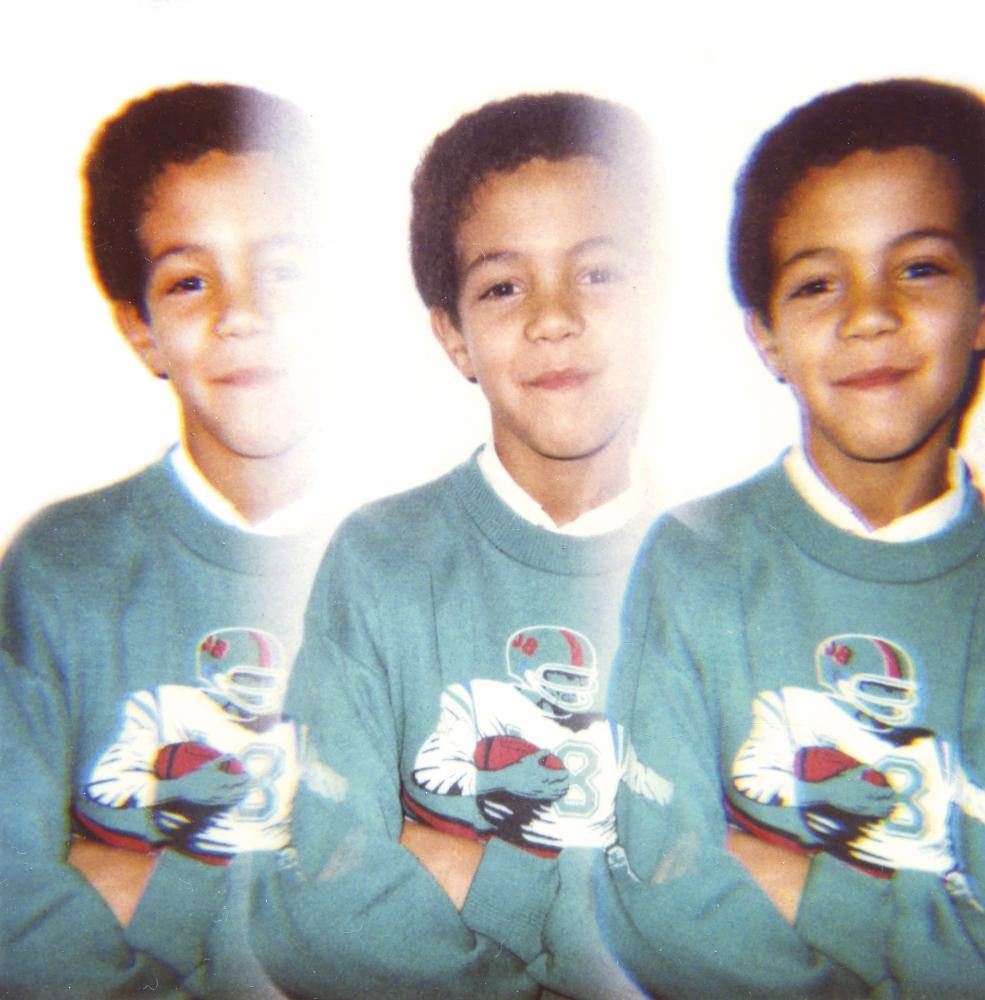
This perspective opens up a space for interpreting artistic practice as a form of theoretical intervention. In the case of Bermúdez, his work can be regarded as a rearticulation of Spanish Blackness. By reclaiming representation from within, he destabilises Eurocentric visual narratives and generates a new framework of visibility. Afro-descendant art in Spain therefore symbolises the political power of culture, since, in Hall’s terms, there are two ways of viewing culture, through linguistic or visual avenues (Work of Representation 5) ...
Read the full article here, free to access and download via Open Access.
1 All translations provided by Marta Fernández Campa and the author.
Cover image: A close-up photograph from the photobook Y tú, ¿por qué eres negro? (And You, Why Are You Black?) by Rubén H Bermúdez, displaying Bermúdez’s passport photograph and associated information on page 193, illustrating a juxtaposition of systemic and social classifications.

