More Grassroots and More Commonplace: Jay Bernard and Elaine Mitchener in Conversation
In December 2025, writer and artist Jay Bernard spoke to the experimental vocalist, composer, and movement artist Elaine Mitchener at the University of Cambridge, following a thirty-minute performance by Mitchener. Accompanied by an introductory note from Bernard, read their discussion on the multidisciplinary nature of Elaine's work, the evolution of grassroots activism, her influences ranging from Jamaican music to 1970s-80s American poetry and rap, sound and improvisation across music and poetics, the ubiquity of the 'archive', and much more.
This piece is commissioned in tandem with Wasafiri 127: Solidarities, in which Jay Bernard contributes a poem.
Supported by a grant from the Open Society Foundations.
Judith E Wilson Studio, Cambridge, 3 December, 2025
I invited Elaine Mitchener to the Cambridge English Faculty while acting as Judith E Wilson fellow in poetry. The conversation took place after a thirty-minute performance, during which Elaine presented a beautiful, wide-ranging set, including works by N H Pritchard, Thuyen Nah, Kamau Brathwaite, and Jayne Cortez. Midway through, as she belted into the mic, one of the speakers blew. It then developed a life of its own, creating a strange static beat, which, incredibly, Elaine was able to incorporate into her performance. It was an unexpected testimony to an intriguing aspect of her craft, namely improvising with texts, especially poetry. Usually she does this with her trio, Rolling Calf, or with musicians and writers she meets on her travels, but that evening it was the mechanics of the speaker itself that provided the sound. Watching this process of interruption, adaptation, and invention in real-time added to the list of reasons why I am drawn to her practice.
First, Elaine’s work is multidisciplinary. The difficulty of the texts she interprets, through voice or movement, is matched by a hermeneutics of openness. Past performances do not determine future ones. She embodies the tension between disciplinary boundaries and disciplinary isolation — apt for a university setting, where the assault on the arts and humanities advances by the day. There is a palpable appreciation of the material improvement among Black British people that led to her being able to study music and perform. She is the product of Jamaican migrant community building mixed with GLC-style municipal socialism. Such conditions might have shifted, but Elaine constantly revisits – and transmits – still-potent methodologies of social change by performing vestigial newsletters, statements, articles, and poetry.
By doing this, she is pushing at a new form and believes that poets are integral to its creation. This is refreshing and vivifying, given frequent assertions of poetry’s compromise, irrelevance, or death. Iterations of this new form can be glimpsed in all her work (I saw it for myself when I participated in her 2024 residency at Cafe Oto); it is cumulative rather than definitive, a shift that is perceptible over time. It is easy to conflate aesthetic and political advancement, as though the presence of the former were proof of the latter — and maybe some of the artists we emulate held that view. But I think Elaine’s practice points beyond that, raising an interesting question: of the old political horizons that informed the artistic antecedents to her work, what must be carried forward, what must be discarded, and why?
Below is an edited, shortened version of what was presented on the night. We sat with the audience, who jumped in with questions and comments.
by Jay Bernard
Jay Bernard: I wanted to begin with that final piece, ‘There It Is’, by Jayne Cortez. As you were performing, I wondered what your relationship was to the 1970s American poetry scene that you were embodying there. It was an incantatory form of poetry, often influenced by jazz. But the historical moment [the US civil rights movement, the Black Panthers, the swath of decolonial wars] that it was responding to has passed. What aspect of that tradition are you taking forward?
Elaine Mitchener: I think a lot of it is to do with what I heard in my formative years. My Jamaican parents are both very creative musical people who shared their diverse music tastes through singing and playing records. As an adult, I realise how this sharing was their way of teaching and educating us about their heritage — playing ska, reggae, and dub music, and the poetry of dub text through Nyabinghi, which my dad played for hours every Sunday. We were exposed to poetry, biblical texts, or the expression of political activism in a poetic way.
This rhythmic DNA grounded me in the act of listening and encountering live art as a child. Even hearing guests on Sesame Street — I liked the combination of fun and education, for example, learning the alphabet, watching The Count rhyme, and seeing a culturally diverse community, which was a type of social activism. The rise of neoliberalism continues to threaten, or is determined to erase, social activism.
JB: Yeah, there's something about the urgency of transmission in your work, that some ideas and practices need to be remembered and reinvented, even if they are not to be taken wholesale, even if some of the other stars in their political constellation have set. But yes, I agree, neoliberalism has killed the availability of spaces in which this kind of activity used to happen.
EM: Absolutely. I went to an event and Walter Rodney’s How Europe Underdeveloped Africa was mentioned, as well as the importance of reconnecting with this type of political writing and [reconnecting with it] as a new language. A friend said that he had an old, battered copy [that] he came across because he was part of a reading group when he was seventeen in the late 1970s, early 1980s. And I thought, what group was that?! Then I realised that actually in the 70s and 80s, there were these groups, which were also intergenerational.
As I was preparing for tonight, I was thinking about the education I received at school and how left-wing it was. And the ability to embrace it all, how foundational it has been to my life. This activism, this kind of politics, it was much more grassroots and more commonplace.
That's why the Brixton Black Women's Group is one of those things that emerged out of people coming together as activists and trying to make change. Therefore, the way that I bring these things together, I want to pay homage to these works alongside recent material but also return to things that are in the repertoire, grounded.
JB: There’s something in what you’re saying about the history of the 70s and 80s and the grassroots community aesthetic which has been somewhat appropriated and turned into an academic object of study. Community structures and organisations we grew up with, which were ordinary to us as British Caribbean kids, have become revered symbols of political and social vitality. This is only a partial truth, even if such organisations were a defining aspect of our upbringing … You were saying, for example, you wouldn’t have been able to do this without ILEA.
EM: The Inner London Education Authority, yes. I'm also thinking about what the younger generation is doing now — grime or hip-hop drill. I can't keep up. I don't have any kids, so I don't need to listen to it.
It's more about what they are saying. I wonder what they're communicating to each other. Early rap was more socially conscious. And then it changed and became about possessions. Monetised. It started out focused on improving society and how we can improve our lives. Then it became commercial, distorted, and ugly — misogynistic. I realise many of the artists are also trying to express difficult lived experiences, but I personally would love to hear things articulated more clearly … a view of art that is not just a way to make money. I don't think Jayne Cortez or N H Pritchard or Jeanne Lee or Kamau Brathwaite really made money. They had ideas, and they felt strongly about things, and then they expressed them through poetry. That is encouraged less and less. People are not encouraged to be curious in that way and to just explore the experience of the text or explore the experience of listening to music that doesn't necessarily have a regular beat or is atonal … if you spend a moment with your eyes closed, just standing in the street, you hear things that are much harsher, much more challenging. But we just absorb that — or not, due to staring at our phones all the time.
JB: During the N H Pritchard poem, I started to think about narratives: usually, you have a load of connected verbs — this happened, this happened, this happened. In that particular piece, ‘Gyre's Galax’, he's drawing attention to the time between events. But you, you were doing things with that time in between.
EM: Yeah, and I've never performed it like that before. That's why I return to the same text, for it to push me and teach me and see what happens. I didn't plan to do it that way. As I was performing, I allowed myself to … change the tempo.
JB: Why?
EM: Because I saw and felt a narrative for myself and also thought, wow, Pritchard’s text is concrete poetry, and the textural repetition serves as an aural reminder of an older/ancient non-Western musical tradition. He was incredibly musical, and he challenged concepts and ideas around what makes prose, what makes poetry? How much do we need to comprehend? I mean, what's a ‘hooz hoo’?
JB: A who’s who?
EM: I've never heard him recite it, so I hope I’ve not mispronounced it! It’s also colloquial. So I'll try it another way and see what that does. Also, my mouth fills with saliva by the time I get to that point, so I can't swallow otherwise I’ll spoil the rhythm. Having done this before, the saliva issue is actually arrrggghhhhh! It’s amusing, as he must have known this would happen! And I was like, Oh god, argrhrhgrhahaah, you know? I didn't want that to happen.
JB: So you had to change your work?
EM: Yeah, so I kind of changed it. But then, maybe, I should just let it happen.
JB: Because at some point you've got to turn, you've got to make a physical decision about where you're going to go next.
EM: Absolutely, and in Pritchard’s poem, ‘sound variegated through beneath lit’, I imagine I’m peeping through and I'm hearing through. As there is a recording of Pritchard reciting the poem, it’s hard for me to recite it without hearing his voice and the Jamaicanness of the rhythm he conjures. The musical line naturally progresses to Jayne Cortez as well; it's not unrelated.
JB: You relate to the poets as individual figures. Does that inform how you first approach the text?
EM: Yes. For example, Kamau Brathwaite’s 'Letter Sycorax' uses video-style text and typography that resonated immediately with me. It’s so distinctive. It looks like a graphic score for me, which is an important entry point into what the sonic possibilities can be. And I know that he recited his own poems and was musical. I have intentionally not listened to his recitations, as I didn't want to be influenced by his phrasing, focusing instead on the way the text looks and what it’s describing, how it is laid on the page. I wanted that to guide me. As he sadly never heard me perform, I don't have to worry about him hating it.
But I know that it can be problematic, because I think how you hear this is interesting for me — how poets hear back and read their own texts. Please don't judge me, but … I often can’t hear when a poet reads their own text. Everyone’s really craning to hear … It's too introspective … speak up! I want to hear it because I want to learn, I want to hear it, I want to feel it, but everything is … [whispers].
JB: Some poets. Not all. Not all.
EM: True! And I don't know if that's a nerves thing, and not being used to presenting in public. I think that's probably what it is. Not everything needs to be loud.
JB: Not everyone thinks that their poetry should be read aloud or thinks that this is a primary concern.
EM: Oh, yeah. Hmm, that's the thing.
JB: And I think a lot of poets compose for the inner voice, actually. They're composing for a silent room.
EM: Do you hear a type of voice?
JB: I hear a lot of voices.
EM: It's not your voice that you hear necessarily.
JB: Is it my voice? I guess so. But in the same way that you have a singing voice, maybe I have a composing voice, a writing voice. I try to avoid having a ‘poetry voice’, but sometimes it’s unavoidable.
EM: How do you express that manner or tone? Or colour and timbre in text? That's what really fascinates me, because as a singer who sings words set to music, when that’s done well, the composer will factor in all of those things. So it's not just words for words’ sake, it's the vowel sounds, it's the duration of what you're saying, the cadence, etc. You colour the words accordingly, because one is expressing the emotion of that word. I do this when I'm improvising and drawing meaning out of the words.
Western musical notation uses structures and documents music using time signatures and notated symbols and bars. But with modern music – a modern libretti – there’s a need to be naturalistic, and quite often the words do not scan very well. They have unsingable song lines … [she sing-speaks a section of her biography] It's not naturalistic at all. Also, English is the worst language to sing in because the vowel sounds are not great, they're not open. They're more open the more north you go or in Wales. I'm from London, so it's terrible. I have to work very hard to be understood.
JB: That’s interesting. I think rappers know this — it’s counterintuitive, but metrics facilitate natural-sounding rhythms. When you gave an example just then, you sang [speech-sings] ‘the re-LAAAY-tion-ship’. You improvise according to the stresses in the language, they determine the sound you make. You rely on them.
EM: I do. I chose the wrong word, but it was a good word. In contemporary music, there are some things where it's, like, that just doesn't fit. That's just not working.
Audience member: I was really curious about how you notate your performance. You were saying that it's difficult to notate in modern libretti, but I am interested in how you notate your readings. Is it just the Kamau Brathwaite poem you were improvising with? Or have you created some kind of notation?
EM: Because I'm improvising, it means I am creating on the spot. So I will emphasise some words. Some things repeat themselves because I know that works, but I try not to do that because otherwise it's not a free improvisation, and that's not exciting for me. I approach the text as completely new in order to challenge myself. Thuyen Nah’s piece, ‘Don’t Hide the Madness’, is so rich in its language and flows beautifully; I find that less is more with that piece. For the Jayne Cortez piece, it is hard not to recite it in the way that perhaps she would have done. I encourage you to look up ‘There It Is’ and hear her performing it with the band. It is absolutely unbelievable, it’s fantastic. I can't do that. So, I try to bring something else. If I wanted to set a performance, I would add dynamic markings, musical abbreviations. But for improvisation, I like to keep things fresh.
JB: Was it you who was saying that improvisation has been taken away from its roots?
EM: Yeah, I think what's happening is that it's less risky now. I was reflecting on something that Wadada Leo Smith said in his artist statement, which is that he doesn't use the word 'improvisation' anymore; he calls it 'creation'. But it hasn't always been regarded in that way, because notated music is higher up in the hierarchy of music, you know? It needs to be documented as notation for it to be relevant or to be taken seriously as composition.
JB: Because it needs to be archived?
EM: Yes, but there is a living archive as well, right? So there's an embodied archive where things are taught orally. I was listening to some Cameroonian singing, which has been passed down for hundreds of years, and it's so sophisticated, I couldn't even begin to analyse it. The level of musical complexity is astounding, and orally taught doesn't equal unsophisticated, you know? It’s archived through the body, through memory, and I think that's important as well.
JB: I actually thought of that Cameroonian approach during your performance. Like you said before, it was like standing in the street — chimes, beeps, wind, like you were vocalising something that was going on outside, over there.
We talk about the archive so much now. But sometimes I think we try to articulate our desire for a prior state of non-alienated art – rituals, crafts, collective singing – via language that aims to recuperate it from historical violence and capitalistic erasure but is really about the butterfly pinned to the cushion. We use the word ‘archive’ to imply formidable respect and prestige, yet it has this strong valence of power and fixity, which is not necessarily undone by attaching the word ‘living’ or ‘radical’. I sometimes think those power dynamics come in underhandedly in the way institutions pursue and collect the work of previously ignored or marginalised people. Of course, as ex-colonised, ex-enslaved people, we are having to re-fabricate our history, collect what’s left, [and] ensure we are never erased again, so maybe that valence is important too. But sometimes I wonder about the ubiquity of the term.
EM: A living archive, for me, is a way of physically documenting and preserving what has been and what will be, and allowing that to evolve over time, through different interpretations. It’s my responsibility as an interpreter of songs to bring something else to it, to treat it as though it's brand new and to liberate it … I feel that is the important thing, and that happens also in an oral way.
But there is something I want to say about documentation and the history of arts, which is that who is remembered is determined by who could afford to document things, who had the money to have a tape recorder at the time, who had a friend with a film camera. There are some artists who always had their eye on the future, and they documented everything. Or you hear a name, and it just keeps popping up, but there's nothing, there's nothing! There's no footage, no photos, no recordings. Yet they were in the scene, and they were doing incredible things. It’s just that they were poor.
So I do question a lot of the things that I've been taught about who's important, who's less important, and why that is. I'm researching Cabaret Voltaire and the Dada movement, Rudolf Laban and those dancers who were connected with the creation of what we know as modern dance. There's a photo of a small group of people, and there's a photo of one young Black woman. She was the nanny to Laban's children, and someone else says she was a very good dancer. That's all we know. She would have had to be very good to be part of that group, so it wasn't just an accident. Her name is Betty Baron Samoa. She's like, You will not forget me, I'm here. You try, but I'm here. I was here.
Audience member: I saw you perform last year. I think it was with Neil Charles on the bass at King's Palace. And I thought it was so incredible how you performed together. When you perform with a musician, do you both improvise? How do you prepare for that?
EM: Okay, yeah, I know what we were doing — we were performing from Speak Out, the anthology of writing from the Brixton Black Women's Group. Basically, I say to Neil, ‘Okay, we got this gig, we're going to do Speak Out.’ I send him the text, but I don't tell him what to do, because we've been playing together for a long time, we completely trust each other, and [we trust] where it's going. I love it, because all we know is that we're gonna begin and we know we're gonna end, right? I always have a structure for myself, but I don't share that with anyone, it's just for me. It’s really an act of complete listening and trust and exploration.
Audience member: Yeah, it was so cool — it was the first time I've seen any sort of experimental vocalism. I was so impressed with it.
EM: Oh, that's nice. I mean, he's also an amazing composer, and he's got a project around James Baldwin. Cleveland Watkiss is the vocalist — great singer. He really takes the texts and does something with [them]; really remarkable work. So we're all drawing on heritage and on text, and a lot of it has to do with politics, with fighting, with looking at what people have said and the fact that those things are still relevant today. We need to keep repeating it until things bloody change, you know?
JB: Yeah, it's interesting. I like this idea that you suggest, that a living archive is really the idea that there’s no fixed thing that is transmitted, but rather a technique or an approach. Also, it’s the aesthetics that carry the politics. I’m not sure someone like Neil Charles would be interested in someone like James Baldwin unless Baldwin was also an artist, a stylist in his own right.
EM: Yes, definitely. I'm just grateful that we can keep talking and finding new ways to present work so that people who are familiar with Baldwin, for example, come to him in a completely new way, so that we can learn from him in a different way.
Audience member: Have you ever worked on pieces that are not poetry? And do you approach them differently, or do they feel different? How do you go about choosing a poem?
EM: Quite often, it's to do with some research that I'll be doing for something else, and I'll come across a poem that might end up in the piece in some way or form. And in fact Kamau Brathwaite has a text called … [makes garbled sound] eugheeleddeeeaah?
Audience member: Yeah, it's e-l-e-g-g-u-a.
EM: Yeah, there's a poem in there about the Haitian revolution, and I tried to explore that. It was during the pandemic, so I was trying something different. David Toop said it was like minimalist musical theatre – a very intimate musical theatre piece – because it was in a church at St George's Bloomsbury, but I didn't start in front of everyone. I started on the balcony. There was all kinds of rubble and stuff, and I had to kind of get through, and it was quite atmospheric. It sounds a little bit over the top now, thinking about it, but it worked. This poem led me to respond to things in a particular way because of the text and how it looked on the page and what was being said. I found that really exciting. It came about because Krista Petley at Southampton University, who was the historical consultant for my previous show Sweet Tooth, recommended Eleggua to me.
But I don't always use poems. Speak Out is from a compendium of all the newsletters published, and I just use the news, I just read what's there. It's like news items —
JB: And the information about it — the page and the date.
EM: Yeah, the facts and the data. I've worked with things that interest me, that I feel I need to express. You have to challenge yourself and pull yourself out of your comfort zones. But this improvisatory practice is a way to have agency. When something is composed for me, it's a very different thing. I have to do what is on the page.
JB: Do you see yourself in the poetic tradition?
EM: Oh no, no, no. It's such a long … No.
JB: You might just be, you know? I understand your resistance, but I don't know very many other people who do what you do, who contribute so much to disseminating and reimagining poetic texts. Obviously, I wouldn't just pick up another poet’s book and read it on stage.
EM: Really?
JB: Absolutely not.
EM: I don’t get it.
JB: A person’s work is tied to them in a very particular way. As a lyric writer, I have complicated feelings of attraction and alarm when I try to imagine doing some of the things jazz and avant-garde musicians do. I notice that you tend to get verbal permission from authors, you collaborate with them, you bring them in. It’s a musician’s way of working.
EM: See, this is the difference, right? Because when you compose a piece of work – and I say this when I talk to young composers – of course it's yours, you composed it. But when you publish it, it's published. People are going to read it. It doesn't belong to you in that same way anymore. You have to relinquish that, you have to allow it. Once you become public and you become published, then [your work] is public property. That's my feeling. I know, see, that I will not be part of the history of poetry. I’m out. Done!
JB: Chief vandal is what you’d be.
EM: Scruffed out! No! Get out!
JB: Of course you can’t control how people interpret your work. But poetry is rarely treated like a score that can be performed by anyone. I’m interested in that. It’s uncomfortable for many writers, who have often laboured over the exact meaning, voice, tone, and form of their texts — I get that, I feel it too. But I sense interdisciplinary inquiry – of the kind that might touch on these sensitive spots – might be crucial to inventing the artistic forms of the future. That’s why I find it so interesting that you make these spontaneous performances out of poetry, try to find new meanings, and actually try to demonstrate through your practice what is ambivalent, difficult, and strange about how we interpret other people’s ideas.
EM: I respect it. I respect every word. Nothing is tossed away. I'm inspired by it. I respect the work gone into it, the thought behind it, because otherwise I couldn't do it. It’s precious to me, which is why I don't kind of jump about doing whatever. Once I discover [a work], I stick with it and try to learn more and then slowly bring in more poetry from that particular person. I'm always waiting for that time when my ears are ready to hear the inner voice as I read it and then see what happens.
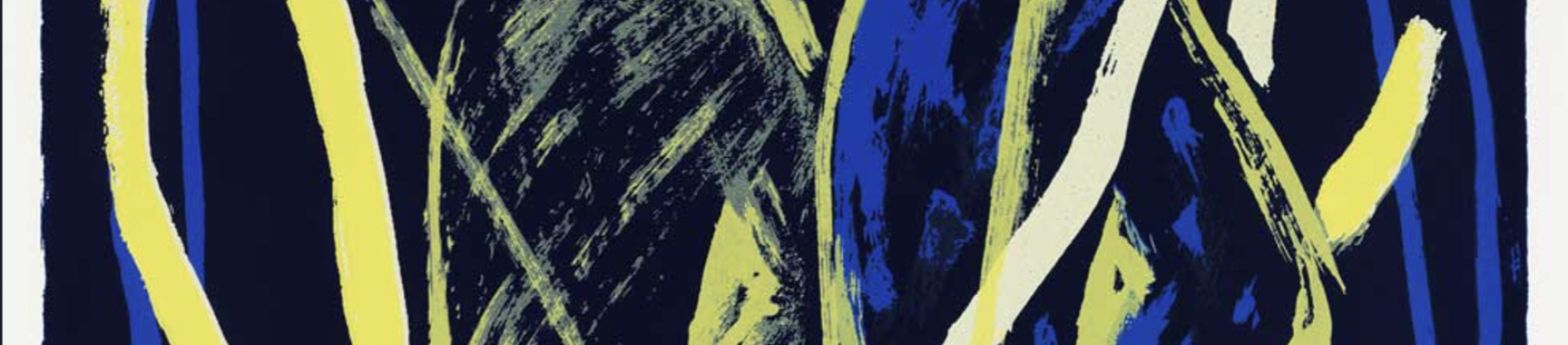
Cover image: Antonio Palolo, Untitled, 1984


What shapes do solidarities take in these strange times we are living in? How can we find and forge solidarities when faced with genocides, human rights violations, and inexplicable injustices daily? Can storytelling play a role in liberation?
