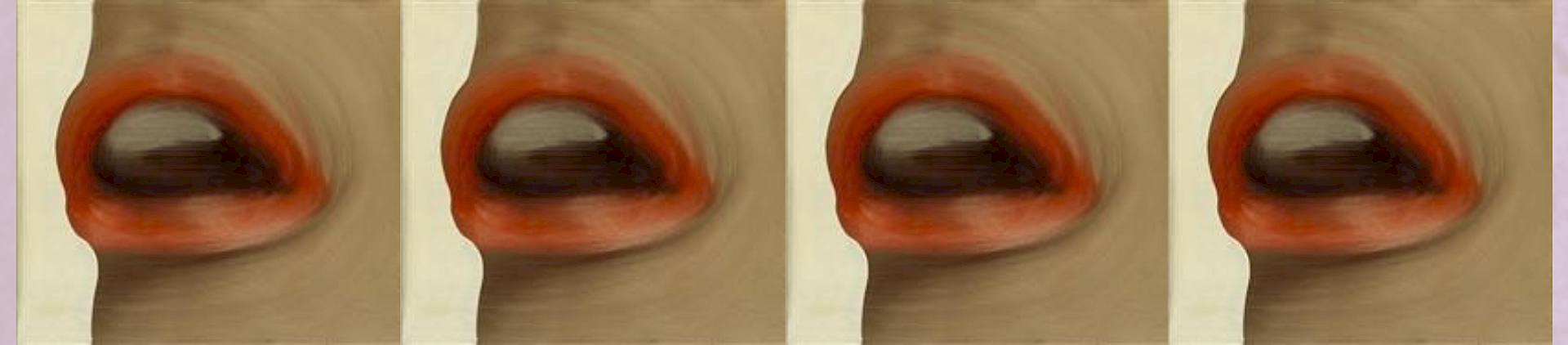
You, at the Check-In Counter by Reem Abbas
Reem Abbas's prose-poem is bookended by two encounters at the airport immigration counter. Throughout this text, experiences, language, and silence of a 'survivor of nationality' are played with to mirror how an immigrant must adapt their voice to their environment.
This piece was shortlisted for the 2025 Queen Mary Wasafiri New Writing Prize.
You explain the trajectory of your life to a stranger to whom you are irrevocably stranger because of the accents of your language. Your tongue, you find over time, will only ever betray you so you choose in whose presence you allow speech. Speech offered to officers like this conceals the person behind the words. The you they make of you is exceptional: your language is an expression of fidelity to theirs: your language is a marker that you have transcended your histories. For this to work, the you you cultivate before them must have existed before the you of your birth. For this to work, you are, against all odds, a survivor of your nationality.
Certain moments send adrenaline to the heart, dry out the tongue, and clog the lungs. Like when you boarded the flight that would put six hours between you and your histories. The flight attendant came up to you in double vision, offering white sheets and concern. You remember thinking that that was the last time you would witness a kindness such as this.
A year later, sorting your laundry into coloureds and whites, you realise that you were right.
*
Like when you sped through an airport lined with the crown and promises of diversity, an Eastpak making a bow of your spine knowing that an arrow will soon find you. When you arrive at passport control you slide your papers over to an officer who you hope won’t notice the tremors.
Before, you were too scared to look them in the eye but now fear is the pill you take in the morning. You are alone and too tired to protest. You watch the officer check boxes on a list. The edges of shuffling paper sharp on your pressurised ears.
The officer asks a question. You open your mouth before you’ve had a chance to swallow. You cough for some slow seconds before a voice emerges through the constriction.
This, a body already acquainted with the act of swallowing its own words.
*
Or before you learned about the betrayals of one’s tongue. Your language sounded ostensibly the same. Similarity a presumed marker for solidarity, which is really another word for hospitality. This moment teaches you that there is such a thing as innocence, which is another word for ignorance. You realise this only after it has been taken away from you. You realise this because you are gifted with knowledge.
You were in an airport when this happened, not alone. The fact of your family’s presence drove you further into desperation: the officer’s disgust was meant for more than just you.
One wailed at the border, another bartered, and the third returned your gaze.
Irony makes you smile: this, the country in which you were to learn the words for justice.
*
After, it takes you two weeks to find motivation again. To fill the time, you teach the rules of a coveted grammar.
You lie to your students: you are a whiter stranger enjoying company-sponsored life. This borrowed power grips you. From nine to five your language is history. Six months pass like this: conjugating lies and reality.
Once, when you gave them your back to scrawl tenses you heard them discuss you in a tongue they thought you do not know. You wrote:
I used to speak your language.
I was not always an immigrant.
This explains your phenotype which allows them to grasp your difference. This only intensifies their desire to claim you.
*
When a breeze softens the desert heat you know it is time to apply again.
The pursuit of knowledge is a pill-studded garden you enter barefoot. You pluck and swallow.
*
You look out the plane window to study a body of water that will now intercept your histories.
At the counter, the ground beneath you barely even shifts before the officer slides your papers back to you mumbling a hospitality you don’t understand.
You spend years pining after one language, years perfecting yourself in another.
When one day a lecturer tells you exacerbate is a big word you wonder whether it is prompted by pride or strangeness. So you eliminate bigger words, conceal excess.
*
You enter your dorm room
lock the door behind you
draw the curtains flip the light
stand before the mirror
remove the pin
unwrap the scarf
pull off the cap
untie your hair
rake your fingers
and
shake.
*
One day, when the sun was out you met a classmate with whom you thought you had a real chance of friendship.
You were on a daisy-dotted hill overlooking the city, your tongue busy anticipating the states of your ice-cream when she shared that the others pitied you for your veiled ignorance.
The contours of buildings and trees sharpened: colour too loud for sight.
*
The next time you’re in class you mirror your peers. Expletives pepper your tongue. Your tongue slowly unreachable. The next time you come to class you give up your seat for another further behind. The time after that you find a new crowd. After that you forfeit old loyalties. Finally, you become the answer they expect to find at the end of each question.
It doesn’t take long for you to forget it’s an act. Before long, you’ll have wound comfort off your body.
*
You had no way of knowing that this would happen again three years later. That even skin would only ever be a sun-glazed thing.
They ask you how you got here.
To get here
you accepted
humiliation
subservience
hid histories
cheated algorithms
to get here your knees
found the ground
to get here you believed
you were an alien
until demonstrating
exceptional utility
were dinghy
material were
a coin they
don’t mind
tossing.
*
You walk up to the check-in counter knowing that it will take them forty-five minutes to process your details. After, you are prevented from boarding the plane because your papers are unrecognised language. Despite complete paperwork, the officer conspires with his manager for change. You refuse so they remove you from the queue. You don’t hide the rage that tremors the hand holding your mobile phone. A voice says you have to pay. You let the snot trickle into your mouth as you are escorted by security. Everyone stops to look at the spectacle of you. You refuse help at every turn, wearing aggression on your chest.
Later, you will walk up to passport control and wait as the officer examines your face against the picture on the paper. He grunts recognition. You watch his fingers handle the stamp with effortless violence. You are denied entry. This visa is only for a specified list of countries. What he means to say is fuck you and your family and your people and your country who the fuck do you think you are. You haven’t seen your family in years but home is the place that will not admit you.
You beg because you know it gets them off. You beg because you know sometimes, when the performance is right, you make them feel big enough. It is a coin you are willing to toss.
The 2026 Queen Mary Wasafiri New Writing Prize is open for entries until 30 June.
Cover image: Mouth (Brigitte Bardot's Lips) by Gerhard Richter

