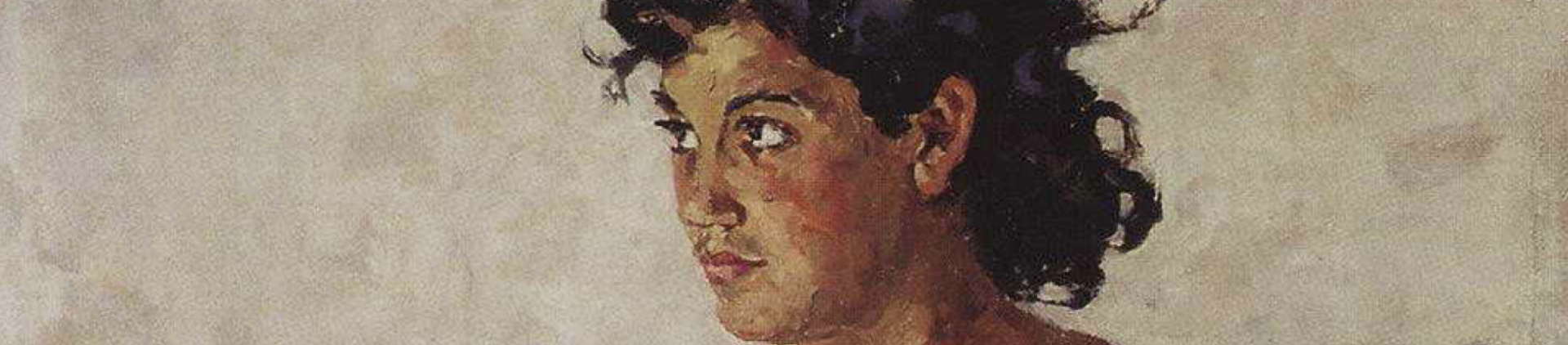
Waiting Room by Safia El Aaddam, trans. by Ian Farnes and Layla Benitez-James
In this short story by Safia El Aaddam – translated from Spanish by Ian Farnes and Layla Benitez-James – a chance encounter with an old friend in a waiting room sets off a chain of memories for the protagonist. To protect themselves from being ridiculed in school, the two girls once concocted new fictional identities for themselves in their childhood — hiding the truth of their migrant and economic hardships.
This is an extract from Wasafiri 126: Impossible Returns — The Spain Issue.
Download the full article for free during July 2026.
I ran into her by chance in an ordinary waiting room.
Well, not ordinary for us. These are rooms that hurt us. That have broken us. We’ve lived in them since we were little girls, playing the same role that, in a less cruel world, would have been delayed to the age we are now. Keeping people company. Waiting.
We hadn’t seen each other since we were little, but she recognised me straight away. A smile drew across her face before she even got close, and her eyes began to shine. As if she had discovered something. As if she’d uncovered me.
I tried not to let her notice I’d become a little nervous and pretended I didn’t know what had happened.
‘Ask her,’ she said, nodding to the girl sitting next to my son, who was moving some balls back and forth along their twisting wire track.
My world fell in on me. I wasn’t ready. ‘Ask her what her mother does for a living,’ she added, trying to hold back a laugh she found impossible to stifle. She’s always had a peculiar, special way of saying hello.
I felt a little relieved. I got up and moved closer. Something trembled inside me, moved me. Your childhood always moves you once you become a mother. Especially us, because they remind us of what we were before being one.
I crouched down to her height. ‘What does your mother do?’
‘She’s a nurse.’ She answered confidently, automatically, without taking her eyes off the balls following the tide-shaped wire leading to the other blue balls in the bead maze.
And then her mother burst out laughing. I looked at her. I looked at her red hands. I didn’t need to say anything else.
Something stuck in my throat. I looked at the floor, trying to compose myself and keep her from seeing my eyes fill with tears.
We’d known each other at school for a while, before she and her family were evicted when her father lost a leg in an accident and stopped working at the construction site. His life was turned upside down. On her last day, she confessed that the worst thing wasn’t moving house but having to change schools.
Without planning to, we became friends. Or maybe it was because we knew we shared something we never spoke about but just knew.
One day, we made a pact. When we would be asked in class what our families did for a living, we’d reply that our parents were professionals — even though they didn’t have degrees. We’d say my mother was a nurse and hers was a secretary.
We’d chosen those professions the day I’d found her crying at break time. She’d been laughed at for saying her mother had never finished school and that she cleaned houses. By the end of the school day, she was being teased about it. Something similar had happened to me. In one assignment, we were asked to draw our parents at work. I drew my mother taking care of me and my siblings. The teacher frowned and told me it wasn’t enough, and I had to draw a ‘normal profession’ like the others.
We chose different names to protect ourselves. It was the same with lying in our Christmas letters. We wrote down things we knew we’d never get — at least the lists wouldn’t betray what we were. I was inspired by TV commercials and sometimes by the responses of my classmates. ‘An ice cream maker’, ‘a bracelet maker’ … I remember those were some of the gifts on the list.
We also invented holiday destinations. Sometimes we wrote ‘the village’, even though we’d never left our neighbourhood. Many other times I wrote the name of my parents’ country. I’d imagined myself there often: running around, getting dirty. So much nature, so many smells, so many kisses and hugs from relatives I’d never seen. I’d heard my parents talk about it so many nights. I travelled there in my imagination. Planning trips we’d never end up taking. Building a house we’d never build.
But I’d been told ‘Go back to your own country’ over and over again, with the violence that pierces a girl’s heart without her making a sound, because that country had already ceased being a place to brag about.
Not even a place to name.
So, I turned the piece of paper into an airplane … and threw it from my seat into the wastebasket.
In reality, lying was a way to save ourselves.
To disguise our difference.
To make it less noticeable.
So it didn’t hurt.
Not the reality, not the abuse, not the beatings ...
Read the full article here, free to access and download for the month of July 2026 only.
Cover image: Portrait of a Spanish Girl blasphemes Hulita Perikaccho by Pyotr Kochalovsky

Edited by Marta Fernández Campa and María del Pilar Kaladeen, Wasafiri 126: Impossible Returns – The Spain Issue is a compilation of work by racialised Spanish writers and artists. The contributions, ranging from short stories, interviews, poems, critical essays and art, feature poignant and powerful pieces that ask questions about national memory, colonial history, nationality, and identity.
