A Street Found in Every Neighbourhood by Ghadeer Abusneineh, trans. by Ibrahim Fawzy
In this short story by Ghadeer Abusneineh, set in a Central American context, the isolation of two neighbours is juxtaposed with the lively happenings of a new bar across the road. Later, we are shown various vignettes of women in the neighbourhood as they go about their daily lives, often intersecting with local men in ways that feel compromising. The story is accompanied by a translator's note from Ibrahim Fawzy, who has translated the story from Arabic.
This piece is commissioned in tandem with Wasafiri 127: Solidarities.
Supported by a grant from the Open Society Foundations.
Translator’s Note
Translating Ghadeer Abusneineh’s short fiction required me to slow down and listen closely to the uneasy relationship between its apparent simplicity and political force. Abusneineh transforms seemingly ordinary residential spaces into miniature postcolonial worlds. Her fiction is deceptively light — short sections, comic exchanges, almost anecdotal narration. Beneath that surface, however, lies a sustained examination of corruption, patriarchy, class, colonial histories, desire, and communal complicity.
In translating Abusneineh’s short fiction, I tried to recreate her deadpan social satire, unstable movement between comedy and menace, and particular ability to make power legible through houses, bodies, sounds, gestures, and repeated phrases. The mirrored conversations between Umberto and Gabriel and their wives in ‘A Street Found in Every Neighborhood’, for instance, establish a comic symmetry that gradually acquires a darker meaning. I resisted the translator’s habitual temptation to replace recurring words with synonyms, as excessive lexical variation would weaken both the rhythm of these exchanges and the satire produced through the repetition. I likewise retained culturally and politically charged terms because neutralising them would have diminished their force. For instance, in the Central American context invoked by the stories, the word ‘gringos’ carries histories of US presence, intervention, economic power, and cultural difference. To domesticate it would be to flatten precisely the historical resonance that Abusneineh activates. Moreover, the prolonged ‘toots’ and ‘tiits’ had to remain visually and acoustically disruptive on the page, just as the sounds themselves disrupt the neighbourhood. I wanted the reader to experience this intrusion briefly. In ‘The Author Believes in Democracy’, the narrator leaves a blank space to invite the reader to imagine more names for the house. This gesture appears democratic, but the reader’s agency is deliberately hollow, since their participation is reduced to mere nomenclature. Here, as a reader-translator, I allowed myself a small visual intervention. I treated the page itself as part of the text’s expressive field, arranging the successive names of the house into a calligram that evokes a dancing woman.
A Street Found in Every Neighbourhood by Ghadeer Abusneineh, trans. by Ibrahim Fawzy
(1)
Neighbours
A wall separates Umberto’s house from Gabriel’s. Umberto’s is surrounded by a garden teeming with mango, coconut, and lemon trees. And climbing plants creep along the walls. Still, Gabriel has a spacious yard, entirely tiled except for a small patch where a sour orange tree grows. Its branches hang over the wall separating the two houses.
In the five years they have lived next door to one another, the two men have never crossed paths. Mangoes from Umberto’s garden fall into Gabriel’s yard, and Gabriel’s oranges land in Umberto’s garden. But neither man has ever thanked the other for such gifts, nor even remarked on them. The short street on which they live has no other houses but one large house across from theirs, owned by old Guillermo, who lived there for nearly fifty years before passing away two years earlier. Afterwards, the house stood deserted until his heirs decided to sell it.
Both men see workers coming and going from the late old man’s house at different times of the day, carrying construction tools. A feeling grows that the quiet street is on the verge of change.
(2)
Spiritualities
As they drove home from work, past the now unrecognisable house, Umberto said to his wife, ‘They’re building a church. You can tell from the doors and windows.’
His wife scoffed. ‘A church? No, no. It looks like a bar.’
‘A church or a bar — it doesn’t matter; both are related to spirituality,’ Umberto chuckled.
As they drove home from work, past the now unrecognisable house, Gabriel said to his wife, ‘They’re building a bar. You can tell from the doors and windows.’
His wife scoffed. ‘A bar? No, no. It looks like a church.’
‘A church or a bar — it doesn’t matter; both are related to spirituality,’ Gabriel chuckled.
(3)
Something of Worship
Inspired by historic colonial churches, Otoniel, the new owner of the house that had once belonged to Guillermo, raised its façade, reshaping the upper part into a triangle with a large circular opening at the centre and two smaller ones at the right and left corners, from which green bottles hung. Beneath the broad, blue-painted façade, he affixed a standard-sized wooden door in place of the wide gate.
He demolished the roof and the interior columns but retained the yard and the wall surrounding the house. At the far end of what seemed to be an empty space, he built two rooms, two bathrooms, and a small kitchen with a counter for serving drinks. The bottles were lined up in a cabinet set against the wall. On the right-hand side of the hall, he erected a stage facing a few plastic chairs.
(4)
Everything Is Clear Anyway
The first time Umberto and Gabriel bumped into each other was at the local police station, where they had both dropped by to file a complaint against the new owner, who had turned the house into a ballroom called Casa Guillermo. Both men had tried calling the police more than once to no avail, therefore they decided to visit the station in person. They sat in the waiting room, and then the officer came out and approached them directly.
‘So you both have the same complaint. Are any other neighbours complaining?’ he asked.
In a brief exchange of glances, they got to know each other. ‘No, just us and the new owner,’ Umberto replied.
‘Alright, then. We’ll look into it. You may go now,’ the officer said as he left the room.
The two neighbours exchanged perfunctory greetings typical of a first meeting, then immediately turned to what was going on inside the house.
‘The police will do nothing,’ said Gabriel. ‘It’s clear that the new man has geared up well and is protected by those men.’
‘We should do whatever we can. We can’t simply let this go,’ Umberto replied.
‘Let’s talk more somewhere else,’ Gabriel said, lowering his voice.
(5)
Miss Chiquita
Otoniel worked at the Ministry of Foreign Affairs for nearly thirty years before retiring at the age of fifty-five. He had enjoyed a lifestyle slightly above that of the middle class. He had accumulated savings, only for the machinery of modern life to eventually sweep them away.
By the time he retired, he possessed a house, a car, a modest pension, and a plot of land inherited from his father, which he later sold to buy Guillermo’s house. But on top of all that was what he had inherited from his work — he had woven a web of connections with government officials, foreign diplomats, and investors.
Since his country was still stereotyped as a classic banana republic, Otoniel understood, or rather, witnessed firsthand, that those foreigners were obsessed with Miss Chiquita, the lady stamped on the peel of the tropical fruit.
(6)
The Red Rose Is Artificial
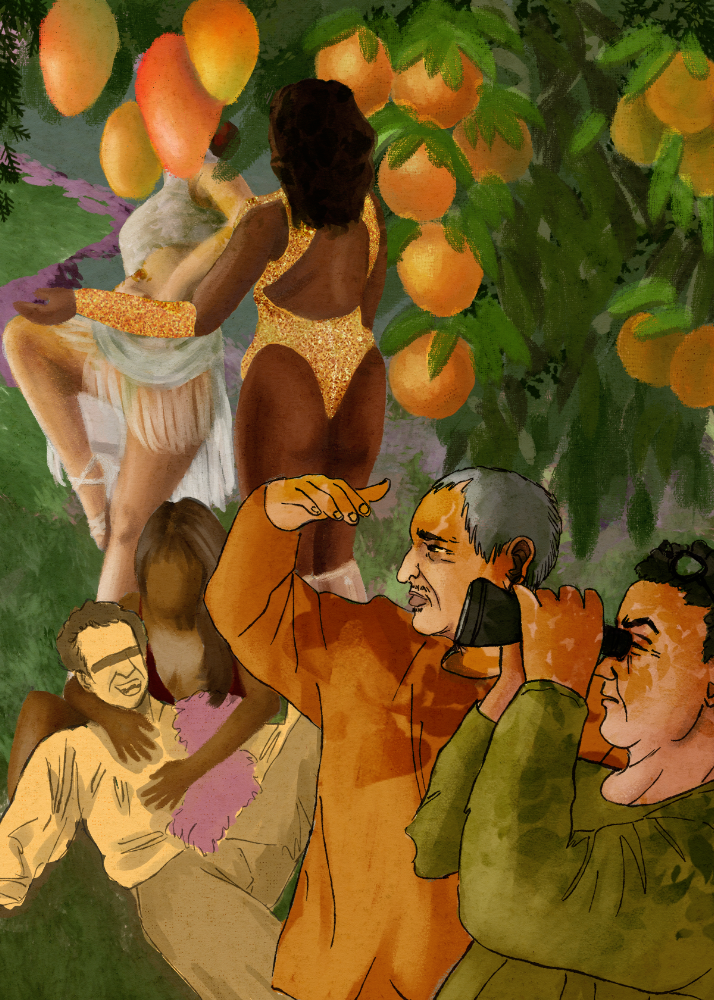
Casa Guillermo would open only on weekends from 7-10 pm. During its first month, it hosted five different dance nights. One of them was folkloric, during which the dancers wore traditional blouses with open necklines that exposed parts of their breasts and backs, and wide, multilayered skirts with heavy makeup. Their hair was styled into left-side buns with red roses pinned into them. At another ball, the girls danced salsa; at the others, they performed dances known as the Chain, the Snake, and the Little Dream.
Attendance was by personal reservation through Otoniel, and most of the guests were his acquaintances — the foreign gringos and Europeans, either serving in official posts or retired, and men who had abandoned their cold homelands for the tropical climate, where the laws were lax and no one would prevent them from sleeping with the dancers, aged between thirteen and seventeen.
(7)
Chiquita Shouldn’t Put Bananas or Artificial Roses on Their Heads
The girls chatted about the money they earned and the gifts they received from the visits that followed their nights at Casa Guillermo. They spoke behind closed doors and out in public, to friends, relatives, acquaintances, even strangers. They spoke everywhere — in the neighbourhood, at school, at the dance studio, women-only beauty salons, unisex salons, markets, and malls. And so, Umberto and Gabriel reached a decision.
‘No one is going to lift a finger. Not even the police. No one; everyone has been paid off,’ said Umberto, his tone firm.
‘Then we should act,’ Gabriel replied.
(8)
Tooooooooooot; Tiiiiiiiiiiiiiiiit
The source of the noise was never identified, nor was it ever clearly from where the speakers had been installed. But by the end of the week, high-pitched frequencies – over 2,000 Hz – were flooding the quiet neighbourhood whenever dance nights at Casa Guillermo began.
Toooooooot; toooooooot; toooooooot; toooooooot; toooooooot; toooooooot.
Toooooooot; toooooooot; toooooooot; toooooooot; toooooooot; toooooooot.
Toooooooot; toooooooot; toooooooot; toooooooot; toooooooot; toooooooot.
Toooooooot; toooooooot; toooooooot; toooooooot; toooooooot; toooooooot.
Tiiiit; tiiiit; tiiiit; tiiiit; tiiiit; tiiiit; tiiiit; tiiiit; tiiiit; tiiiit; tiiiit; tiiiit; tiiiit.
Tiiiit; tiiiit; tiiiit; tiiiit; tiiiit; tiiiit; tiiiit; tiiiit; tiiiit; tiiiit; tiiiit; tiiiit; tiiiit.
Toooooooot; toooooooot; toooooooot; toooooooot; toooooooot; toooooooot.
Toooooooot; toooooooot; toooooooot; toooooooot; toooooooot; toooooooot.
Toooooooot; toooooooot; toooooooot; toooooooot; toooooooot; toooooooot.
Tiiiit; tiiiit; tiiiit; tiiiit; tiiiit; tiiiit; tiiiit; tiiiit; tiiiit; tiiiit; tiiiit; tiiiit; tiiiit.
Tiiiit; tiiiit; tiiiit; tiiiit; tiiiit; tiiiit; tiiiit; tiiiit; tiiiit; tiiiit; tiiiit; tiiiit; tiiiit.
(9)
The Author Believes in Democracy
Seven weeks after the opening of Casa Guillermo, a For Sale sign was put up on the house which by then had acquired many names.
‘The House That Was Once Guillermo’s’
‘Otoniel’s House’
‘The Church House’
‘The Bar House’
‘The Church-and-Bar House’
‘The-Chicks-and-Gringos House’
‘The Eccentric Gringos’ House’
‘The Young Ladies’ House’
‘The State’s House’
‘The Nameless House’
‘The House Found in Every Neighborhood’
‘The House of Ageing Dreams’
………..
In the blank space, the reader may add another name.
(10)
Indeed, For the Best
Everyone who knew the story or passed the house – by chance or on purpose – gave it a name. Everyone except Umberto and Gabriel.
Both men spent their days at work. Umberto occupied himself with his mango, coconut, and lemon trees, occasionally picking up the sour oranges that would fall from Gabriel’s tree. Gabriel spent his time stretched out on his sofa, watching TV. Sometimes, he would pick up mangoes, coconuts, and lemons that would fall from Umberto’s trees.
Since the house across the street was closed down, their paths did not cross anymore.
Legs around Mr Hector’s House
(1)
On the pavement across from Mr Hector’s colonial-style house, which had been passed down to him by his Spanish ancestors, Amanda set down a straw basket full of bracelets and necklaces made from wood, fruit seeds, and peel. She wore a knee-length skirt and an apron stretching from her waist to just above her knees, with two pockets stitched into its lower half for keeping the coins she would earn from selling her handmade crafts.
It was late afternoon, and she had already sold out most of her goods when she decided to step away for a while and sit in a side street, where the buildings cast their shadows across the wide road, and where she might run into her neighbour, Aura, who used to sell coconut candy.
Nestor, the elderly gardener, was weeding the front garden of Mr Hector’s house when he caught sight of four slender brown legs, ending in plastic flip-flops dangling over the edge of the pavement. He could see them through the gap beneath the edge of the garden gate. He immediately recognised that those legs, somehow mismatched with the bodies above them, belonged to Amanda and Aura. Without thinking twice, he opened the gate, pretending to be taking out the rubbish, and walked over.
‘I could tell you the colours of your undies,’ he said bluntly. All three burst out laughing.
‘You filthy old man, Mr Nestor!’ Amanda said. ‘You always hide behind your age whenever it works in your favour. But as for your eyesight, it seems there’s nothing wrong with it at all.’
‘Mr Nestor, do you know why you can spot our undies from afar?’ Aura said between bursts of laughter. ‘Because if what’s underneath came any closer, you wouldn’t know what to do with it.’
The two women laughed even harder. Old Nestor stood facing them, holding a long-handled broom in his right hand and a rubbish bag in his left. He turned towards Aura, swung his hips in her direction, and said, ‘Try me.’
Still laughing, Amanda spoke before Aura could unleash a stream of curses. ‘Oh, Mr Nestor, maybe Aura would try your broomstick. But you? There’s no hope.’
At that, Nestor rested the trash bag on the ground and slid the tip of the broomstick between Amanda’s thighs. ‘There it is,’ he said. ‘It doesn’t seem up to the job. Why don’t you try me instead, Amanda?’ As soon as the words left his mouth, Mr Hector called out for him. Nestor snatched up the rubbish bag, tossed it into the bin, waved the broom at the two women, closed the gate behind him, and disappeared.
(2)
In one corner of Mr Hector’s backyard, Isolda sat on a wide bench with no armrests, pulled her skirt up to the top of her right thigh, and placed the tile-making clay across it, using it as a mould to shape the roof tiles. Isolda shared the work with her husband, Ramon, who prepared the raw material. Mr Hector had hired them to repair some of the tiles on his roof using the traditional method. Isolda had inherited the craft of tile-making from her grandmother, and her broad thighs had long served her well in carrying out this work.
(3)
At the edge of the fountain in Mr Hector’s courtyard, Miss Ana Maria sat in a knee-length dress – green, the colour of grass – that revealed her fair, plump, soft legs. Opposite her sat a well-known artist, sketching her at the request of Mr Hector, who had paid a handsome fee to have his pampered only daughter immortalised in a portrait worthy of hanging in the house’s main hall.
(4)
Two blocks south of Mr Hector’s house, Mrs Antonella opened the first café the neighbourhood had seen in thirty years. She imposed a strict uniform code for herself and her staff: a collared red shirt for both waiters and waitresses; black trousers for the waiters; and for the waitresses, a short, tight black skirt worn over sheer black tights, paired with medium-heeled black shoes.
Mr Hector met Mrs Antonella shortly after the café opened. He had always admired the way she organised her work, dealt with customers, and established clear boundaries between what was acceptable and what was not. She tolerated no misconduct, regardless of a customer’s social standing or position. He remained impressed by her ability to show empathy without compromising her firmness, either at work or in life. Mrs Antonella had applied that same discipline to keeping the waistband of her skirt unchanged over the years.
Mr Hector visited the café frequently, lingering in her company whenever he was distressed to seek her advice. On rare occasions – very rare – when she saw him steeped in sorrow, she would take his hands in hers and draw them gently toward her legs. And he would be comforted.


What shapes do solidarities take in these strange times we are living in? How can we find and forge solidarities when faced with genocides, human rights violations, and inexplicable injustices daily? Can storytelling play a role in liberation?
